
Direct-to-Consumer Indian Snack Benefits in 2026

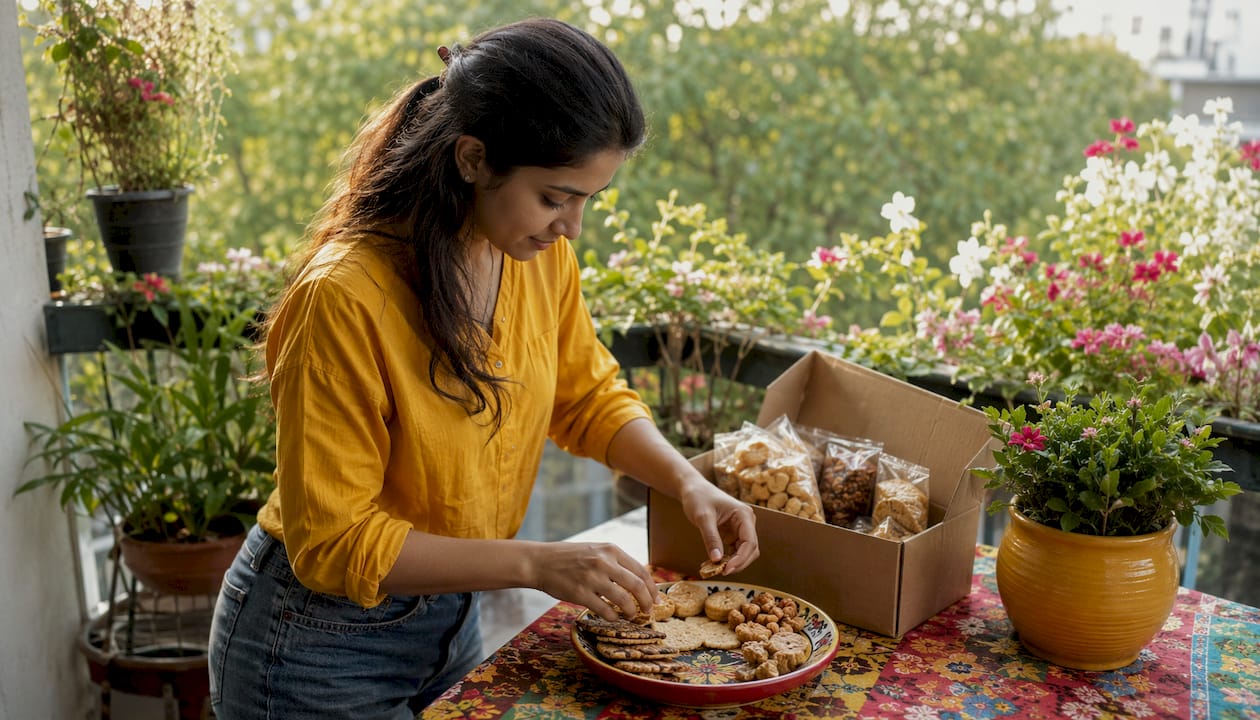
Why direct-to-consumer Indian snacks are better for you
Buying Indian snacks directly from the brand means fresher products, cleaner ingredients, and a lot more honesty about what’s actually in the bag. No retail middlemen, no mystery additives, no watered-down recipes. The direct-to-consumer model puts real, home-style Indian snacks straight into your hands, made the way they were meant to be.
Here’s what you get with D2C Indian snacks that traditional retail simply can’t match:
Fresher products because short supply chains mean less time sitting in warehouses
Authentic, nutrient-dense ingredients like millets, nuts, and seeds that mass-market brands routinely skip
Full ingredient transparency so you know exactly what you’re eating
Subscription options that bring variety and convenience right to your door
Clean-label formulas free from artificial additives, refined sugar, and palm oil
The Indian healthy snacks market is experiencing significant growth as a rising number of consumers seek clean-label products. That’s not a niche trend. That’s a shift.
1. Millets and whole grains deliver real nutritional power
Traditional Indian snacks built around millets, nuts, and seeds offer something most grocery-store snacks don’t: actual nutrition. Millets are gluten-free, fiber-rich, and have a low glycemic index, meaning they support steady energy without the sugar crash that follows a bag of chips.
Health-conscious parents are increasingly choosing snacks that remove refined sugar, palm oil, and maida flour in favor of ingredients like makhana, nut butters, and whole grains. These aren’t just trendy swaps. They’re ingredients with documented benefits for digestion, immunity, and sustained energy.
Millets (jowar, ragi, foxtail): fiber-rich, gluten-free, low glycemic index
Nuts and seeds: protein, healthy fats, magnesium, and zinc
Makhana (fox nuts): low fat, low glycemic index, high protein relative to calories
Chickpeas and lentils: folate, iron, fiber, and vitamin B
Millets are moving from specialty health aisles into mainstream snacking, showing up in everything from ragi crisps to foxtail-millet nachos. D2C brands were ahead of this curve by years.
Pro Tip: Look for snacks that list a whole grain or nut as the first ingredient. If refined flour or sugar leads the list, the “healthy” label is mostly marketing.
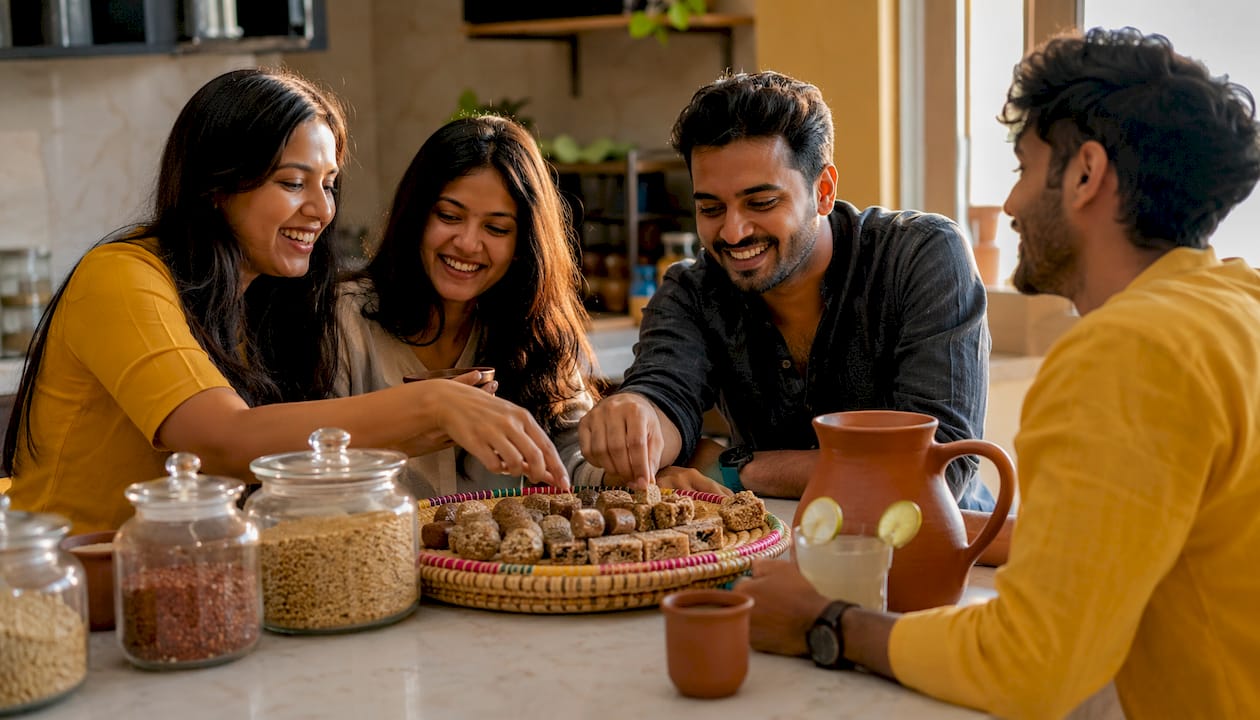
2. How the D2C model makes Indian snacks better quality
Cutting out retail intermediaries does more than reduce costs. It changes what a brand can actually put in the bag. Without shelf-life pressure from distributors and retailers, D2C brands can use fresher, less-processed ingredients and skip the preservatives that keep conventional snacks shelf-stable for months.
Consumers consistently cite premium quality, superior convenience, and a broader product range as the core reasons they choose D2C food brands over traditional stores. That direct relationship also means brands hear feedback fast and adjust recipes accordingly, something a brand selling through a national retail chain simply cannot do at the same speed.
No retail markup pressure means more budget goes into ingredient quality
Direct feedback loops let brands refine flavors and formulas quickly
Subscription boxes let you build a custom snack selection beyond what any local store carries
Transparent labeling is standard, not optional, because the brand owns the customer relationship
Support for small producers: many D2C Indian snack brands source from artisan makers and small-scale producers, keeping traditional recipes alive
53% of regular D2C food customers participate in at least one subscription program. For snack lovers, that means consistent access to a rotating variety of authentic options without hunting through grocery aisles. You can also explore cooking subscription boxes as a way to discover new Indian flavors alongside your snack routine.
3. What’s driving demand for healthy Indian snacks in the US right now
Health consciousness is reshaping how Americans snack, and Indian flavors are right at the center of that shift. Families, especially parents, are reading labels more carefully and choosing snacks that do something useful nutritionally. The clean-label movement has real momentum: 71% of D2C food buyers regularly check ingredient lists before purchasing, and 59% will pay more for products free from artificial additives.
Quick commerce and social media have accelerated discovery. Snacks that once required a trip to a specialty Indian grocery store are now a few taps away, and impulse purchases on delivery apps have introduced makhana, murukku, and millet puffs to buyers who’d never encountered them before.
Rising label literacy: buyers check for hidden sugar, palm oil, and maida before buying
Quick-commerce growth: 10-minute delivery turned premium Indian snacks into impulse buys
Sustainability preferences: consumers favor brands using minimal, responsible packaging
67% of consumers trust D2C brands more than traditional food companies on ingredient quality and sourcing
For anyone looking for healthy alternatives to junk food that actually taste good, authentic Indian snacks built on whole grains and spices are a genuinely satisfying answer. The flavor is bold. The ingredient list is short. That combination is hard to find in a conventional snack aisle.
4. Why Desimunchiess stands out for authentic, healthy Indian snacks
Desimunchiess was built around one idea: snacks that taste like they came from someone’s kitchen, not a factory. Every product uses traditional recipes and high-quality natural ingredients, made with the kind of care that mass-produced snacks skip entirely. No artificial additives. No refined sugar. Just bold, home-style flavor in every bite.
The brand’s direct-to-consumer approach means you get snacks that are freshly made and shipped straight to you, with full transparency about what’s inside. Desimunchiess offers a wide variety of snacks built on clean-label principles, from millet-based bites to nut-forward treats, all free from the shortcuts that conventional brands rely on.
Authentic recipes rooted in traditional Indian homemade methods
Clean-label ingredients: no refined sugar, no artificial additives
Wide variety of health-conscious snacks beyond what local stores carry
Direct-to-consumer freshness: shorter supply chain, better taste
Brand transparency through detailed blog content and honest ingredient labeling
Desimunchiess aligns directly with the 2026 health trends driving demand for snacks with natural ingredients and supports the kind of small-batch, artisan production that keeps Indian snack culture genuine. If you want to see how D2C Indian snacks compare to mass-market options, the 2026 brand comparison guide breaks it down clearly.
Freshly made Indian snacks, delivered straight to you
Desimunchiess gives you something most snack brands won’t: real, homemade-style Indian snacks with zero compromise on ingredients. No palm oil, no refined sugar, no fillers. Just the bold, comforting flavors you love, made fresh and shipped directly to your door.
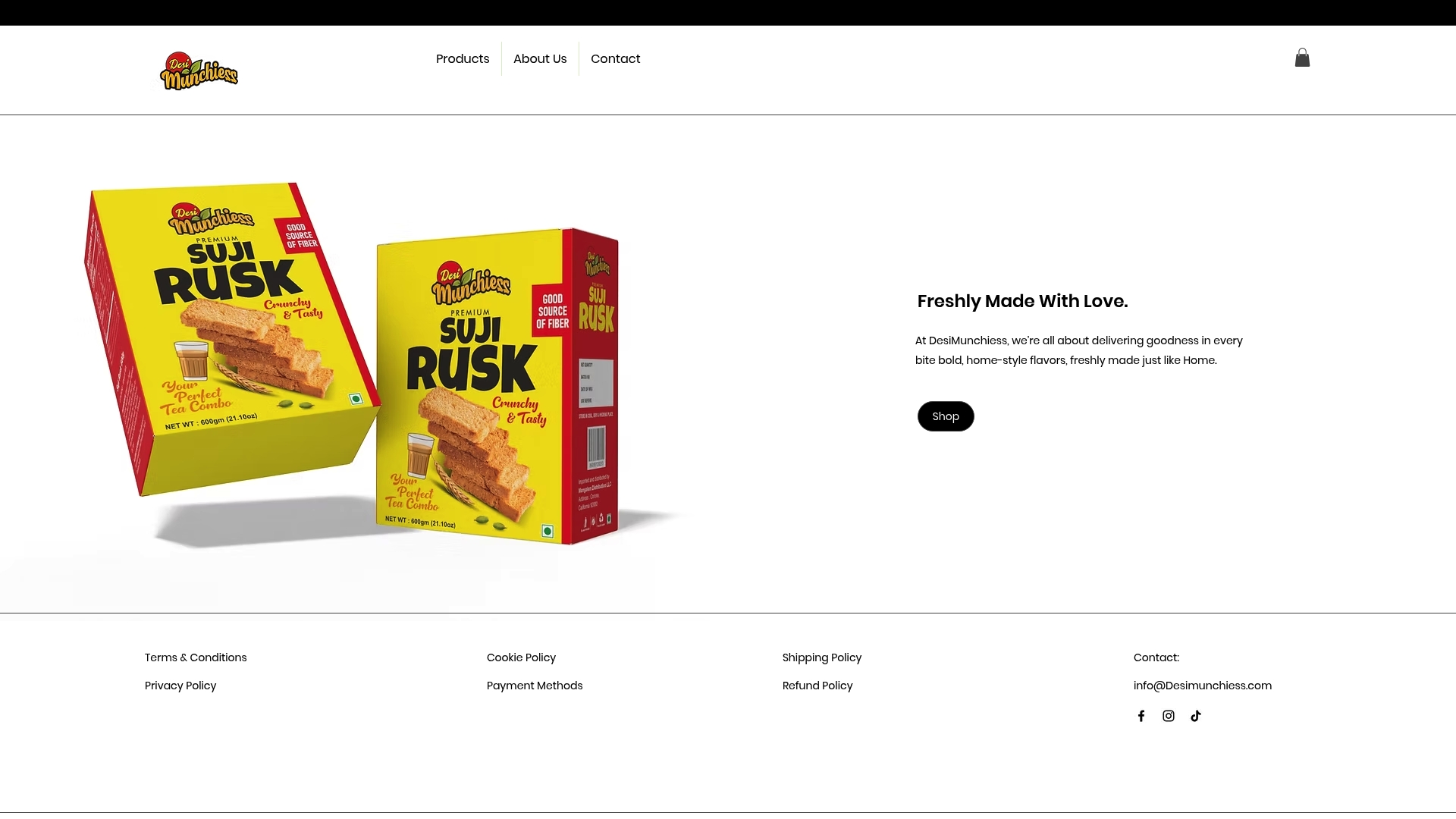
We make it easy to snack well. Browse our full range of authentic Indian snacks, from millet-based bites to tangy tamarind treats, and find your new favorite. Try our Tamarind Candy for a taste of what clean-label Indian snacking really means. Ready to snack smarter? Shop Desimunchiess today at desimunchiess.com.
Key Takeaways
Direct-to-consumer Indian snacks deliver fresher, cleaner, and more nutritious options than mass-market alternatives, backed by a market projected to reach USD 6.12 billion by 2030.
Point | Details |
Market growth is real | The Indian healthy snacks market is expected to grow considerably through 2030. |
Clean-label demand is high | 73% of consumers seek clean-label products and are willing to pay a premium to avoid artificial additives. |
D2C builds consumer trust | 67% of consumers trust D2C brands more than traditional food companies on ingredient quality and sourcing. |
Subscriptions add convenience | 53% of regular D2C food customers participate in at least one subscription program for consistent access and variety. |
Desimunchiess delivers authentically | Desimunchiess offers freshly made, additive-free Indian snacks using traditional recipes shipped directly to your door. |
Recommended
Comments