
How to Host an Indian Snack Tasting Party

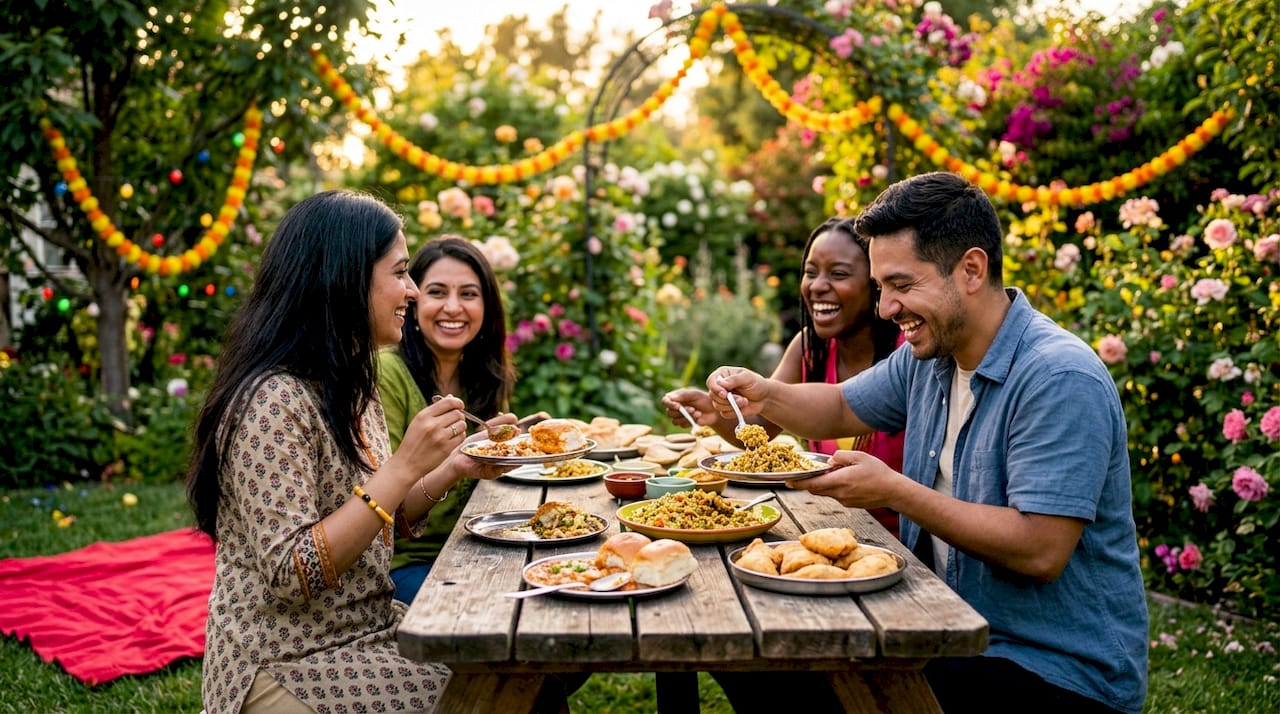
An Indian snack tasting party is a casual, bite-sized food experience built around bold flavors, shared plates, and genuine connection. You curate a spread of small portions, guests graze freely, and the food does the talking. To host an Indian snack tasting party well, you need three things: a balanced menu, a smart prep timeline, and a presentation that feels warm and inviting. The Rule of Three menu strategy gives you a proven framework. Desimunchiess makes sourcing authentic, freshly made snacks easy, so you spend less time worrying and more time with your guests.
How to host an Indian snack tasting party with a balanced menu
The best Indian snack tasting menus follow the Rule of Three: one creamy dish, one hearty or dry dish, and one legume-based dish. This combination covers texture, protein, and flavor contrast all at once. Guests get variety without feeling like they are eating the same thing twice.
Creamy options
Creamy snacks anchor the spread and cool the palate between spicier bites. Dahi puri, samosa chaat with yogurt, and paneer tikka with mint chutney all fit this category. They are crowd favorites and work well for guests who are new to Indian flavors.
Hearty and dry options
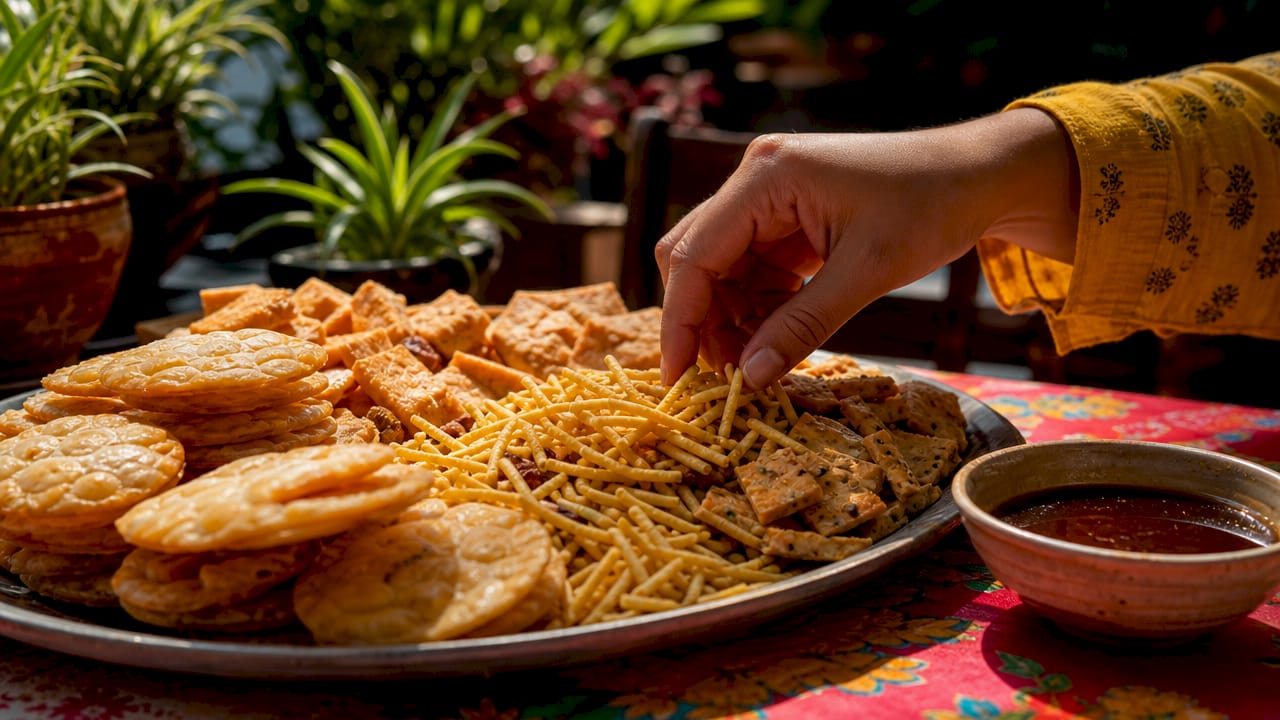
Dry snacks add crunch and substance. Tikoni mathi, chakli, and baked mathri hold up well at room temperature and do not require last-minute prep. They also travel well if you are sourcing from a brand like Desimunchiess rather than making everything from scratch. Check out these festival-exclusive Indian snacks for ideas that go beyond the basics.
Legume-based options
Legume-based snacks like chana masala cups, dal vada, and sprouted moong chaat add protein and heartiness. They satisfy guests who want something filling without a full meal. These also work well as vegetarian anchors for mixed groups.
Quantity planning matters. Plan for 4–6 bites per guest for a two-hour event. For a longer gathering of three or more hours where snacks serve as the main meal, aim for 10–12 bites per person. That range keeps guests satisfied without waste.
A DIY chaat bar costs roughly $1.20–$2.40 USD per head, depending on toppings variety. That makes it one of the most budget-friendly interactive catering formats you can set up at home.
Pro Tip: Offer at least one non-vegetarian option like chicken tikka skewers or keema puffs. Even a single meat dish signals thoughtfulness to guests who eat meat.
Menu category | Example snacks | Best for |
Creamy | Dahi puri, paneer tikka, samosa chaat | Palate balance, new guests |
Hearty and dry | Tikoni mathi, chakli, mathri | Room-temp serving, crunch |
Legume-based | Dal vada, chana cups, moong chaat | Protein, vegetarian guests |
What is the best prep timeline for an Indian snack party?
A standard prep timeline starts two hours before guests arrive with chopping and marinating, moves to cooking starches 90 minutes out, and reserves the final 30 minutes for plating and setting the atmosphere. Following this sequence keeps you calm and present when guests walk in. Rushing the last hour is the most common mistake hosts make.
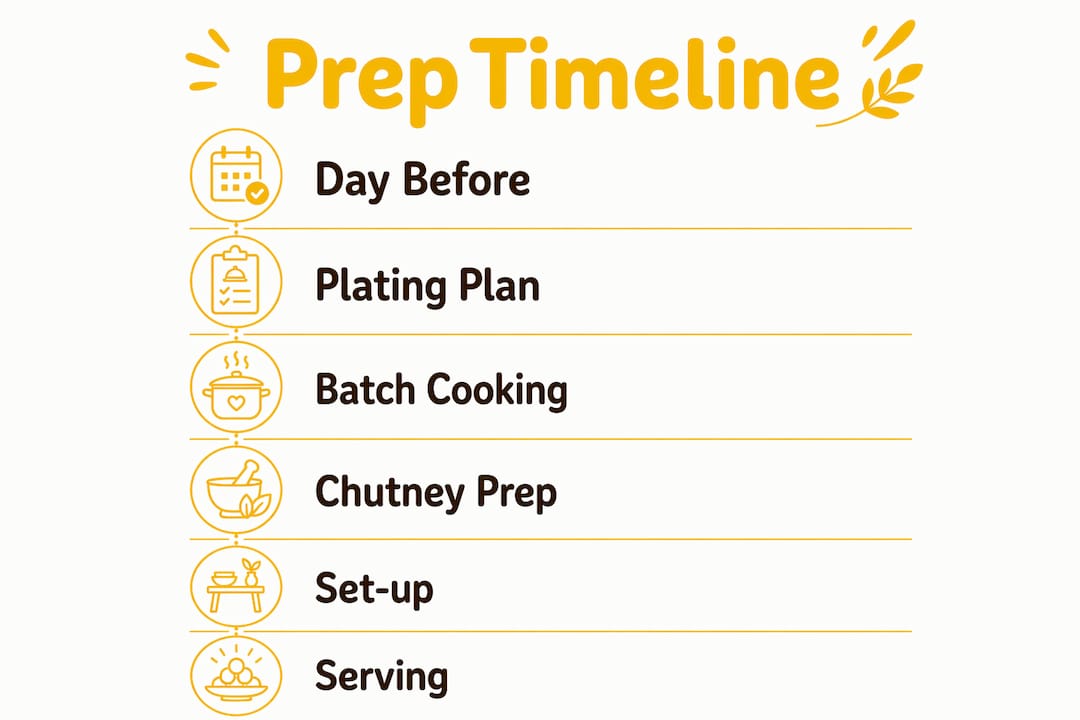
Here is a practical timeline that works for most home setups:
Night before: Marinate proteins, soak legumes, and freeze any snacks that fry better from cold. A make-ahead strategy that includes overnight marinating preserves flavor and frees up your morning completely.
Two hours before: Chop garnishes, prep chutneys, and portion dry snacks into serving bowls. Label each bowl with the snack name and spice level.
90 minutes before: Cook rice-based or starch-based items. Steam idlis or cook pav if you are serving pav bhaji bites.
One hour before: Set up your chaat bar station. Arrange toppings, sauces, and crisps in separate labeled bowls.
30 minutes before: Do your first fry round for samosas, pakoras, or vadas. Use insulated containers to hold them warm.
During the party: Fry a second batch midway through the event. Frying in two rounds keeps snacks fresh and crispy rather than sitting under a heat lamp.
Pro Tip: Prep a printed or handwritten plating plan the night before. Sketch which snack goes in which bowl or tray. On party day, you follow the map instead of making decisions under pressure.
Batch cooking is your best friend for Indian snack parties. Make double the chutney you think you need. Guests always use more than expected, and running out of mint chutney mid-party is a real mood dampener.
How do you create an authentic atmosphere for an Indian tasting event?
Atmosphere is not decoration. It is the sensory context that makes food taste better. Indian music and traditional incense build anticipation and stimulate appetite before guests even reach the table. Start a playlist of classic Bollywood instrumentals or regional folk music 20 minutes before guests arrive. Light a sandalwood or rose incense stick near the entrance.
Here is what makes the biggest difference in presentation:
Build-your-own chaat bar: Set out labeled bowls of sev, tamarind chutney, chopped onions, cilantro, and yogurt. Guests assemble their own plates, which creates conversation and interaction.
Bite-sized and utensil-free snacks: Food that guests can pick up and eat in one or two bites keeps the party social. No one wants to balance a plate and a fork while standing.
Spice-level labels: Label every dish as mild, medium, or spicy and place a small palate cleanser like cucumber raita or mango lassi nearby. This removes anxiety for guests unfamiliar with Indian heat levels.
Color and height: Use small bowls, wooden boards, and tiered trays to vary height on the table. Indian snacks are naturally colorful. Let the food be the visual centerpiece.
Pro Tip: Place a small card next to each snack with its name and region of origin. Guests love learning that chakli comes from Maharashtra or that dal vada is a South Indian classic. It turns eating into a mini cultural experience.
Drinks complete the atmosphere. Serve jaljeera, aam panna, or a simple rose milk alongside sparkling water. These traditional beverages complement spicy snacks far better than soda.
What are the most common challenges when hosting an Indian snack party?
Soggy chaat is the number one complaint at Indian snack parties. Serve chaat components separately and let guests assemble their own plates right before eating. Pre-assembled chaat turns soft within minutes. The crispy sev and puri shells are the whole point.
Other common challenges and how to handle them:
Spice inclusivity: Not every guest tolerates heat. Always include at least two mild options. Paneer tikka with minimal spice and plain mathri work for sensitive palates.
Keeping food warm: Use small cast-iron skillets or electric warming trays for fried snacks. Avoid covering them with foil, which traps steam and softens the crust.
Last-minute guest changes: Plan for 10–15% more guests than your confirmed count. Indian snack parties are casual, and people often bring a friend. Dry snacks like mathri and chakli scale easily without extra cooking.
Menu overwhelm: Stick to five or six snacks total. More variety sounds appealing but creates decision fatigue for guests and prep stress for you.
“The goal of a snack tasting party is not to impress with quantity. It is to delight with quality and create moments where guests pause mid-bite and say, ‘What is this?’ That pause is the whole point.”
Explore heritage Indian snack recipes to find dishes with that kind of stopping power. The less familiar the snack, the more memorable the party.
Key Takeaways
A successful Indian snack tasting party depends on a balanced menu, a staged prep timeline, and a presentation that makes guests feel at home from the moment they walk in.
Point | Details |
Use the Rule of Three | Build your menu around one creamy, one dry, and one legume-based snack for balance. |
Plan quantities carefully | Aim for 4–6 bites per guest for two-hour events and 10–12 bites for longer gatherings. |
Prep in stages | Marinate the night before, cook starches 90 minutes out, and fry in two rounds during the party. |
Label spice levels | Mark every dish as mild, medium, or spicy and offer a palate cleanser like cucumber raita. |
Serve chaat components separately | Assemble chaat at the last minute to keep textures crisp and guests happy. |
Why the best Indian snack parties feel effortless
I have hosted more Indian snack tasting events than I can count, and the ones guests remember most were never the most elaborate. They were the ones where I was actually present, laughing and refilling plates instead of sweating in the kitchen.
The biggest shift I made was treating dry snacks as the backbone of the spread rather than an afterthought. A well-chosen mathri or chakli holds the table together while you fry the second batch of samosas. Guests graze, conversations flow, and no one notices the gap.
I also stopped trying to represent all of India in one party. Pick a region or a theme. One year I did a full Mumbai street food tasting: vada pav bites, pav bhaji cups, and bhel puri stations. The focus made the party feel intentional rather than scattered. Guests asked better questions, and the food told a clearer story.
The cultural atmosphere piece is underrated. Music and scent do more work than any centerpiece. I have seen guests walk in, smell the incense and hear the music, and immediately relax. The food has not even hit the table yet. That sensory welcome sets the tone for everything that follows.
If you are hosting for the first time, resist the urge to cook everything from scratch. Source two or three high-quality ready-made snacks from a brand you trust, and focus your cooking energy on one or two showstopper items. Your guests will not know the difference. They will just know the food was good.
— Shivam
Desimunchiess makes hosting an Indian snack party easy
Hosting a great Indian snack tasting party starts with great snacks. Desimunchiess offers freshly made, bold-flavored Indian snacks crafted from traditional recipes and high-quality ingredients. Every bite tastes like it came from a home kitchen, not a factory floor.
Short on prep time? Stock your spread with authentic Indian snacks from Desimunchiess and spend your energy on presentation and atmosphere instead. The Tikoni Mathi 350g is a party-ready crowd pleaser with real crunch and traditional flavor. It fits perfectly in the hearty and dry category of your Rule of Three menu. Browse the full range, pick your favorites, and let Desimunchiess handle the snack sourcing while you focus on the fun.
FAQ
How many snacks should I serve at an Indian tasting party?
Plan for 4–6 bites per guest for a two-hour event and 10–12 bites per person for longer gatherings where snacks serve as the main meal.
What are the best Indian appetizers for a party?
Dahi puri, samosa chaat, dal vada, paneer tikka, and dry snacks like mathri and chakli cover all flavor and texture categories. Aim for a mix of creamy, crunchy, and legume-based options.
How do I keep Indian snacks crispy during a party?
Serve chaat components separately and fry snacks in two rounds during the event rather than all at once. Use insulated containers and avoid covering fried items with foil.
How do I handle guests with different spice tolerances?
Label every dish as mild, medium, or spicy and offer a palate cleanser like cucumber raita or mango lassi. Always include at least two mild options so every guest has something comfortable to eat.
What drinks work best with Indian snack platters?
Traditional beverages like jaljeera, aam panna, and rose milk complement spicy Indian snacks better than soda. Sparkling water with a squeeze of lime also works well as a neutral palate reset.
Recommended
Comments