
6 Truly Safe Nut Free Indian Snacks for Severe Allergies

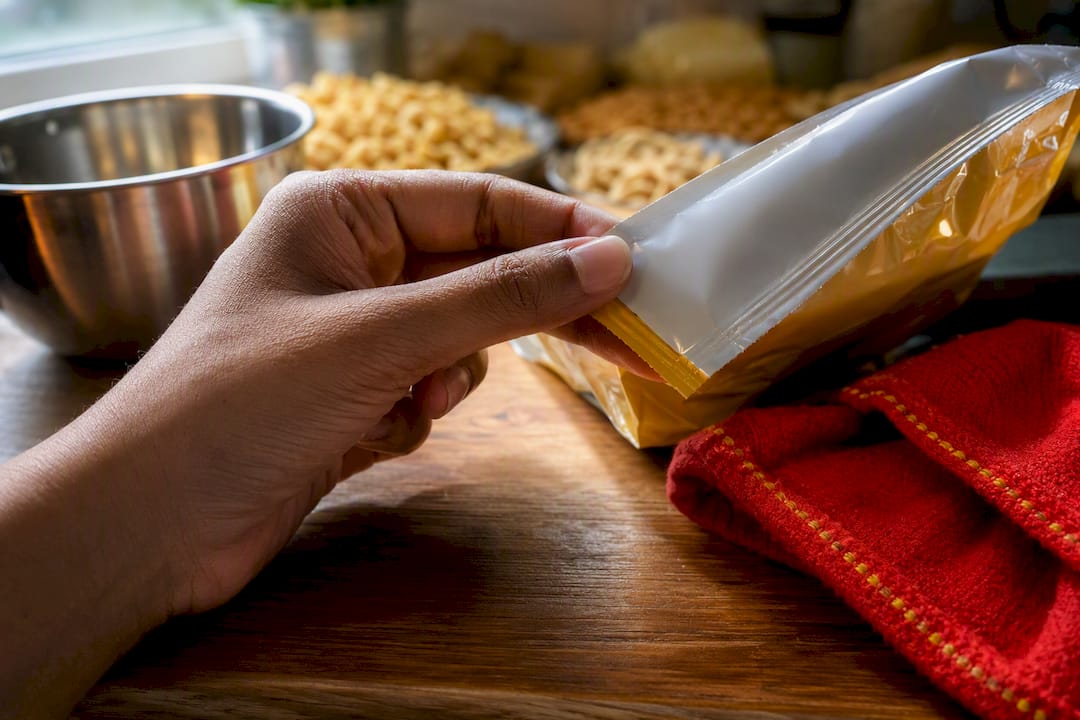
Yes, you can enjoy authentic nut-free Indian snacks without giving up flavor or tradition. The safest bets are sev, roasted chana, baked mathri, plain gulab jamun, and coconut burfi, since none of these need nuts to taste right. For anyone with a severe allergy, though, we always point you toward products made in a dedicated nut-free facility, or toward making the snack yourself at home.
TL;DR:
Nut-free Indian snacks like sev, roasted chana, and coconut burfi are safe options when made with nut-free ingredients and proper labeling.
Reading labels thoroughly for explicit nut-free facility claims, allergen disclosures, and oil sources is essential to avoid cross-contact risks.
Homemade snacks allow full control over ingredients, reducing the chance of nut contamination, especially when using dedicated tools and specific oils.
Packaged snacks can still pose risks if fried in shared oil or produced on shared equipment, making manufacturer confirmation critical for severe allergies.
Serving nut-free Indian snacks at events requires clear labeling and individual portions to prevent cross-contamination among guests.
Table of Contents
What Are Nut-Free Indian Snacks You Can Actually Trust?
Indian snacking has always leaned on gram flour, wheat, chickpeas, and coconut more than tree nuts or peanuts. That’s good news if you’re managing an allergy, but it doesn’t mean every item on the shelf is automatically safe. The ingredient base matters, and so does what touches the food after it’s cooked.
Here’s a quick rundown of snacks that are commonly nut-free by nature, along with what to double-check before you buy:
Sev and bhujia: Made from gram (chickpea) flour and fried in oil. Confirm the oil isn’t peanut oil and that no nut flour was blended in for texture.
Papdi and papri: Simple wheat-flour crackers, typically baked or fried plain. Watch for flavored versions that add nut-based garnishes.
Roasted chana: Just chickpeas, roasted or salted. Skip any masala mix that lists cashew or peanut in the seasoning blend.
Banana chips: Usually plantain fried in coconut or vegetable oil. Some brands fry in peanut oil for flavor, so read the fine print.
Plain gulab jamun: Milk-solid dough fried and soaked in sugar syrup, with no nuts required. Beware of versions garnished with pistachio or almond slivers.
Coconut burfi: Coconut, sugar, and milk. It stays nut-free as long as the recipe skips cashew paste, a common thickener in fancier versions.
None of these are guaranteed safe just because the base recipe is nut-free. A gluten-free bhujia product, for instance, still needs its own allergen statement checked, since gluten-free and nut-free are two separate promises. If you want a broader sense of how savory snack categories differ in ingredients and risk, our breakdown of namkeen versus other savory snacks is a good next stop.
How Do You Check Labels for Safe Packaged Indian Snacks?
Reading a label carefully and completely helps protect you from a bad reaction. Here’s the order to check things in:
Look for an explicit nut-free facility claim. Language like “made in a dedicated nut-free facility” carries more weight than a plain ingredient list, since it speaks to the production line itself, not just the recipe.
Scan the allergen statement for peanut, tree nut, and sesame. FALCPA requires major allergens to be clearly disclosed, but it doesn’t force companies to flag shared-equipment risk, so this step alone isn’t enough for severe allergies.
Check the oil source specifically. Peanut oil shows up often in traditional frying because of its high smoke point, so don’t assume “vegetable oil” on the front label tells the whole story.
If the label leaves you unsure, call or email the company directly. Ask three things: whether nut products run on the same production line, whether fryers are dedicated to nut-free items, and where the frying oil is sourced from. A company that answers clearly and quickly is usually one worth trusting.
Pro Tip: Save the manufacturer’s email response. If a reaction ever happens, that written confirmation is useful for tracking down exactly where things went wrong.
Can You Make Guaranteed Nut-Free Snacks at Home?
Homemade is the only way to get full control over every ingredient that touches your food, and several Indian classics come together fast in a home kitchen.
Besan sev: Press seasoned gram-flour dough through a sev press directly into hot oil. Ten minutes, no nuts anywhere near it.
Baked mathri: Swap the traditional deep-fry for a 350°F oven bake using whole wheat flour, ajwain, and a neutral oil.
Roasted spiced chana: Toss cooked chickpeas with oil, chili powder, and salt, then roast until crisp.
Coconut-only burfi: Simmer shredded coconut with condensed milk and cardamom. No cashew paste, no shortcuts.
Gulab jamun: Stick to a milk-powder based dough and skip any pistachio garnish at the end.
For oil, sunflower, rice bran, and plain vegetable oil all handle Indian frying temperatures well without carrying peanut protein. Recipe developers who focus on plant-based Indian cooking often build entire recipe cards around these exact swaps, which is a solid place to pull inspiration from. This smoke point guide also explains why some oils hold up better than others under high heat, which matters if you’re frying mathri or sev at home.
Pro Tip: Keep one cutting board, one frying pan, and one set of utensils reserved only for nut-free cooking if anyone in your house also eats nut-containing food. Cross-contact happens on tools just as easily as in factories.
Wash pans and presses with soap and hot water between uses, and store finished snacks in labeled, sealed containers. For full step-by-step versions of these recipes, our guide on traditional Indian snack making techniques walks through frying, roasting, and baking methods side by side.
When Is a Packaged Snack Still Not Safe to Eat?
Shared equipment is the real danger, not the recipe on the ingredient list. A factory that fries mathri and peanut-coated snacks in the same fryer can leave allergenic protein behind even after cleaning, because oil residue and microscopic particles don’t always rinse out completely.
Peanut oil makes this worse. Many traditional producers use it for its flavor and high smoke point, which means an otherwise nut-free sev or papdi can pick up allergen exposure purely from the frying medium. Dry-mixed, sealed snacks packaged in separate facilities carry noticeably lower risk than anything fried in shared oil.
Community reports on allergy forums repeatedly note that a “nut-free” label doesn’t guarantee the product ran on a nut-free line. Real assurance, several posters agree, comes only from direct manufacturer confirmation or from making the snack yourself.
As a rule of thumb: if a manufacturer can’t confirm dedicated fryers, separate production lines, and a non-peanut oil source, treat that item as unverified for anyone with a severe allergy. Choose homemade or a confirmed dedicated-facility product instead.
How Do You Serve Nut-Free Indian Snacks at Events Safely?
Group settings raise the stakes, since one shared bowl can expose several guests at once. A little labeling and planning goes a long way.
Label every dish clearly, noting the main allergens present and marking anything nut-free in writing, not just verbally.
Serve in individual, sealed portions rather than a shared bowl where scoops or hands can cross-contaminate.
Ask guests directly about allergies ahead of time, and keep a backup batch of roasted chana or plain papdi on hand for anyone with restrictions.
Small changes like these keep the celebration focused on the food, not on worry.
Our Take on Making Snacks Safer Without Losing the Flavor
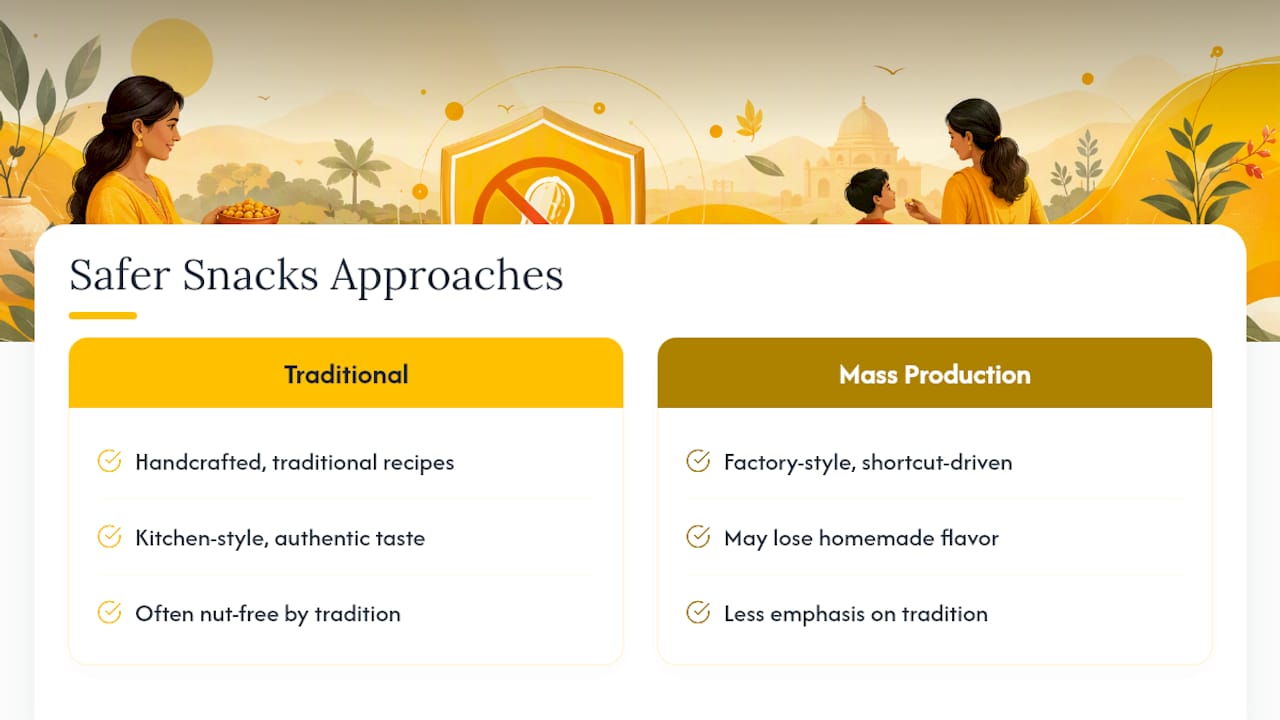
Homemade-style snacks should taste like they came from someone’s kitchen, not a factory line. That means we lean on traditional recipes and handcrafted methods rather than mass production shortcuts, because that’s where the real flavor of Indian snacking lives.
Allergy safety and authentic taste aren’t opposites. The snacks that skip nuts by tradition, sev, roasted chana, coconut burfi, do not need a substitute ingredient to taste right. We think that’s the real lesson here: the safest snack is often also the most traditional one, not a compromise version.
— Shivam
Why Order Nut-Aware Snacks From Desimunchiess
Some brands make homemade-style Indian snacks in small batches, using traditional recipes without the shortcuts a mass-production line takes. This approach means fewer unknown ingredients between you and your snack, and the ability to ask questions before ordering.
Browse the full snack catalog to see what’s currently available, from savory bites to traditional sweets. If you want to see a specific example, the Tikoni Mathi is one of our most popular savory picks. Before you check out, always read the product-specific ingredient and allergen statement on the page you’re ordering from, since formulations can vary by batch and season. If a product page doesn’t answer your question, reach out directly and ask before adding it to your cart.
Primary Sources and Further Reading
This article is general information, not a substitute for advice from a qualified doctor. Consult a qualified healthcare professional about your own circumstances before acting on anything here.
Sources
FAQ
What Are Some Indian Foods That Don’t Contain Nuts?
Sev, roasted chana, papdi, plain gulab jamun, and coconut burfi are all traditionally made without nuts, since their base ingredients are gram flour, chickpeas, wheat, or coconut.
What Indian Sweets Are Nut Free?
Plain gulab jamun and coconut-only burfi are typically nut-free, as long as the recipe skips cashew paste or a pistachio garnish, which some versions add for decoration.
Is Indian Food Safe for Nut Allergies?
Many Indian snacks are naturally nut-free by recipe, but packaged versions can carry cross-contact risk from shared fryers or peanut oil, so checking labels and asking manufacturers directly matters for severe allergies.
What Snacks Are Completely Nut-Free?
No snack is guaranteed nut-free just from its ingredient list. Products labeled as made in a dedicated nut-free facility or made at home with verified ingredients offer the strongest assurance, and brands like Desimunchiess that use traditional, handcrafted recipes are worth checking product by product.
Recommended
Comments