
The Role of Snacks in Children Nutrition Explained

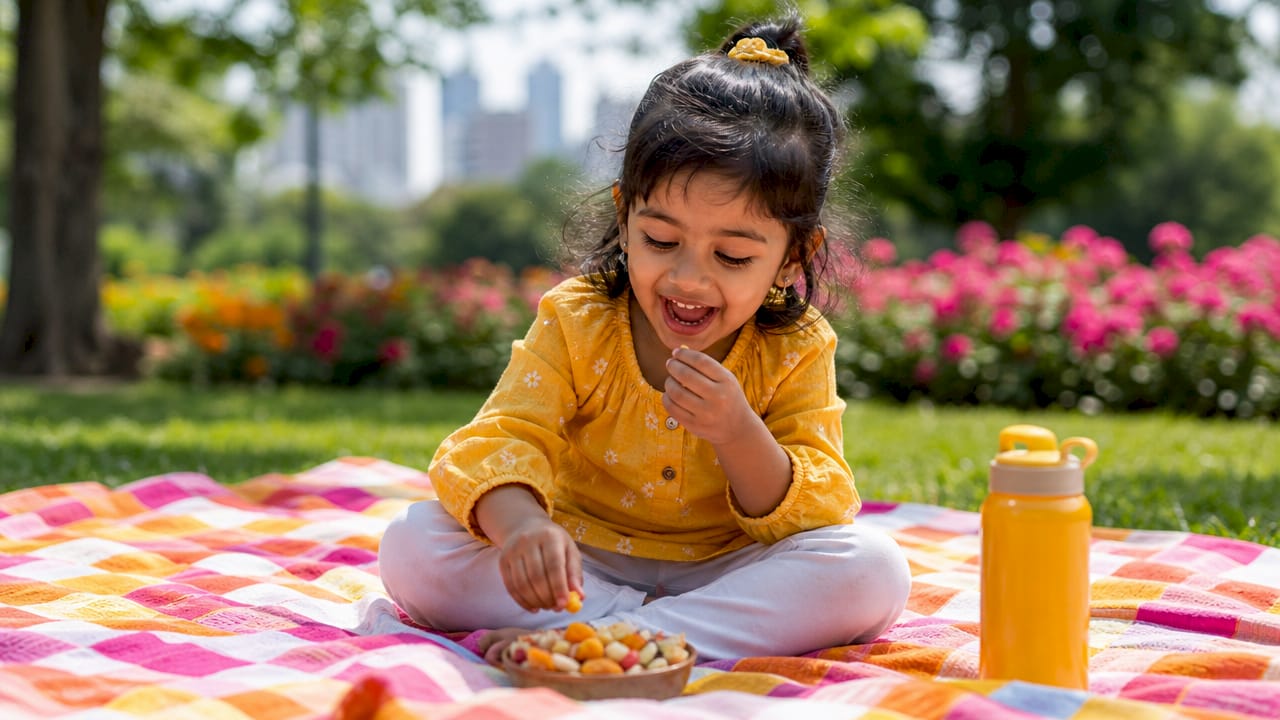
Snacks are defined as eating occasions between main meals that supply a meaningful share of children’s daily calories and nutrients. The role of snacks in children nutrition goes far beyond satisfying hunger. Most kids eat 5–8 times per day, and that frequency reflects a biological reality: young children have small stomachs that cannot hold enough food at three sittings alone. Growth demands a steady supply of energy, protein, calcium, iron, and healthy fats. When snacks are chosen well and timed right, they fill those gaps without crowding out meals.
How do snacks contribute to children’s growth and development?
Snacks supply a significant portion of the calories and nutrients children need each day. Children aged 1.5 to 5 years get nearly 33% of their daily energy from snacks. That share is not a sign of poor eating habits. It reflects how small, growing bodies actually work.
Pediatric nutrition experts use the term “between-meal eating occasions” to describe structured snacking, distinguishing it from unplanned grazing. The distinction matters because structured snacks deliver targeted nutrients, while grazing tends to deliver empty calories. The nutrients children most commonly fall short on include iron, calcium, vitamin D, and dietary fiber. Snack time is a practical window to address each one.
Key nutrients that well-chosen snacks can provide:
Iron: Whole grain crackers, fortified cereals, and legume-based dips like hummus
Calcium: Cheese cubes, plain yogurt, and milk-based smoothies
Fiber: Fresh fruit, raw vegetables, and whole grain options
Healthy fats: Nut butters, avocado slices, and seeds
Protein: Hard-boiled eggs, cottage cheese, and edamame
Ultra-processed snacks high in added sugars and unhealthy fats negatively affect digestion and immunity. That means the quality of what fills those snack occasions shapes long-term health, not just daily energy levels. Choosing snacks with real nutritional value is one of the most direct ways parents can support their child’s growth.
What are the best practices for timing and frequency of children’s snacks?
Snack timing shapes appetite just as much as snack content does. Unregulated snacking is linked to empty calorie consumption and a higher risk of dental caries and obesity. The fix is structure, not restriction.
Nutrition experts recommend the following schedule for most children:
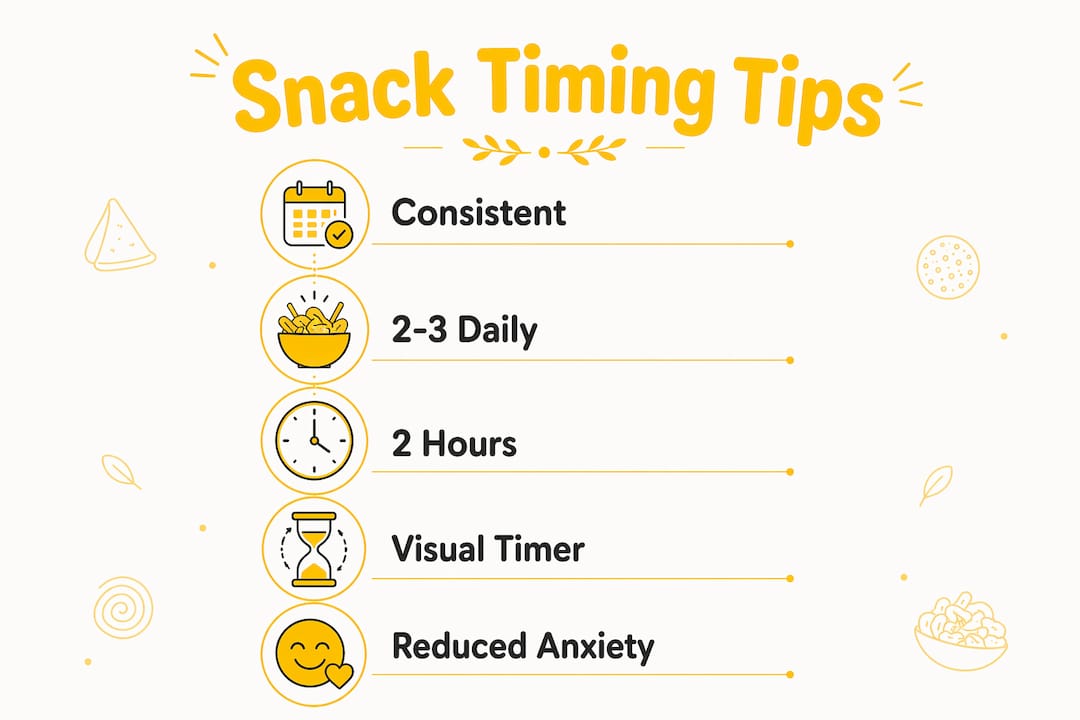
Offer snacks about 2 hours after a meal. This gap gives the stomach time to empty and rebuilds genuine hunger before the next eating occasion.
Limit snacks to 2–3 per day. More frequent eating occasions reduce appetite at mealtimes and make it harder for children to read their own hunger signals.
Serve snacks at the table. Eating at a consistent spot, without screens, helps children pay attention to how much they are eating and when they feel full.
Keep portions predictable. A small plate or bowl signals a defined amount. Open bags or containers make it easy to eat past fullness without noticing.
Avoid snacks within 1 hour of a meal. A snack too close to dinner suppresses appetite and turns mealtime into a battle.
A predictable snack rhythm also reduces anxiety around food. Building a consistent snack routine reduces anxiety and prevents snack obsession, improving overall feeding success. Children who know when the next snack is coming are less likely to beg for food constantly or fixate on treats.
Pro Tip: Set a visual timer for younger children so they can see when snack time is coming. This reduces constant asking and helps them build patience around hunger.
How to identify and choose healthy snacks for children
Not every snack labeled “healthy” or “natural” actually delivers good nutrition. Parents often mistakenly trust front-package claims. The nutrition facts panel tells the real story, and the “Added Sugars” line is the most important number to check.
Many snacks marketed to children contain added sugar levels comparable to candy. A fruit-flavored pouch, a granola bar, or a flavored rice cake can each carry 8–12 grams of added sugar per serving. That adds up fast against the American Heart Association’s guidance that children under 2 should have no added sugar, and older children should have very little.
What to look for on the label:
Added Sugars: Aim for 0–3 grams per serving for everyday snacks
Fiber: At least 2 grams per serving signals a more filling, nutritious choice
Ingredient list length: Shorter lists with recognizable ingredients are a reliable quality signal
Serving size: Check whether the listed serving matches what your child actually eats
Snack type | What makes it a good choice |
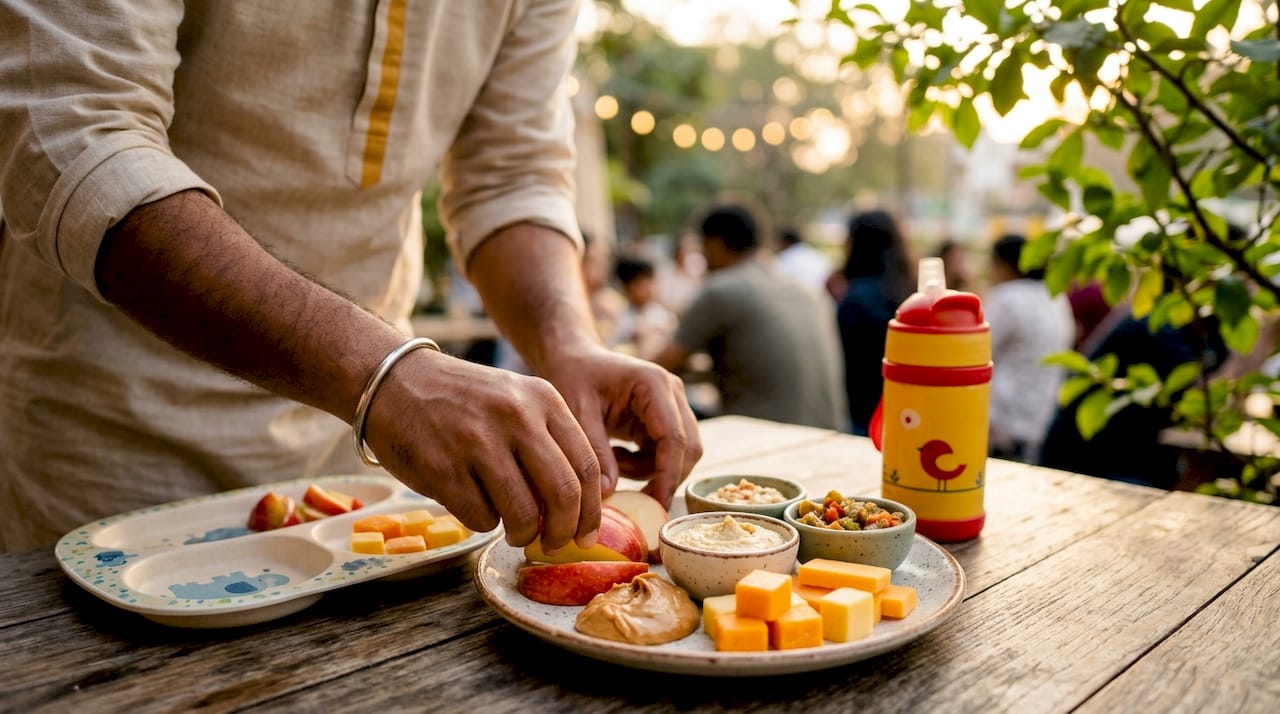
Apple slices with nut butter | Fiber plus healthy fat and protein stabilize blood sugar |
Plain yogurt with berries | Calcium, protein, and natural sugars without additives |
Whole grain crackers with cheese | Complex carbs paired with protein for sustained energy |
Roasted chickpeas | High fiber, plant protein, and satisfying crunch |
Hard-boiled egg with fruit | Complete protein paired with natural carbohydrates |
The most effective snacks combine fiber-rich carbohydrates with protein or healthy fats to stabilize blood sugar and maintain energy. That pairing principle is the simplest rule parents can apply when building a snack.
Pro Tip: Prep a “snack station” in the fridge each Sunday. Fill it with pre-portioned fruits, cheeses, and dips so healthy choices are always the easiest option on busy weekdays.
Learning to read labels is also a skill worth teaching children as they get older. When kids understand why certain foods make them feel good and others leave them tired, they start making better choices on their own. You can find more guidance on preservative-free snack options that align with these principles.
How to encourage positive snacking habits in picky eaters
Picky eating is normal, and snack time is one of the best opportunities to gently expand a child’s food range. The key is patience and repetition, not pressure. Children may require up to 20 exposures to a new food before they willingly accept it. That number surprises most parents, but it reframes rejection as a step in the process rather than a failure.
Practical strategies that work:
Pair new foods with familiar favorites. Serve a new vegetable alongside a dip your child already loves. The familiar element lowers resistance.
Use sensory play before eating. Let children touch, smell, and describe a new food before they taste it. Engagement without pressure builds curiosity.
Avoid food rewards. Forcing bites or using food as a reward disrupts natural hunger and fullness cues, which harms long-term eating habits.
Give limited choices. Offer two options rather than an open question. “Do you want apple slices or cucumber sticks?” gives autonomy within a healthy boundary.
Keep the environment calm. Snack time should feel low-stakes. Pressure, commentary, or visible frustration from parents increases food anxiety in children.
Structure also reduces the “snack obsession” many parents describe. When children know snacks happen at set times, they stop treating every moment as a potential food opportunity. That predictability is especially helpful for children who are anxious about food or who use snacking as a comfort behavior. You can read more about why homemade snacks tend to be safer and more familiar for children who are working through food acceptance.
Key Takeaways
Snacks are not extras in children’s diets. They are a structured, necessary part of daily nutrition that supports growth, fills nutrient gaps, and builds healthy eating habits when managed with intention.
Point | Details |
Snacks fill real nutrient gaps | Children aged 1.5–5 get nearly 33% of daily energy from snacks, making quality choices critical. |
Timing prevents appetite disruption | Offer snacks 2 hours after meals and limit to 2–3 per day to protect mealtime hunger. |
Labels reveal hidden sugars | Check the “Added Sugars” line on nutrition facts panels, not front-package health claims. |
Pair nutrients for lasting energy | Combine fiber-rich carbs with protein or healthy fats to stabilize blood sugar between meals. |
Repetition beats pressure for picky eaters | Children may need up to 20 exposures to a new food before accepting it, so stay patient and consistent. |
What I’ve learned about snacking after years of watching kids eat
Most parenting advice about snacks swings between two extremes: total restriction or total freedom. Neither works. What I’ve found, both personally and through watching families navigate feeding, is that the middle path is the only one that sticks.
The shift that changed everything for me was stopping the search for the “perfect” snack and focusing on the pattern instead. A child who eats a cookie at snack time on Tuesday is not on a bad path. A child who eats only cookies every day because snack time has no structure is. The overall rhythm matters far more than any single choice.
Setting clear snack boundaries also reduced mealtime struggles more than any specific food swap I tried. When my kids knew snacks happened at 10 a.m. and 3 p.m., they stopped asking constantly and arrived at meals actually hungry. That one change made dinner feel less like a negotiation and more like a meal.
My honest advice to parents: stop grading every snack. Focus on whether your child is eating a variety of foods across the day, whether they seem energized, and whether mealtimes feel reasonably calm. If those three things are mostly true, you are doing well. Perfection is not the goal. A good enough pattern, repeated consistently, builds healthy eaters over time.
— Shivam
Snacks your kids will actually love from Desimunchiess
At Desimunchiess, we believe good snacking starts with real ingredients and bold flavors that feel like home. We make freshly prepared, traditional snacks using handcrafted methods and no unnecessary preservatives, so every bite delivers genuine taste without the additives you find in mass-produced options.
Our Tamarind Candy is a great example: a classic, lower-processed treat made from a traditional recipe that kids love and parents feel good about. We keep added sugars low and ingredients simple, because that is how home cooking has always worked. Browse our full range at Desimunchiess and find snacks that fit your family’s routine without the guesswork of reading through long ingredient lists.
FAQ
What is the role of snacks in children’s nutrition?
Snacks supply 20–30% of children’s daily calories and fill nutrient gaps that three meals alone cannot cover. They are a structured part of healthy eating, not an optional extra.
How many snacks should a child eat per day?
Most children do well with 2–3 snacks daily, spaced about 2 hours after meals. More frequent eating suppresses appetite at mealtimes and can lead to empty calorie consumption.
What makes a snack healthy for kids?
A healthy snack combines fiber-rich carbohydrates with protein or healthy fats. Check the “Added Sugars” line on the nutrition label and aim for 0–3 grams per serving for everyday snacks.
Are sugar-sweetened drinks a concern at snack time?
Yes. High intake of sugar-sweetened beverages in children aged 1–5 contributes to dental caries and obesity risk. Water or plain milk is the better choice at snack time.
How do I get a picky eater to try new snack foods?
Offer new foods alongside familiar favorites and repeat exposure without pressure. Children may need up to 20 encounters with a new food before they accept it, so consistency matters more than variety in any single sitting.
Recommended
Comments