
Survive a 12 Hour Trip: Travel Friendly Indian Snacks for U.S. Trips

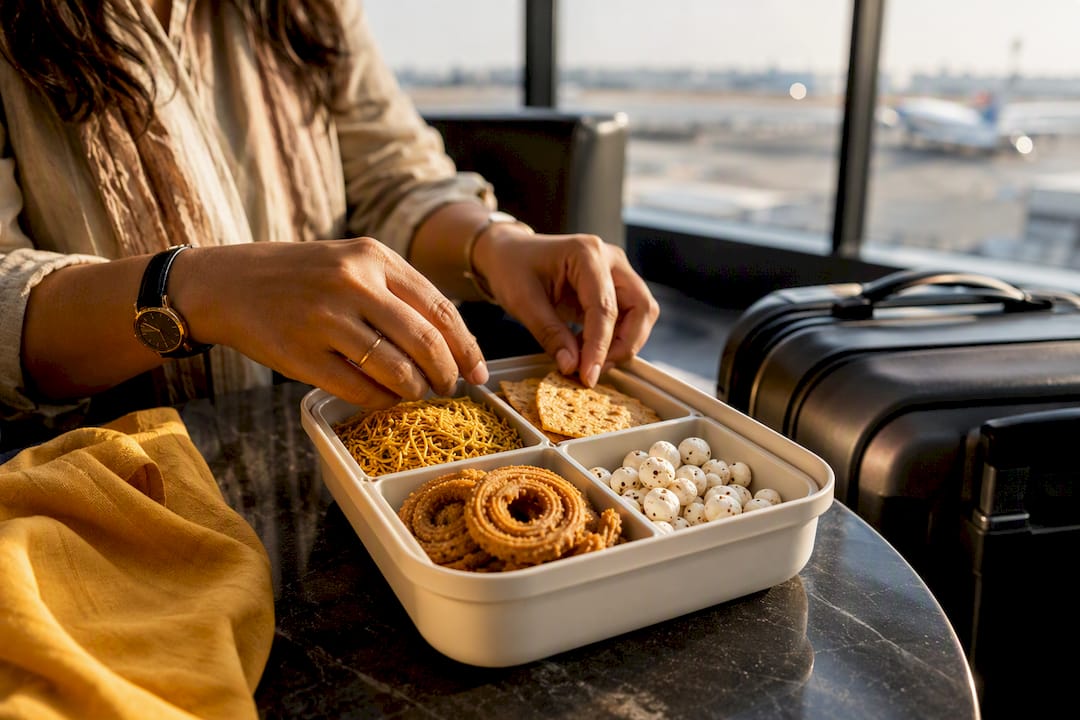
Dry namkeen and chivda, khakhra, roasted makhana, roasted nuts and chana, chakli, mathri, and banana chips travel best because they’re light, need no fridge, and shrug off a bumpy road trip or a delayed flight. The one packing rule that matters more than any other: seal it airtight, then cushion it. Do that, and your snacks show up at the destination the same way they left your kitchen.
TL;DR:
Airtight sealing and cushioning are crucial to prevent snacks from becoming soggy or crushed during travel.
Store-bought vacuum-packed options like khakhra and rice chivda offer longer shelf life and better durability than homemade varieties.
Fragile snacks such as chakli and mathri should be packed in rigid containers to survive long hours of travel intact.
Roasted makhana, nuts, and chana are lightweight, protein-rich, and maintain freshness over several weeks, making them ideal for long trips.
Fragrant, fried, or ghee-based sweets and snacks should be consumed within a few days, especially in warm weather, due to spoilage risks.
Table of Contents
What Makes Travel-Friendly Indian Snacks Actually Work
We grew up watching our moms pack steel tins of sev and mathri before every train ride, and there’s a reason that habit never died. Traditional dry Indian snacks like sev, chakli, mathri, and chivda are lightweight, need no refrigeration, and hold up over long hours on the road or the rails when you store them right, which is exactly why they show up in travel snack guides again and again. Here’s a rundown of the categories worth packing, plus what to expect from each one once it’s zipped into your bag.
Sev and namkeen mixtures are the easiest starting point. They’re already dry, already salty, and already built to sit in a jar for weeks. The catch is oil residue. Cheaper sev can leave a light film on your fingers and the inside of a bag, so a double layer of packaging (a small container inside a larger zip bag) keeps that mess contained.
Chakli and murukku are crunchy spirals of rice and lentil flour, and mathri is a flaky, savory cracker. Both are travel favorites, but both are fragile. A loose chakli at the bottom of a backpack becomes chakli crumbs by hour three. Pack these in a rigid container, not a soft pouch, and they’ll survive a full day of travel intact.
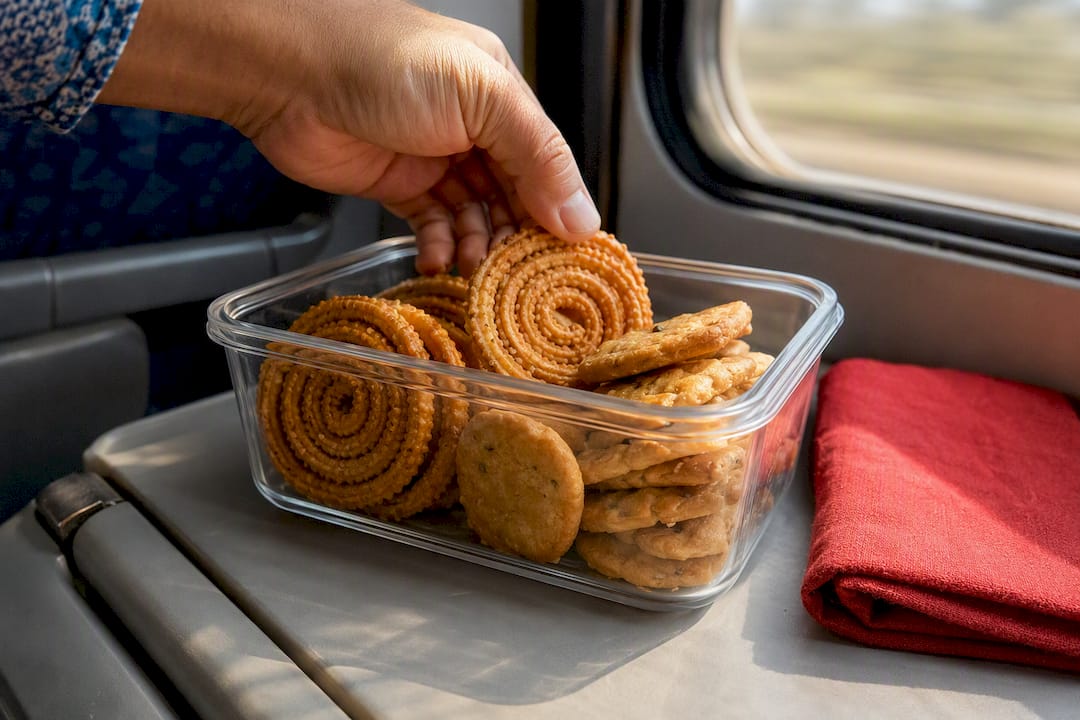
Khakhra and thepla chips are where store-bought options really shine. Khakhra is a thin, roasted wheat flatbread that’s naturally low in oil and dries out to a near-cracker texture, which makes it one of the most forgiving snacks in this whole list. Vacuum-packed khakhra, like the retail packs from Amul, are sealed for shelf stability and sold specifically as ready-to-eat travel food. If you’re not making your own, this is the category to buy rather than DIY.
Poha chivda and rajgira chivda are light, flattened rice or amaranth mixes tossed with peanuts, curry leaves, and light spice. They’re lower in oil than fried namkeen and pack down small, which matters when your carry-on is already tight. Rajgira (amaranth) chivda is also naturally gluten-free, a detail worth knowing if you’re packing for someone with a wheat sensitivity.
Roasted makhana, or fox nuts, deserve their own callout. They’re one of the most recommended snacks for travelers who want something healthy and lightweight, and for good reason: they’re airy, low in oil when roasted rather than fried, and carry a decent hit of protein for their weight. They also make almost no mess, which is more than you can say for most fried snacks.
Roasted nuts, masala nuts, and roasted chana are the high-energy staples of this list. They’re calorie-dense, protein-heavy, and don’t spoil for weeks in a sealed bag. The only real downside is weight if you’re packing a lot, and the obvious allergy risk if anyone in your travel group has a nut allergy.
Banana and plantain chips are crunchy, sweet-savory, and hold up well in heat, but they’re fried, so they’re heavier on oil than most of the other options here. Dry sweets like barfi and ladoo are a mixed bag for travel: they taste great and pack a good energy punch, but ladoo made with more ghee can turn greasy in warm weather, while drier barfi varieties travel more cleanly.
Here’s how the main categories stack up at a glance:
Snack type | Shelf-stable window | Mess risk | Buy or make |
Sev / namkeen | Several weeks sealed | Medium (oil residue) | Either |
Chakli / mathri | Several weeks sealed | Low if boxed, high if loose | Homemade for flavor control |
Khakhra | Weeks (vacuum-packed) | Very low | Store-bought recommended |
Chivda (poha/rajgira) | 1 to 2 weeks | Low | Either |
Roasted makhana | Several weeks | Very low | Either |
Roasted nuts/chana | Weeks to months | Very low | Either |
Banana chips | Several weeks | Low | Store-bought |
Barfi/ladoo | Days to a week | Medium (can soften/melt) | Homemade, eat soon |
If you’re curious how namkeen stacks up against other savory snack styles in more detail, this comparison of namkeen and other savory snacks breaks down texture and shelf life further.
How to Pack Snacks So They Survive the Trip
Getting travel-friendly Indian snacks to your destination in good shape has less to do with what you pack than how you pack it. Follow this order and you’ll skip the soggy-bag, crushed-chakli disaster that ruins half the joy of snacking on the road.
Choose rigid over soft. Small airtight tins or hard plastic containers beat flimsy zip bags for anything fragile, like chakli, mathri, or banana chips. An airtight storage container built for kitchen use works just as well in a suitcase.
Vacuum-seal what you can. Retail vacuum packs, like sealed khakhra, hold their crunch far longer than anything left in loose packaging.
Cushion the container. Wrap it in a soft t-shirt or tuck it between rolled clothes instead of letting it bounce against hard suitcase walls.
Split by bag type. Pack anything crumbly or heavy in checked luggage, and keep small, sealed snack bags in your carry-on for easy access during security lines and layovers. Original retail packaging also helps at customs and security checks, since sealed, labeled bags draw less scrutiny than loose homemade items.
Mind the climate. Heat and humidity are the real enemies here. A snack that lasts three weeks in a cool pantry might lose its crunch in two days inside a hot car trunk.
Shelf life really comes down to hours versus days. Dry roasted snacks like makhana and roasted chana tend to maintain freshness well over typical travel durations. Fried items with more oil, and anything sweet with dairy or ghee, are far more sensitive to heat and should be eaten within a day or two if you’re traveling somewhere warm.
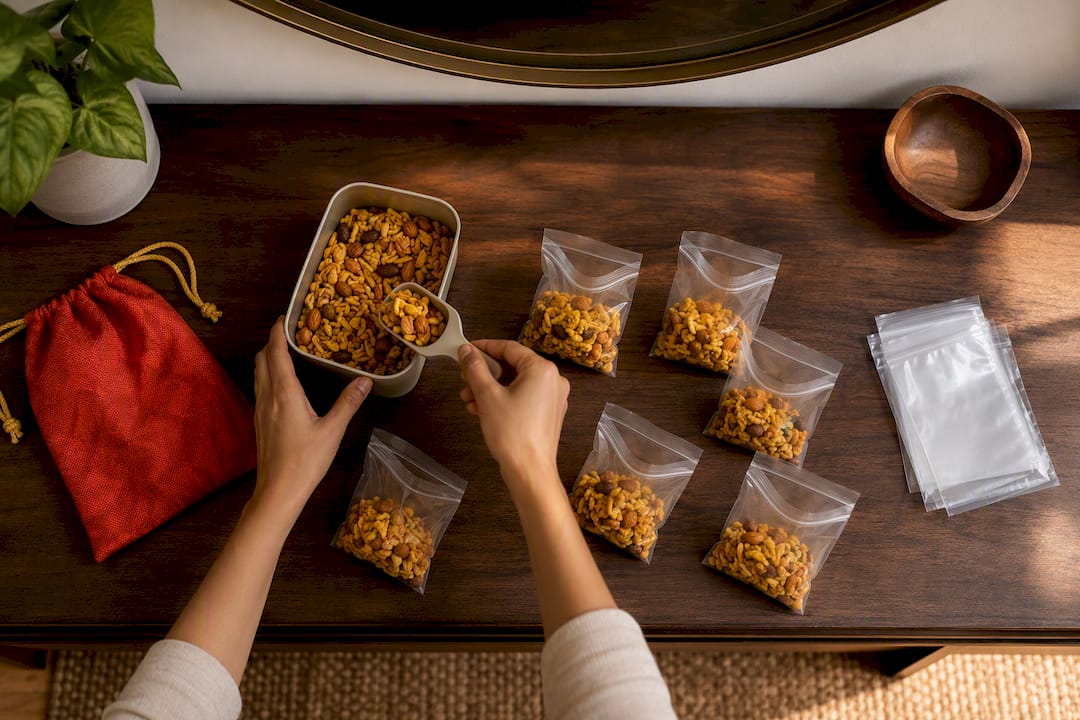
Pro Tip: Portion your snacks into single-serve resealable bags before you leave home. It stops one open bag from going stale for everyone, and it keeps crumbs from taking over your entire backpack.
Choosing Travel Snacks for Protein, Low Oil, and Allergies
Not every dry Indian snack is created equal when you’re thinking about nutrition on the road. Some options genuinely fuel a long drive or a delayed flight better than others.
Protein-forward picks: roasted chana, roasted makhana, and spiced roasted nuts all deliver protein without needing a cooler, which makes them smart choices for a long haul where you won’t get a real meal for hours.
Lower-oil swaps: baked sev and khakhra beat their deep-fried cousins on oil content, and khakhra in particular holds its texture well even after baking rather than frying. Baked Indian snacks are worth seeking out specifically if oil is a concern for your trip.
Gluten-free options: rajgira chivda, roasted makhana, and plain roasted nuts are naturally gluten-free, making them easy swaps if someone in your group avoids wheat.
Allergen checklist: always read the label before packing for a group. Peanuts, cashews, and sesame seeds show up in a surprising number of namkeen mixes, so pack a separate nut-free tin if anyone has a nut allergy, and double-check chikki and some chivda blends for hidden sesame.
Portion planning: a rough guide is a small handful (about a quarter cup) per two to three hours of travel. It’s enough to curb hunger without turning a road trip into a nonstop grazing session.
Quick Recipes and What to Buy Instead
If you’d rather make your own travel stash, three recipes cover most cravings without demanding a full day in the kitchen.
Roasted makhana: dry roast fox nuts in a pan with a touch of ghee, a pinch of salt, and any spice you like (black pepper or chaat masala work well). Cool completely before sealing. Stored airtight, it holds its crunch for a couple of weeks.
Poha chivda: roast flattened rice with peanuts, curry leaves, turmeric, and a light hand with oil. Because it’s roasted rather than deep-fried, it stays lighter and travels cleaner than most namkeen. Good for about ten days to two weeks sealed.
Baked chakli-style bites: if you want the flavor of chakli without the fragility, press the dough into small flat rounds and bake instead of fry. They’re sturdier for packing and lower in oil, though they won’t have quite the same snap as the fried original.
Converting a family fried recipe into a travel-safe version comes down to two moves: cut the oil and extend the roasting or drying time so the final product is drier and crisper. Vacuum-pack it as soon as it’s fully cooled, since sealing warm snacks traps moisture and speeds up staleness. Traditional snack-making techniques explain a few more ways to adjust classic frying methods for a longer shelf life.
If cooking from scratch isn’t in the cards, buying is a perfectly good call. Look for vacuum-packed khakhra, sealed masala nuts, and ready-to-eat rice or meal packets, including freeze-dried options that just need hot water. A balanced travel kit mixes small crunchy snacks with at least one meal-style packet, so you’re covered whether you need a quick nibble or something closer to a real meal on a long haul flight.
Homemade wins on flavor and lets you control exactly how much oil and salt goes in. Store-bought wins on convenience and shelf life, especially with vacuum sealing doing the heavy lifting. Most travelers end up packing a mix of both, and that’s honestly the smartest approach.
Why Handcrafted Snacks Still Beat the Bagged Stuff
We think a lot about what makes a snack worth packing for a twelve-hour drive, and it usually comes down to two things: does it taste like someone’s kitchen, and will it still be good by hour eight. Mass-produced snacks are built for shelf life first and flavor second. Handcrafted, homemade-style snacks flip that order, using traditional recipes and real ingredients so freshness and taste don’t get lost along the way. Hygiene matters just as much on a long trip, which is why batch-made, carefully sealed snacks tend to hold up better than anything left loose in a bag. If you want a starting point for cleaner, homemade-style snacking, these clean-ingredient recipes are a solid place to look.
— Shivam
Skip the Prep and Order Travel-Ready Snacks Instead
Making your own chivda or roasting a batch of makhana is satisfying, but it eats up a weekend you might not have before a trip. Some snack providers offer products handcrafted in small batches using traditional recipes, delivering homemade taste without the hours of frying, roasting, and cleanup.
That matters for travel specifically because the same qualities that make a snack good at home, real ingredients, minimal oil where it counts, no shortcuts, are what keep it tasting fresh days after it leaves the kitchen. Whether you’re stocking up for a road trip or just want a tin of something bold-flavored waiting at home when you land, you can shop the full snack lineup at Desimunchiess and have it packed and ready before your next trip.
Sources
Recommended
Comments