
What Does a Bulk Indian Snack Order Mean?

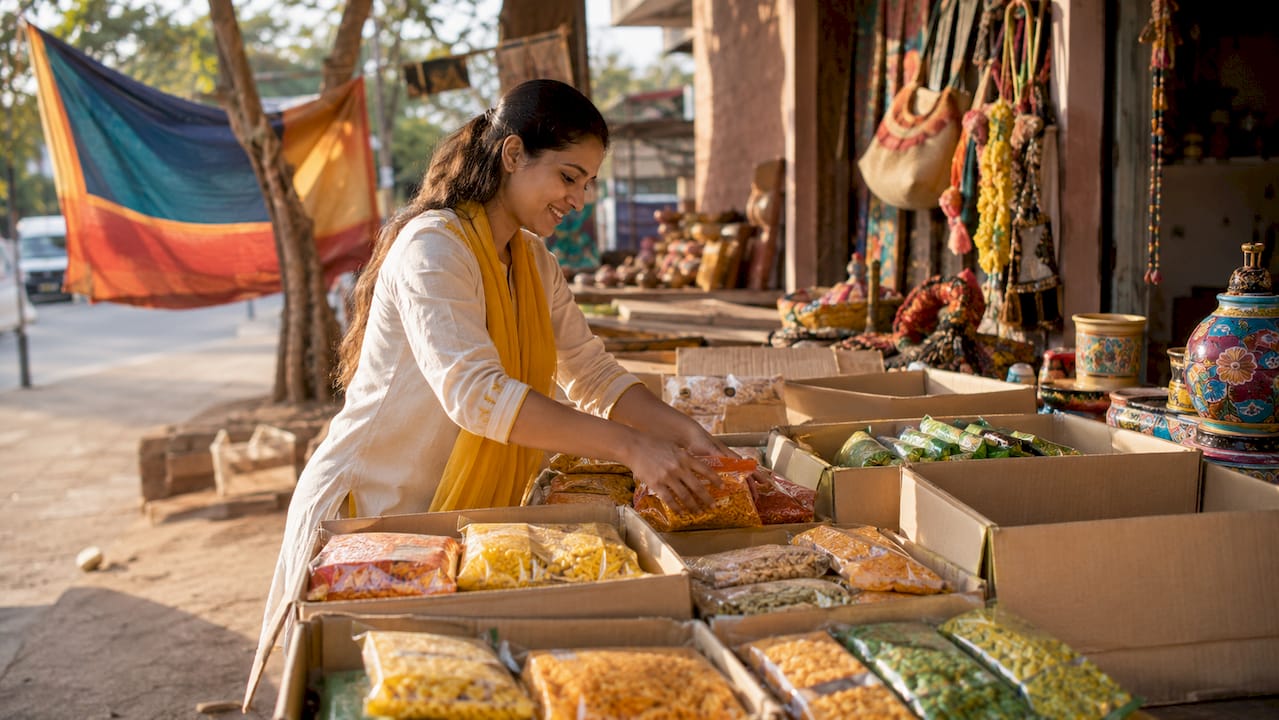
A bulk Indian snack order is defined as a large-quantity purchase of packaged Indian snacks, typically structured as a wholesale or B2B transaction that includes volume discounts, specialized packaging, and logistical requirements that differ from standard retail buying. This type of purchase covers products like namkeen, chips, and variety packs, and it applies to retailers, foodservice providers, and event buyers who need reliable supply and consistent quality. Understanding what does bulk Indian snack order mean goes beyond counting units. It includes packaging durability, shelf life, food safety compliance, and pricing structures that only kick in at certain quantity thresholds. Whether you are stocking a store, planning a wedding, or buying for a corporate event, knowing the full picture helps you order smarter.
What does a bulk indian snack order mean in practice?
A bulk Indian snack order is not just a big bag of chips. The industry term is wholesale snack procurement, and it describes purchases that meet a supplier’s minimum order quantity (MOQ) while qualifying for tiered pricing, custom packaging, and dedicated logistics support.
Bulk snack packages typically come in three formats:
Multi-SKU variety packs: Several different snack types bundled together, popular for events and gifting
Multi-unit snack packs: Multiple units of the same product, sized from 200g to 1kg+ per container
Single sachets in bulk cartons: Individual serving-size packets packed in large master cartons for redistribution
These formats serve different buyers. A caterer needs multi-unit packs for consistent portioning. A retailer prefers variety packs to offer customers choice. An individual buyer stocking up for a family reunion might want a mix of both.
MOQ thresholds typically fall between 50–500 units for low-MOQ suppliers and 1,000+ units for true bulk orders. Ordering below MOQ usually results in higher per-unit costs and can make the deal unprofitable for the supplier. That threshold is where the meaning of bulk snack order becomes concrete. Below it, you are just buying retail in larger quantities. Above it, you unlock the pricing, packaging, and service benefits that define genuine bulk procurement.
Pro Tip: Ask any supplier upfront whether their listed price applies at MOQ or only at higher volumes. Some suppliers advertise bulk pricing but only deliver it at 500+ units.
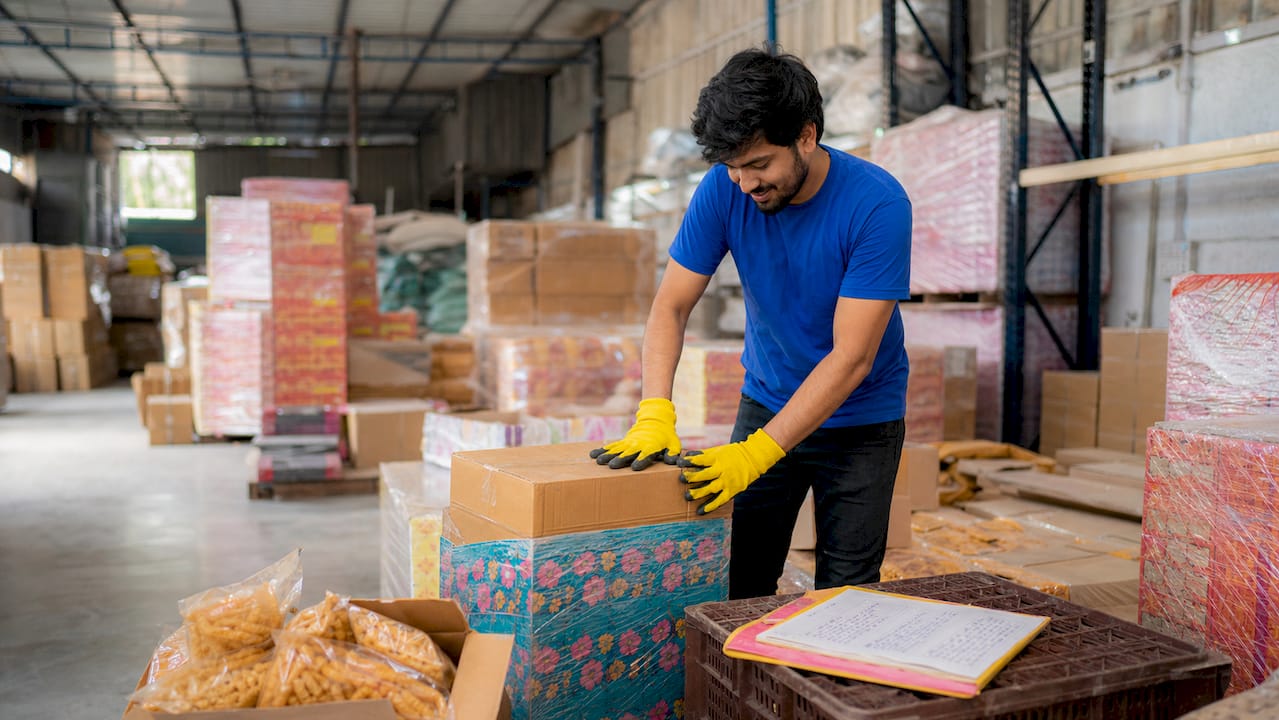
Packaging durability matters more in bulk orders than in retail. Snacks traveling through a supply chain face more handling, temperature changes, and transit time. Bulk packaging uses thicker materials, sealed inner bags, and moisture barriers to protect shelf life, which for most Indian snacks ranges from 3 to 12 months depending on the product and preservative use.
How do pricing and cost savings work?
Volume discounts are the primary financial benefit of Indian snack bulk purchasing. Buying more units lowers the per-unit cost because fixed production, packaging, and logistics expenses get spread across a larger order.
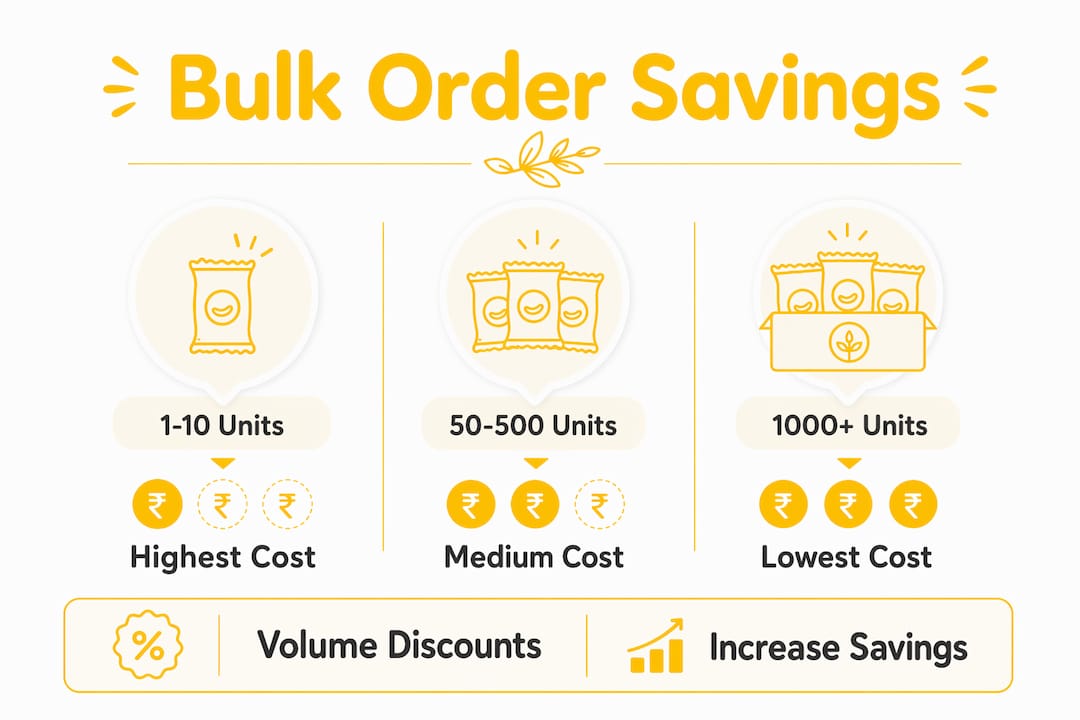
Here is a simplified comparison of how pricing typically shifts across order sizes:
Order Type | Typical Units | Per-Unit Cost | Notes |
Retail pack | 1–10 units | Highest | No discount, standard packaging |
Low MOQ order | 50–500 units | Moderate savings | Basic bulk pricing, limited customization |
True bulk order | 1,000+ units | Lowest per unit | Full volume discount, custom packaging available |
The table shows the pattern clearly. Per-unit cost drops as volume rises. But total cost of ownership tells a different story. Storage space, cash tied up in inventory, and the risk of spoilage all increase with order size. A buyer who saves 30% per unit but wastes 20% of the order to expired product has not actually saved money.
Demand forecasting is the tool that keeps bulk orders profitable. Before committing to 1,000 units of any snack, estimate how quickly you will move that inventory. Restaurants and retailers with steady weekly sales can absorb large orders easily. Individual buyers or one-time event planners should calculate their actual consumption need and order closer to that number, even if it means a slightly higher per-unit price.
Pro Tip: Request a price break schedule from your supplier before placing an order. Most suppliers have 2–3 pricing tiers. Knowing the exact unit thresholds for each tier lets you decide whether the savings justify the larger commitment.
Customized packaging adds cost but also adds value. Branded bags, custom labels, and gift-ready packaging are popular for weddings and corporate events. Bulk namkeen orders for events regularly include custom packaging as part of the order, and suppliers typically build that cost into the per-unit price at higher volumes. The net result is still cheaper than buying retail and adding custom packaging separately.
Who places bulk indian snack orders and why?
Bulk Indian snack orders come from a wide range of buyers. Understanding who they are helps you figure out where your own needs fit.
Wedding and event planners order namkeen, chakli, and variety packs in bulk to serve as welcome snacks, favor bags, or buffet items. Consistent quality and branded packaging matter most to this group.
Corporate event organizers buy bulk snack assortments for office parties, client gifting, and conference catering. They prioritize reliable delivery timelines and professional packaging.
Retailers and grocery stores place regular bulk orders to stock shelves. They focus on MOQ pricing, product turnover rates, and supplier reliability.
Restaurants and catering companies buy bulk to control food costs and maintain menu consistency. They often order single-SKU bulk packs of specific snacks used in recipes or served as sides.
Individual buyers stock up for personal use, large family gatherings, or gifting during festivals like Diwali and Holi. This group is the fastest-growing segment in online bulk snack purchasing.
Festival-driven demand causes manufacturers to increase stock and adjust production timelines. Distributors and manufacturers ramp up operations during Diwali, Navratri, and Eid to meet demand surges. This operational complexity means buyers who wait until the last minute often face longer lead times or limited product availability.
Bulk orders for events are most successful when buyers plan 3–4 weeks in advance. That window gives suppliers time to produce, package, and ship without rushing, which protects quality.
How to place and manage a bulk indian snack order
Placing a bulk order well requires more than clicking “add to cart” on a large quantity. Here is what separates a smooth bulk purchase from a costly mistake.
Supplier selection is the foundation. Look for suppliers with food safety certifications, clear MOQ policies, and responsive communication. A supplier who takes days to answer basic questions will not handle order issues quickly either. Check for FSSAI certification for Indian suppliers, which confirms compliance with India’s food safety standards.
Always request samples first. Legitimate suppliers separate sample orders from MOQ commercial orders, offering smaller sample packs (100g to 1kg) before bulk purchasing commitments. Any supplier who demands MOQ quantities for a sample is a red flag. Samples let you verify flavor, texture, packaging quality, and shelf life before committing to a large order.
Negotiate the MOQ. Many suppliers have flexibility, especially for new buyers or repeat customers. You may be able to split an MOQ across multiple SKUs rather than committing all units to one product. This reduces inventory risk while still qualifying for bulk pricing.
Understand lead times. Delivery for bulk Indian snack orders typically ranges from 2–7 business days depending on location and supplier logistics. For event-based orders, add buffer time. A 7-day lead time plus 3 days of buffer means placing your order at least 10 days before the event.
Plan your storage. Bulk snacks need cool, dry storage away from direct sunlight. Most Indian snacks have a shelf life of 3–6 months. Buying more than you can consume within that window creates waste. Check the top snacks available online to match your order to products with longer shelf lives if storage is a concern.
Pro Tip: Label your storage boxes with the product name, order date, and best-by date as soon as your bulk order arrives. This takes five minutes and prevents the common mistake of forgetting which batch is oldest.
For buyers new to bulk ordering, a useful starting point is a family-focused bulk delivery guide that walks through variety selection, cost comparisons, and packaging options in plain terms.
Key takeaways
A bulk Indian snack order delivers real cost savings only when buyers match order volume to actual demand, choose certified suppliers, and account for storage and shelf life alongside per-unit price.
Point | Details |
Bulk means wholesale thresholds | True bulk orders start at 1,000+ units; low MOQ starts at 50–500 units. |
Per-unit savings have limits | Total cost rises with storage, spoilage, and cash flow if volume exceeds real demand. |
Events drive most bulk orders | Weddings, festivals, and corporate events are the top use cases for custom bulk snack orders. |
Samples come before commitment | Always test product quality with small samples before placing any MOQ commercial order. |
Lead times require planning | Allow 2–7 business days for delivery, plus buffer time for event-based orders. |
What i have learned about bulk snack ordering
The biggest mistake I see buyers make is treating bulk ordering as a simple math problem. They calculate the per-unit savings, multiply by the order size, and feel good about the number. What they miss is the full picture: storage costs, product turnover, and the very real possibility that 200 bags of one snack flavor will sit in a corner because nobody wanted that much of it.
The Indian snack market has changed fast. E-commerce has made bulk ordering accessible to individuals who would never have contacted a wholesale distributor five years ago. That access is genuinely useful. But it also means more buyers are entering bulk purchasing without the inventory management habits that experienced retailers develop over years.
My honest advice: start smaller than you think you need to. Order at the low end of the MOQ range on your first purchase with any supplier. Verify the quality, test the shelf life in your actual storage conditions, and confirm the supplier’s communication and delivery reliability. Then scale up on the second order. The savings on a larger second order will still be there. The cost of a bad first order at full bulk volume is much harder to recover from.
The future of bulk Indian snack ordering is moving toward healthier, more customized options. Buyers are asking for lower-sodium namkeen, baked alternatives to fried snacks, and packaging that reflects their brand or event theme. Suppliers who can deliver on those requests at bulk pricing will win the market. For buyers, that means asking suppliers directly about product customization options, not just price.
— Shivam
Stock up with Desimunchiess
Ready to place your first bulk order? Desimunchiess makes it simple. We offer freshly made, bold-flavored Indian snacks with bulk ordering options built for events, gifting, and business needs. Every product uses traditional recipes and high-quality ingredients, so you get that home-style taste in every bite.
From variety packs to custom packaging for weddings and corporate events, Desimunchiess has you covered. Our direct-to-consumer model means you get fresher snacks, faster. Explore our full range and shop Indian snacks online to find the right bulk option for your needs. Whether you are ordering for a family gathering or stocking a store shelf, we would love to help. Let’s chat!
FAQ
What is the minimum quantity for a bulk indian snack order?
Bulk orders typically start at 1,000+ units, while low-MOQ suppliers accept orders from 50–500 units. The exact threshold depends on the supplier and product type.
How do i know if a supplier is reliable for bulk snack orders?
Check for food safety certifications like FSSAI, request product samples before committing to an MOQ, and evaluate how quickly the supplier responds to questions. A supplier who demands MOQ quantities for samples is not operating by standard industry practice.
What packaging formats are available for bulk indian snack orders?
Bulk snack orders come in multi-SKU variety packs, multi-unit packs sized from 200g to 1kg+, and single sachets in bulk cartons. Custom branded packaging is available from most suppliers at higher order volumes.
How long does delivery take for a bulk indian snack order?
Delivery typically takes 2–7 business days depending on location and supplier logistics. Event buyers should add buffer time and place orders at least 10 days before the event date.
Does buying in bulk always save money on indian snacks?
Per-unit cost drops with volume, but total costs can rise if storage, spoilage, or excess inventory are not managed well. Match your order size to your actual consumption rate to keep the savings real.
Recommended
Comments