
Why Desi Snacks Introduce Food Culture: A Deep Dive

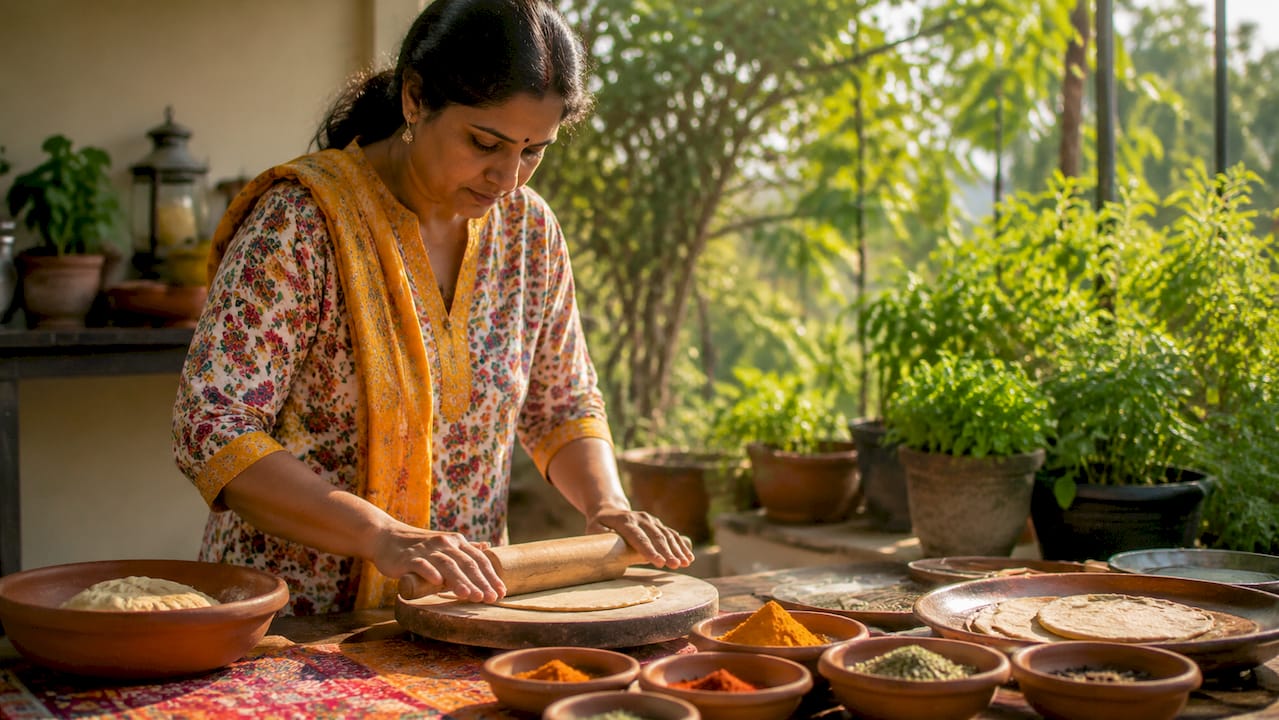
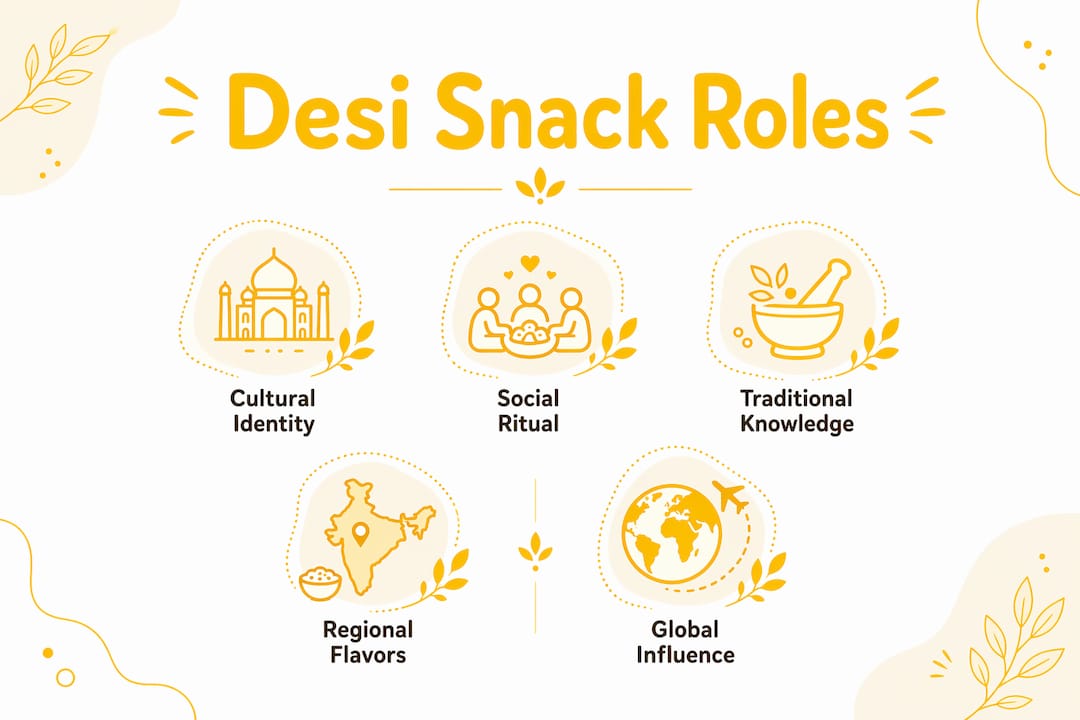
Desi snacks are edible cultural artifacts that introduce food culture by encoding regional identity, social ritual, and agricultural history into every bite. The term “desi” refers broadly to the indigenous foods of South Asia, particularly India, and these snacks are the recognized culinary heritage category that food scholars call traditional indigenous snacks. Understanding why desi snacks introduce food culture means recognizing that a handful of roasted chana or a paper cone of Jhalmuri carries more cultural information than most cookbooks. At Desimunchiess, we believe every snack tells a story worth knowing.
Why desi snacks introduce food culture through regional identity
Desi snacks are the most direct introduction to Indian food culture because each one is a product of its specific geography, climate, and farming tradition. India’s 28 states produce dramatically different snacks not by accident but because local ingredients, weather, and customs shape what people eat between meals. That diversity is the culture itself, expressed in edible form.
Here is a snapshot of how regional snacks reflect their origins:
Region | Signature Snack | Cultural Note |
West Bengal | Jhalmuri | Puffed rice mixed with mustard oil and spices; a street food and social equalizer |
Rajasthan | Mathri | Flaky, spiced cracker built for desert heat and long shelf life |
Gujarat | Chakli | Spiral rice flour snack tied to festive gifting traditions |
Punjab | Pinni | Wheat and jaggery sweet made during winter harvest celebrations |
Maharashtra | Chivda | Flattened rice mix reflecting the state’s rice agriculture |
Tamil Nadu | Murukku | Twisted rice and lentil snack central to temple offerings and festivals |
Each entry in that table represents centuries of agricultural adaptation. Rajasthan’s Mathri, for example, uses minimal water in its dough because the Thar Desert made water conservation a daily practice. The snack’s durability was not a design choice. It was survival logic baked into food. Bengal’s Jhalmuri uses mustard oil because Bengal’s fertile delta has always produced mustard as a primary crop. The snack is literally the land on a plate.
The snack diversity in India also reflects how trade routes shaped flavor. Coastal Karnataka’s snacks carry coconut and tamarind because those ingredients grew abundantly and traveled well. Northern snacks lean toward wheat and dairy because the Indo-Gangetic Plain is grain country. When you eat a regional desi snack, you are tasting the outcome of centuries of local decision-making about food.
How do desi snacks foster social bonds and cultural continuity?
Desi snacks are social tools as much as they are food. The act of sharing them carries meaning that goes beyond hospitality. Across India, offering a snack signals trust, welcome, and belonging without requiring a formal meal.
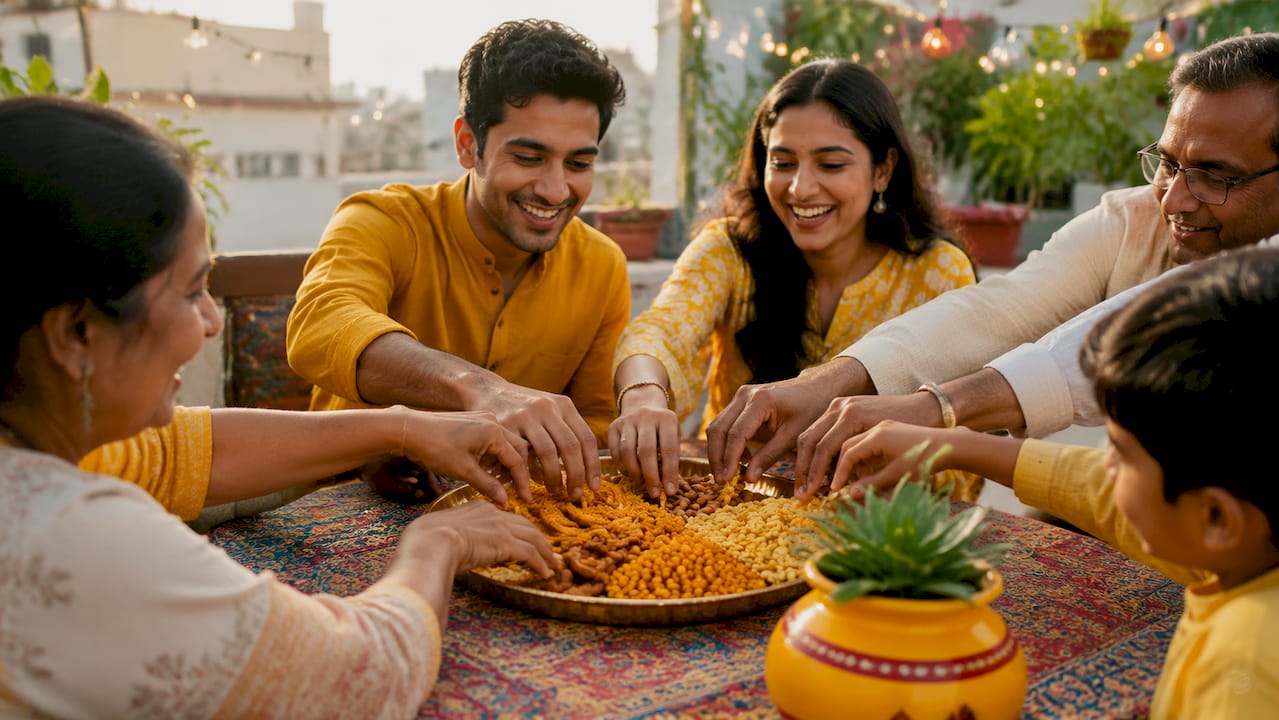
The steel snack dabba is the clearest symbol of this function. The steel dabba is not just storage. It is a ritual object. Opening it for a guest bypasses formal protocols and creates immediate warmth. Grandmothers pass dabbas to grandchildren. Neighbors share them across doorsteps. The container itself communicates care.
Traditional snacks also carry political and democratic weight. Jhalmuri acts as a social connector across socio-economic classes at railway stations and political gatherings. Politicians in Bengal have used it deliberately to build rapport with voters. A street food that costs almost nothing and is eaten by everyone from laborers to professors is a powerful statement about shared identity.
The railway connection runs deeper than politics. Jhalmuri’s portability and shelf stability developed directly from the Indian railway system, which needed travel-friendly foods that worked across class compartments. That history turned a simple snack into a cultural unifier for millions of people in transit.
Traditional snack rituals also support what researchers call “slow life” practices, which strengthen family bonds and preserve cultural heritage in fast-paced modern society. Snack-making afternoons in Indian kitchens are not just cooking sessions. They are intergenerational knowledge transfers where recipes, stories, and values move from one generation to the next.
“Traditional snacks represent ‘slow life’ in a fast-paced era, slowing daily routines and fostering intergenerational cultural continuity. They bring families together around the kitchen more effectively than modern food trends.”
Pro Tip: When you share a desi snack with someone unfamiliar with Indian food culture, explain its regional origin. That single sentence transforms a snack into a cultural introduction that no restaurant menu can replicate.
Do traditional preparation methods add cultural value?
Traditional preparation methods are the difference between a snack that introduces food culture and one that merely imitates it. The how of making a snack carries as much cultural meaning as the what.
Homemade-style and small-batch production are the foundation of authentic desi snacks. Consumers are increasingly wary of mass-produced versions because industrial processing strips out the ingredient integrity that gives traditional snacks their character. The “mom-chef” preparation model, where recipes pass through family hands rather than factory lines, builds trust that no marketing claim can manufacture.
Traditional desi snacks also align with Ayurvedic nutritional principles that have guided Indian food culture for thousands of years. Peanuts, sesame, jaggery, and grains combine in traditional snacks to support digestion and steady energy. These are not accidental pairings. They reflect indigenous nutritional wisdom about how ingredients interact in the body. Preparation techniques that preserve ingredient integrity, such as slow roasting instead of deep frying in refined oils, keep that wisdom intact.
The health halo effect complicates this picture. Snacks labeled as “baked” or containing “ancient grains” are eaten 35% more due to perceived healthfulness. That statistic reveals a real consumer vulnerability. People trust the label rather than the process. True nutritional integrity depends on minimal processing and manufacturing controls that mass-produced versions routinely skip. A traditionally made Murukku and a factory version with the same name are not the same product culturally or nutritionally.
Pro Tip: Look for traditional snack-making techniques like stone grinding, sun drying, and slow roasting when evaluating authenticity. These methods signal that the producer respects the cultural source of the recipe.
What role do desi snacks play in global food culture?
Desi snacks are now recognized internationally as a distinct and growing food category. Indian savory snacks are seen globally as “edible heirlooms,” with consumers in North America, the UK, and Southeast Asia actively seeking the authenticity and culinary stories behind them. That positioning elevates traditional snacks from ethnic grocery items to a stable category in international retail.
The contrast between mass-produced and traditional snacks is sharpest in global markets:
Snack Type | Global Perception | Cultural Signal |
Mass-produced Indian snacks | Familiar but generic | Low cultural specificity |
Traditional small-batch snacks | Authentic and story-rich | High cultural specificity |
Homemade-style branded snacks | Trustworthy and personal | Strong cultural connection |
Global food enthusiasts seek edible authenticity and narrative behind desi snacks, which is why brands that communicate origin stories and preparation methods outperform generic competitors in international markets. A snack with a story from a specific village in Rajasthan or a specific festival in Tamil Nadu gives the consumer something a potato chip never can: a genuine cultural encounter.
68% of urban Indian consumers are replacing ultra-processed foods with indigenous snacks like roasted chana, makhana, and millets. This domestic shift mirrors what international consumers are discovering simultaneously. Both groups are moving toward food that carries meaning alongside nutrition. That convergence is creating a global moment for desi snacks as cultural ambassadors.
The lesser-known Indian snack types are particularly powerful in this context. When a food explorer in Chicago encounters Thekua from Bihar or Shakarpara from Gujarat for the first time, they are not just tasting something new. They are receiving an introduction to a food culture that most of the world has never encountered. That is the role of desi snacks on the global stage: first contact with a living culinary tradition.
Platforms like Tastevibe that document authentic recipes from around the world confirm this pattern. The most searched and saved Indian recipes internationally are not restaurant dishes. They are the everyday snacks that Indian families have made at home for generations.
Key takeaways
Desi snacks introduce food culture because they carry regional identity, social ritual, and traditional knowledge in a form anyone can taste, share, and remember.
Point | Details |
Regional snacks encode geography | Each snack reflects local crops, climate, and customs specific to its origin region. |
Social rituals build cultural continuity | Sharing snacks through dabbas and street food settings transfers cultural values across generations. |
Preparation methods signal authenticity | Small-batch, homemade-style production preserves ingredient integrity and cultural meaning. |
Global demand favors authentic snacks | International consumers treat traditional desi snacks as edible heirlooms with real cultural stories. |
Indigenous snacks align with Ayurveda | Traditional ingredient combinations support digestion and energy through centuries-old nutritional wisdom. |
What i’ve learned about snacks as cultural connectors
I grew up watching my grandmother make Mathri every winter. She never used a recipe card. The measurements lived in her hands. The spice ratios came from her mother, and her mother’s mother before that. I did not understand until much later that what she was doing was not just cooking. She was practicing cultural transmission.
The thing most food writing misses about desi snacks is that the eating is almost secondary. The making is where the culture lives. When my grandmother pressed the dough, she was also pressing stories into it. Stories about Rajasthan, about the women in our family, about what it meant to feed people well. That is something a factory cannot replicate no matter how accurate the flavor profile.
I have also noticed that desi snacks are the fastest way to introduce someone to Indian food culture who has never experienced it. A full meal can overwhelm. A single snack with a story behind it opens a door. I have watched people who claimed they “don’t like Indian food” fall completely in love with a well-made Chakli or a fresh batch of Chivda. The snack does the cultural work that a menu description never could.
The slow food ethos embedded in traditional desi snacks is not nostalgia. It is a practical philosophy about how food should connect people to place and to each other. That philosophy is more relevant now than it has ever been.
— Shivam
Taste real desi food culture with Desimunchiess
If reading about desi snacks has made you want to actually taste the culture, we have got you covered. Desimunchiess makes freshly prepared, bold-flavored snacks using traditional recipes and high-quality ingredients. Every product is handcrafted in small batches, so what you receive tastes like it came from a home kitchen, not a factory floor.
We ship directly to you, which means no middlemen and no compromise on freshness. Whether you are a lifelong lover of Indian food or a curious culinary explorer taking your first step, Desimunchiess is the place to start. Browse our full range of authentic Indian snacks and find the flavors that speak to you. Your cultural food adventure starts with one bite.
FAQ
What makes desi snacks culturally significant?
Desi snacks carry regional identity, social ritual, and traditional preparation knowledge that reflect centuries of Indian food culture. They are recognized internationally as edible heirlooms with authentic culinary stories behind them.
How do desi snacks differ from regular packaged snacks?
Traditional desi snacks use indigenous ingredients and preparation methods rooted in Ayurvedic principles, while mass-produced snacks prioritize shelf life over cultural integrity. Small-batch, homemade-style production is the defining difference in authenticity and trust.
Which indian regions have the most distinctive snack traditions?
Bengal, Rajasthan, Gujarat, Punjab, Maharashtra, and Tamil Nadu each produce signature snacks tied directly to local agriculture and festivals. Jhalmuri from Bengal and Mathri from Rajasthan are two of the most culturally documented examples.
Why are desi snacks growing in popularity globally?
Global consumers are seeking food with authentic stories and cultural specificity, and Indian savory snacks fill that demand. 68% of urban Indian consumers are also shifting back to indigenous snacks, signaling a domestic and international convergence toward traditional food culture.
Can desi snacks really introduce someone to indian food culture?
A single well-made desi snack with a known regional origin introduces more cultural context than most restaurant meals. The combination of flavor, ingredient history, and preparation tradition makes each snack a compact, edible introduction to Indian food culture.
Recommended
Comments