
Baked Indian Snacks You Can Order Online in the U.S.

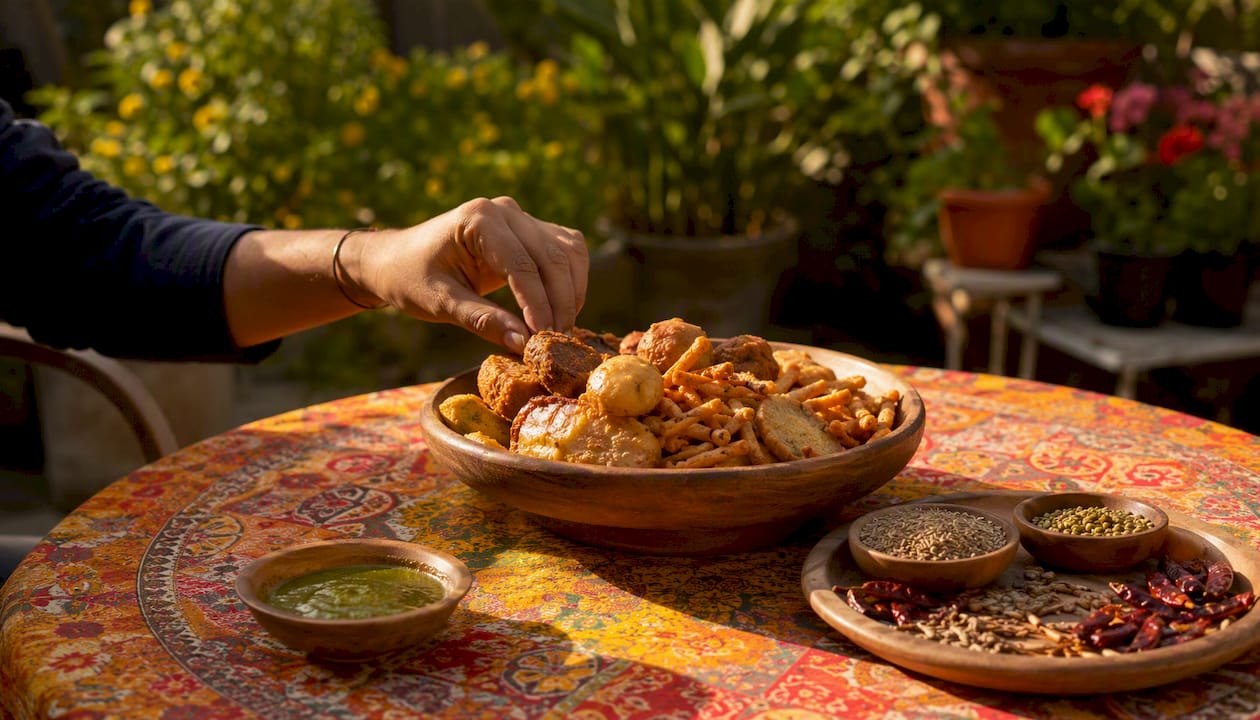
For U.S. shoppers, the best ready-made baked Indian snack to order right now is Desimunchiess’s Tikoni Mathi 350Gm. It’s handcrafted in small batches, shelf-stable, labeled for major allergens, and packed to survive transit without losing its crunch. That combination is harder to find than you’d think.
Here’s why this pick works for online buyers:
Shelf-stable and low-moisture — no refrigeration needed during standard shipping
Allergen-labeled — ingredient list and “Contains” statement visible on the product page
Airtight packaging — sealed inner wrap protects against humidity in transit
350g portion — a sharing-friendly size that supports snacking over several days
Pro Tip: Order early in the week (Monday or Tuesday) so your package ships before the weekend. Snacks sitting in a hot distribution center over Saturday and Sunday are the number one cause of stale-on-arrival complaints.
Key Takeaways
Buying baked Indian snacks online in the U.S. comes down to five things: checking allergen labels, choosing sellers with airtight packaging, timing your shipment for weekday delivery, storing below 85°F in a sealed container, and picking handcrafted over mass-produced for fresher texture.
Point | Details |
Check allergen labels every time | Confirm the “Contains” statement and ingredient list on every purchase, even repeat orders. |
Prioritize airtight packaging | Look for inner shrink-seal, desiccant packets, and rigid outer cartons before buying. |
Ship early in the week | Order Monday or Tuesday to avoid weekend holds in hot distribution centers. |
Store below 85°F, humidity under 60% | Keep opened snacks in an airtight container; humidity causes staling faster than age. |
Desimunchiess for handcrafted quality | Tikoni Mathi 350Gm ships direct-to-consumer with small-batch freshness and allergen labeling. |
Table of Contents
What baked Indian snacks sold online actually look like
The phrase “baked Indian snacks” covers a wider range of products than most shoppers expect. Knowing the categories helps you pick the right item on a product page.
Common types you’ll see at Desimunchiess and similar sellers:
Atta/whole-wheat biscuits — savory or lightly sweet, made with whole-wheat flour, dense and dry
Suji rusk — twice-baked semolina bread, very low moisture, long shelf life
Baked savory cookies — spiced, crumbly, often sesame or ajwain-forward
Tikoni Mathi — a triangular, flaky baked cracker seasoned with cumin and black pepper
Baked namkeen — oven-baked sev-style snacks, lighter than their fried counterparts
Texture-wise, expect dry and crisp rather than soft or greasy. That’s the point. Low moisture is what gives baked vs. fried Indian snacks their longer shelf life and cleaner finish. Most of these items are fully shelf-stable unopened. The exception: anything with a fresh chutney or cream filling ships differently and needs faster delivery.
Pro Tip: If a product description mentions “fresh filling” or “cream center,” check the shipping speed options carefully before adding to cart.
How to read the label before you buy
Always check the ingredient list and the “Contains” statement before placing an order, especially for allergen-sensitive households. This is the single most important step.
FDA allergen labeling rules apply to all packaged foods sold in the United States, including imported products. That means any snack with wheat, milk, soy, tree nuts, peanuts, or sesame must declare it clearly, either in the ingredient list or in a separate “Contains” statement. Many traditional Indian baked snacks contain wheat and sesame as core ingredients, so this check matters every time.
What to confirm on the product page before buying:
Ingredient list — full, in descending order by weight
“Contains” statement — quick-scan for the nine major allergens
Best-by date — confirm it gives you adequate time after delivery
Lot/batch code — useful if you ever need to report a quality issue
Nutrition panel — serving size, calories, sodium
Manufacturer contact — a real address or phone number signals a legitimate seller
Third-party seals — kosher, non-GMO, or organic certifications where relevant
Important: The same flavor line can have different production runs with minor formulation changes. Validate the label on every purchase, not just the first one.
Pro Tip: Screenshot the product page label at the time of purchase. If a freshness issue arises, that screenshot plus your order number is everything you need for a quick resolution.
How shipping and packaging affect freshness
Check the packaging notes and carrier options on the product page before you hit “buy.” That’s the rule. Shipping is where most quality problems start.
For dry baked snacks, UPS recommends insulation and temperature control even for non-frozen items, using gel packs for refrigerated shipments and planning transit windows carefully. For shelf-stable baked goods, gel packs usually aren’t necessary, but insulation still matters in summer months. Higher R-value insulation reduces heat exposure during transit, which is why sellers who use rigid insulated boxes outperform those shipping in plain cardboard.
Key packaging elements that preserve crunch:
Airtight inner shrink-seal or sealed foil bag
Rigid outer carton with void-fill padding
Desiccant or oxygen-absorbing packet inside the inner bag
Insulated liner for warm-weather or long-distance shipments
For carrier selection, USPS Priority Mail works well for 1–3 day bakery shipments, while Ground options suit non-urgent, cooler-season orders. In summer, prioritize speed over cost.
Shipping checklist to run at checkout:
Confirm estimated delivery date falls within the best-by window
Choose expedited shipping (1–2 day) during May through September
Verify the seller ships Monday through Wednesday only (avoids weekend holds)
Look for tracking confirmation in the order details
Check the return or freshness policy before completing payment
Pro Tip: In warm months, the extra $5–8 for expedited shipping is almost always worth it. A stale bag of mathi is a worse outcome than a slightly higher shipping bill.
How to store your snacks once they arrive
Unopened, low-moisture baked snacks generally stay fresh for several months at room temperature. Once you open the bag, the clock moves faster.
Virginia Tech Extension guidance recommends storing dry packaged foods below 85°F, ideally between 50°F and 70°F, and keeping humidity under 60%. Above that humidity threshold, dry foods absorb moisture and go stale quickly. For twice-baked rusks and baked namkeen, humidity is the primary enemy, not age.
Category | Unopened shelf life | Opened (airtight container) |
Suji rusk / atta biscuits | 3–6 months | 2–3 weeks |
Baked savory cookies / mathi | 2–4 months | 2–3 weeks |
Packaged baked namkeen | 2–3 months | 1–2 weeks |
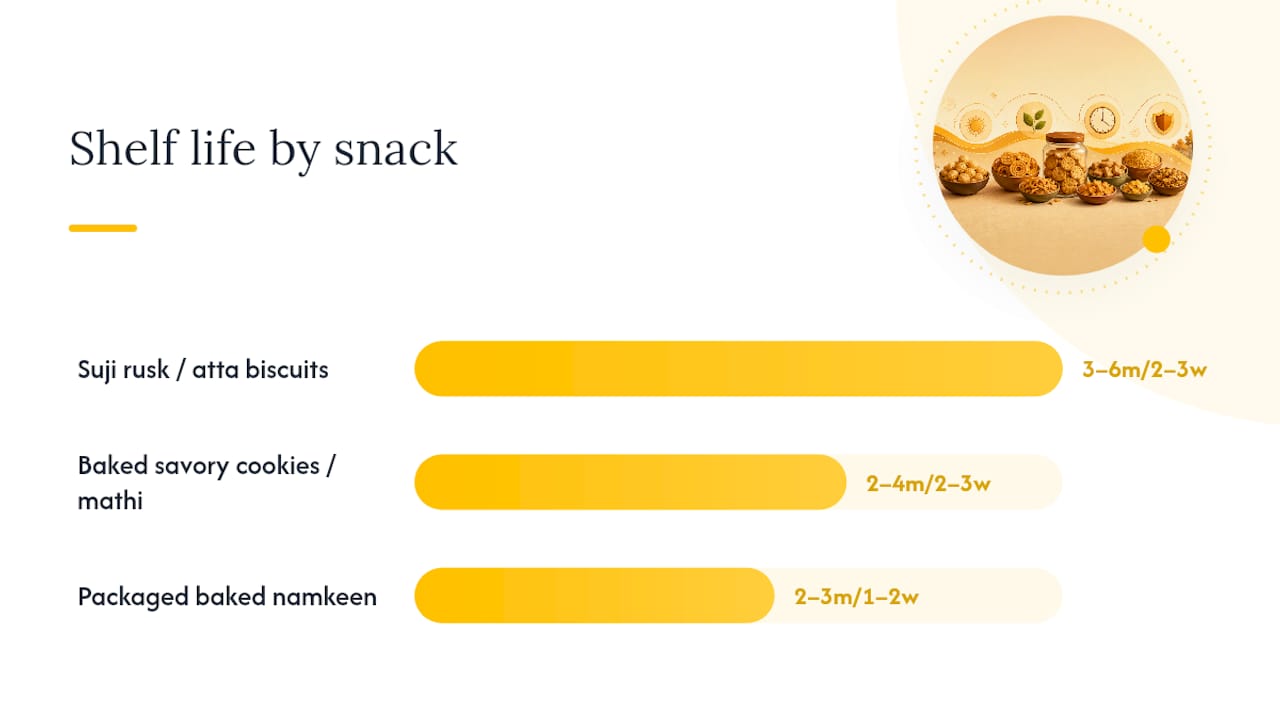
Figures above reflect extension food-storage guidance for commercial packaged baked goods; always defer to the best-by date printed on your specific package.
Storage rules that actually matter:
Keep away from the stove, dishwasher, and any heat source
A pantry or cabinet away from exterior walls works better than a countertop
Never store near strong-smelling foods; dry baked goods absorb odors
Pro Tip: Transfer opened snacks to a glass or hard-sided airtight container with a small food-safe desiccant packet. In humid climates like the Southeast or Gulf Coast, this single step extends crunch by days.
Your buying checklist before placing an order
Run through this before checkout. It takes two minutes and prevents most buyer regrets.
Product type and flavor match what you want
Package weight and serving count fit your household
Full ingredient list is visible and readable
“Contains” allergen statement is present and clear
Best-by date gives you at least 4–6 weeks post-delivery
Seller’s shipping options include your preferred speed
Packaging notes mention airtight seal or desiccant
Price plus shipping total fits your budget
A returns or freshness policy is stated on the product page
Payment page shows HTTPS and a recognized checkout provider
On shipping costs: flat-rate shipping favors heavier orders, so bundling a few items often brings the per-unit cost down. Free shipping thresholds can be worth hitting in summer when you’d otherwise pay for expedited service anyway.
For payment security, use a credit card rather than a debit card for online food purchases. Credit cards offer stronger dispute protections if a shipment arrives damaged or doesn’t show up. Confirm the checkout URL starts with “https://” and that the payment processor is a recognized name.
What to expect after you place your order
Expect an order confirmation email within minutes, a shipping confirmation with a tracking number once the package leaves the seller, and a posted estimated delivery window. When the package arrives, inspect it before putting anything away.
Steps to take on delivery:
Check the outer box for dents, tears, or moisture damage
Open and confirm inner seals are intact
Look for the desiccant packet inside the bag
Verify the best-by date on the inner pack matches the product page
If anything looks off, photograph everything before opening further
If there’s a freshness problem:
Document with photos immediately, including the outer box, inner seal, and lot code
Keep all original packaging until the issue is resolved
Contact the seller with your order number, tracking number, and photos
Reference the freshness or returns policy you confirmed at checkout
Timing matters here too. Sellers who ship Monday through Wednesday give packages the best chance of arriving before the weekend. If a seller’s product page specifies their ship days, plan your order around that schedule.
Why handcrafted baked snacks are worth seeking out
Small-batch, handcrafted baked snacks deliver something mass-produced imports simply can’t match: fresher texture, bolder regional seasoning, and ingredients you can actually trace. When a mathi is made in a small run and shipped directly to you, it hasn’t spent months in a warehouse. That difference shows up in the first bite.
Shivam has spent years comparing traditional Indian snack production methods, from heritage recipes to traditional production techniques, and the gap between handcrafted and mass-produced is consistent across categories.
What shoppers gain by choosing handcrafted:
Fresher texture — smaller batches mean shorter time between production and your door
Bolder flavor — regional spice blends used in full measure, not scaled back for mass appeal
Traceable ingredients — small producers can name their flour mill and spice source
What most online snack guides get wrong
Most buying guides for Indian snacks online spend their energy on flavor comparisons and skip the practical stuff: allergen checks, packaging quality, and shipping timing. Those three factors determine whether your snack arrives tasting like it was made last week or last year.
The conventional advice to “just read reviews” is incomplete. Reviews tell you about flavor. They rarely tell you whether the seller uses desiccant packets, ships on Mondays, or has a real freshness policy. That’s the information that separates a satisfying purchase from a disappointing one.
Prioritize sellers who publish their packaging practices and ship days openly. That transparency is a stronger trust signal than star ratings alone.
— Shivam
Desimunchiess brings homemade-style baked snacks to your door
Desimunchiess makes freshly handcrafted Indian snacks in small batches and ships them directly to you across the U.S. No warehouse middlemen, no months-old inventory. Just bold, home-style flavors made with love and real ingredients.
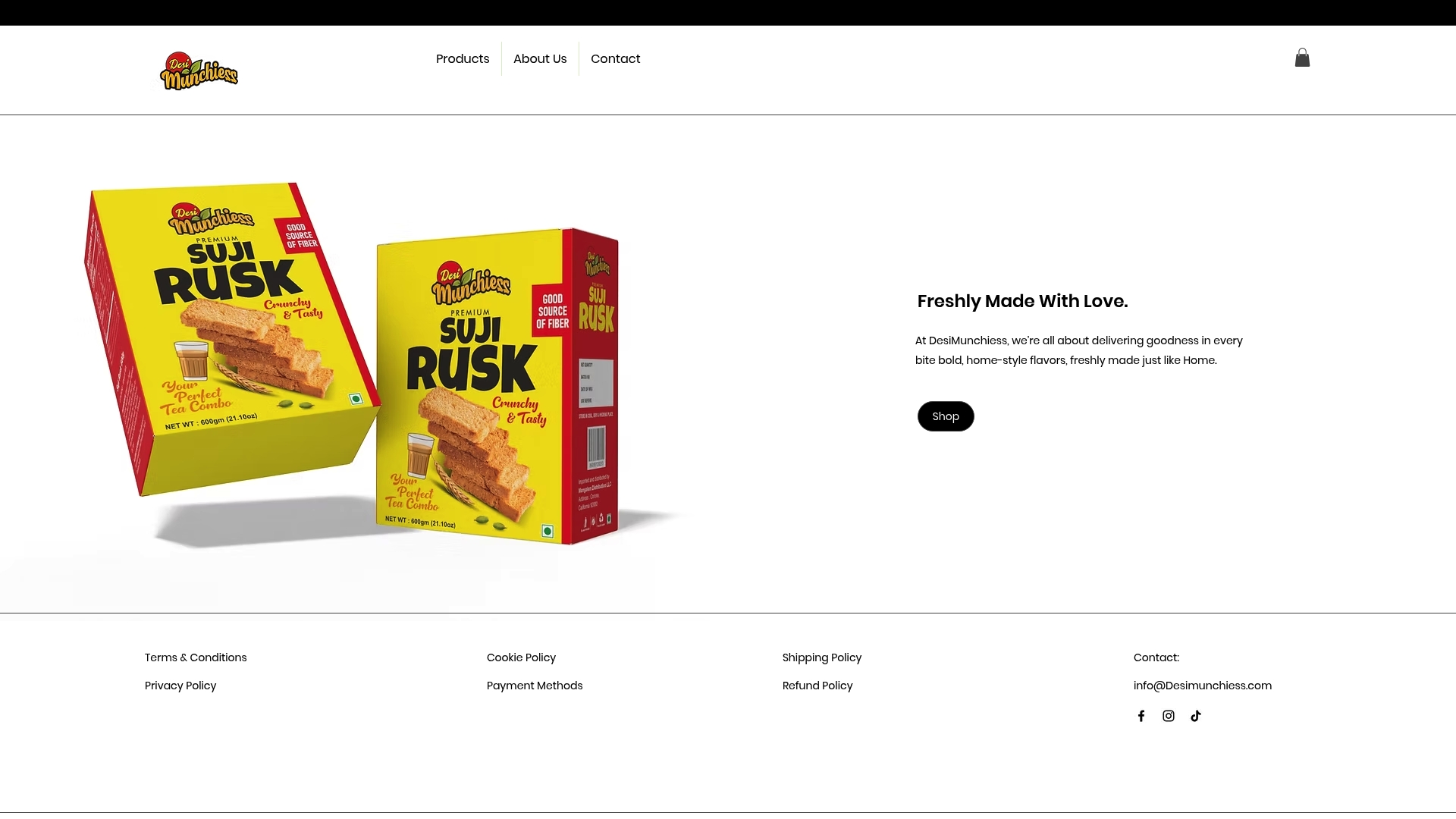
The Tikoni Mathi 350Gm is a great place to start. It’s a classic baked cracker, seasoned with cumin and black pepper, packed airtight, and ready to ship. At checkout, confirm your preferred shipping speed and check for any available promo codes. Browse the full range of homemade-style Indian snacks and place your order today.
Sources
These are the primary references behind the buying guidance in this article:
Recommended
Comments