
Baked vs. Fried Indian Snack Comparison for Home Cooks

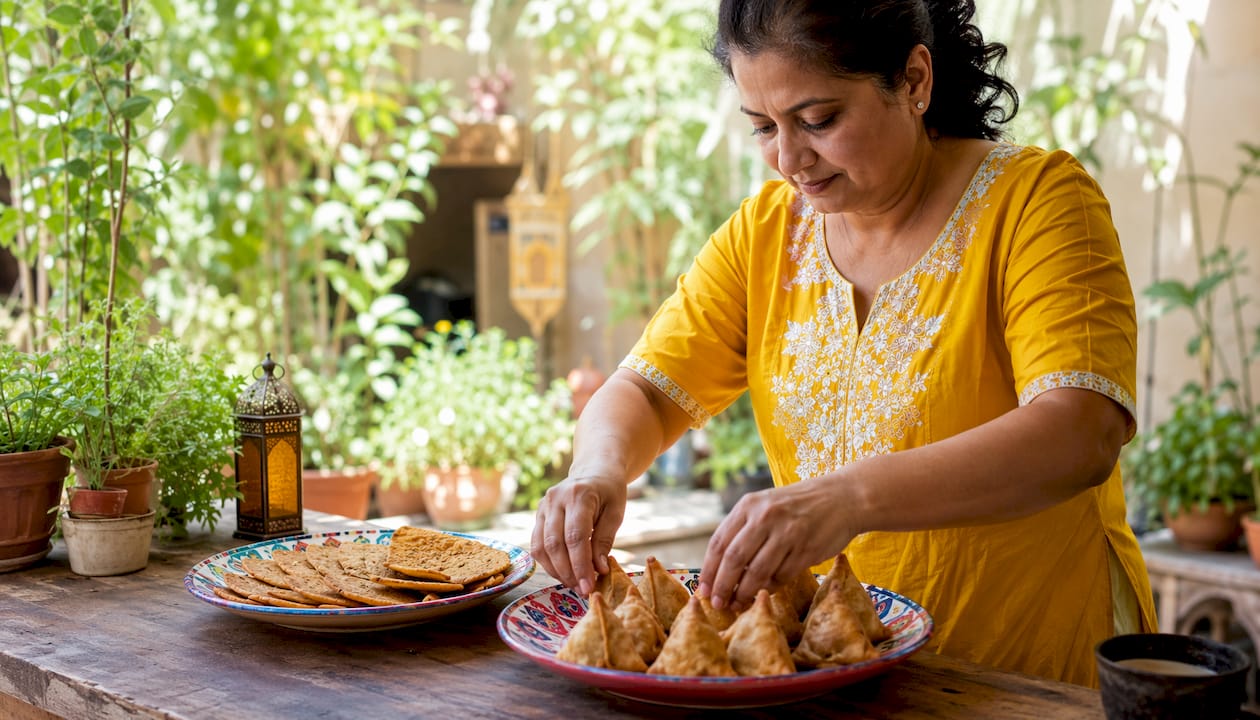
For homemade-style Indian snacks, baked or roasted traditional options usually deliver better health outcomes than deep-fried versions because they use less oil and keep whole-food ingredients intact. That said, the word “baked” on a package label is not a guarantee of anything good.
Here’s the quick guide:
Choose baked or roasted when you’re working with whole-food bases like whole wheat, chickpeas, or lentils (khakhra, roasted chana, makhana). These give you real fiber and protein without the oil load.
Allow occasional frying for snacks where texture is the whole point — samosas, chakli, banana chips — and focus on controlling oil quality and portion size.
One easy swap to start: trade a handful of fried chips for roasted chana. You get more protein, more fiber, and the same satisfying crunch.
Table of Contents
How do baked and fried Indian snacks compare?
Dimension | Fried snacks | Baked/roasted snacks |
Typical calories (per 100 g) | — | 350 kcal |
Typical fat (per 100 g) | 25 g | 8 g |
Texture/sensory profile | Airy, blistered, layered crisp | Uniform, cracker-like crunch |
Ingredient/processing quality | Whole potato or legume possible; oil-heavy | Often whole grain; watch for starch/emulsifiers in commercial “baked” products |
Protein + fiber (satiety) | Low in most fried chips; better in legume-based | Higher in whole-food roasted options (chana, makhana) |
Authenticity/traditional fit | Core to many classics (samosa, chakli, sev) | Native to khakhra, roasted chana, makhana |
Ease of making at home | Requires hot oil management | Oven or stovetop; easier and safer |
Storage/shelf life | 1–2 weeks sealed; oil goes rancid faster | 2–4 weeks in airtight jar; more stable |
One trap worth calling out: many commercial “baked” chips list potato flakes, wheat starch, dextrose, and emulsifiers instead of whole potatoes. That’s a processed snack with a health halo, not a genuinely better option.
Why do frying and baking create such different textures?
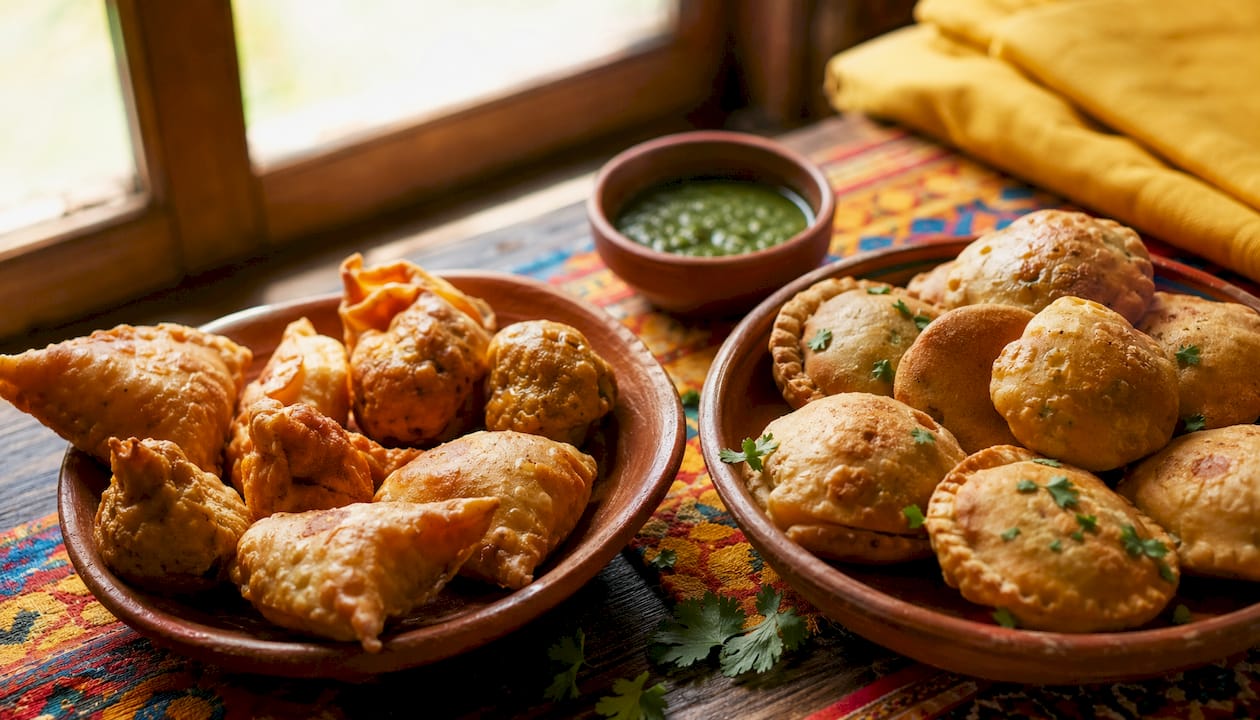
Frying is fast and dramatic. When dough or batter hits hot oil, surface moisture vaporizes almost instantly, creating steam pockets that puff and blister the crust. The Maillard reaction kicks in at the oil-food interface, producing that deep golden color and layered crunch. Deep-frying locks moisture inside while crisping the outside, which is why a fried samosa has that flaky, airy shell.
Baking works more slowly. Heat dehydrates the surface gradually, producing a denser, more uniform crunch without the steam-pocket effect. The result is closer to a cracker than a chip. Neither is wrong — they’re just different.
Pro Tip: To close the gap, preheat your oven to 400–425°F, shape dough thin (under ¼ inch), and brush lightly with oil before baking. That small oil application triggers surface browning and gets you much closer to a fried finish. Check out these traditional snack-making techniques for more method-specific guidance.
What are the real nutrition trade-offs between fried and baked?
Baked snacks typically carry notably fewer calories than their fried counterparts and significantly less fat. But the story doesn’t end there. Manufactured “baked” snacks often compensate with more refined starch, sodium, and additives to restore flavor and texture lost without oil.
Snacks supply roughly one-third of daily calories. The AICR recommends pairing snacks with protein and fiber to keep them between 150–250 calories and reduce overeating.
Whole-food roasted options like roasted chana and makhana outperform both fried chips and commercial baked chips on satiety. They deliver more fiber and protein per 100 g, which means you feel full on a smaller portion.
Snack (per 100 g) | Calories | Fat | Protein | Fiber |
Fried potato chips | — | — | — | ~5 g |
Commercial baked chips | — | ~10 g | ~5 g | ~4 g |
Roasted makhana | — | ~1 g | — | — |
Khakhra (whole wheat) | — | — | — | ~8 g (about 119 kcal per 25 g piece) |
One more thing: acrylamide. Both methods can produce this compound at high temperatures. Baked chips at 170°C can actually contain more acrylamide than fried chips at the same temperature. Temperature and bake time matter more than the method label.
This article is general nutritional information, not medical or dietary advice. Confirm specifics with a registered dietitian for your situation.
How do you pick a genuinely healthier Indian snack?
Start with the ingredient list, not the front-of-pack claim. Whole-food bases like chickpeas, whole wheat, and nuts beat refined starch every time, regardless of whether the snack is baked or fried.
Your shopping and cooking checklist:
Look for whole potato slices (not potato flakes) or whole legumes as the first ingredient.
Aim for at least 5 g of protein per serving, or pair the snack with a protein source like Greek yogurt or hummus.
Check fiber: 3 g or more per serving is a good baseline.
Keep sodium under 200 mg per serving when possible.
Short ingredient list with recognizable items — spices, whole grains, oil — is a green flag.
At home: roll dough thin, preheat your oven fully, and brush with a light coat of oil for better browning.
Pro Tip: Explore desi snack ingredients like besan, whole wheat atta, and moong dal — these whole-food bases give your homemade snacks a real nutritional edge over anything from a bag.
Which homemade Indian snacks are worth making at home?
These eight options cover the best of both baked and lighter fried approaches. They’re all genuinely delicious and easy to pull off at home.
Khakhra is the gold standard for a roasted whole-wheat snack. Roll it paper-thin, cook on a dry tawa with light pressure, and serve with chai or a smear of nut butter for protein.
Roasted chana needs almost no recipe. Toss dried chickpeas with cumin, chili, and a few drops of oil, then roast at 400°F for 25–30 minutes. Eat a small bowl as a standalone snack or pair with fresh cucumber slices.
Roasted makhana (fox nuts) cooks in under 10 minutes in a dry pan with ghee and your spice mix of choice. Low fat, surprisingly filling, and great for late-afternoon snacking.
Baked samosa-style triangles use whole-wheat dough, a spiced potato-pea filling, a light oil brush, and a 400°F oven. They won’t have the same blistered shell as a fried samosa, but the flavor is fully there. Serve with mint chutney and Greek yogurt.
Oven-roasted banana chips slice thin, toss with coconut oil and a pinch of salt, and bake at 375°F until crisp. Far less oil than the fried version. Pair with a small handful of roasted chana for a balanced snack.
Baked moong dal sticks combine soaked moong dal, besan, and spices into a piped or rolled shape, then bake until crunchy. High protein, genuinely snackable.
Oven-baked pakora-style fritters work best with a thick besan batter, vegetables like spinach or onion, and a hot oven (425°F). Finish with a quick broil for color. They’re lighter than the fried original and still bold.
For regional inspiration on which snacks come from where, the North vs. South Indian snack guide is a great next read.
When is frying actually the right call?
Some snacks are just better fried. Chakli, sev, and traditional samosas have textures that baking can’t fully replicate — and that’s okay. Classic fried snacks like these are prized for exactly that reason. Occasional frying is fine when you do it right.
Smarter frying rules:
Use a high-smoke-point oil: avocado oil, refined coconut oil, or peanut oil all work well.
Keep oil temperature between 340–375°F (170–190°C). Too low and the food absorbs oil; too high and the outside burns before the inside cooks.
Avoid reusing oil more than once or twice. Degraded oil adds off-flavors and harmful compounds.
Drain on a wire rack, not paper towels, for a crisper result.
Keep portions small — a few pieces, not a plateful.
Pro Tip: Finish fried snacks with a squeeze of lime and fresh chaat masala right before serving. Bold finishing flavors mean you need fewer pieces to feel satisfied.
How do you portion snacks to actually feel full?
Pair every snack with a protein or fiber source. That combination slows digestion, keeps blood sugar steady, and turns a light snack into something that actually holds you over. The AICR’s registered dietitians put the sweet spot at 150–250 calories per snack.
Practical pairings that work:
1 small khakhra + 2 tbsp hummus
⅓ cup roasted chana on its own (it’s already protein-rich)
1 baked samosa triangle + 3 tbsp plain Greek yogurt as a dip
Small bowl of makhana + a few walnuts
For high-protein Indian snack ideas that go beyond these basics, the protein-focused snack guide has solid options. And if you’re curious about protein-rich snack formats more broadly, protein snacks for vending covers some useful category benchmarks.
How do you store homemade Indian snacks to keep them crisp?
Cool baked or roasted snacks completely before storing — trapped steam turns crispness into sogginess fast. Then seal them in an airtight glass jar. Roasted chana and khakhra stay fresh for 2–4 weeks this way. Baked samosa pastries (unfilled) keep for about a week at room temperature or two weeks refrigerated.
Watch for signs of rancidity in nut-based snacks: a bitter smell or waxy taste means the oils have turned. Toss them. For reheating, a 5-minute blast in a 350°F oven or a quick air-fryer run at 325°F restores crunch without re-frying. Never reuse frying oil that smells off — that’s a food safety issue, not just a flavor one.
Key Takeaways
Whole-food bases like chickpeas, whole wheat, and lentils matter more than the “baked” label when choosing or making healthier Indian snacks.
Point | Details |
Whole foods beat labels | Choose snacks made from whole chickpeas, whole wheat, or lentils over “baked” products with starch and additives. |
Roasted snacks win on satiety | Roasted chana and makhana deliver more protein and fiber per serving than most baked or fried chips. |
Smart frying is acceptable | Use a high-smoke-point oil at 340–375°F, limit reuse, and keep portions small for occasional fried treats. |
Pair snacks with protein + fiber | Combine a 150–250 calorie snack with hummus, Greek yogurt, or nuts to stay full longer. |
Desimunchiess for ready-made | Desimunchiess offers handcrafted, homemade-style Indian snacks made with whole ingredients for when you want the real thing without the prep. |
The snack you choose says more than you think
Here’s what most baked-vs-fried articles miss: the method is almost secondary. A baked snack made from potato flakes and emulsifiers is not a health food. A fried snack made from whole chickpeas and good oil, eaten in a small portion, often is. The real question is what’s in the snack before it ever hits heat.
Traditional Indian snacking culture figured this out long before nutrition labels existed. Khakhra was roasted because it traveled well and kept its texture. Roasted chana was a field snack because it was filling and cheap. These weren’t health trends — they were practical, whole-food choices that happened to be nutritious. When we lean into those traditions instead of chasing “baked” marketing claims, we usually end up eating better without thinking about it much.
The other thing worth saying: don’t write off fried snacks entirely. A freshly fried samosa at a family gathering is not a health crisis. Eating a bag of fried chips alone at your desk every afternoon is a different story. Context and frequency matter as much as method.
Homemade-style Indian snacks, made fresh for you
If you love the idea of authentic, whole-ingredient Indian snacks but don’t always have time to make them from scratch, Desimunchiess was built for exactly that.
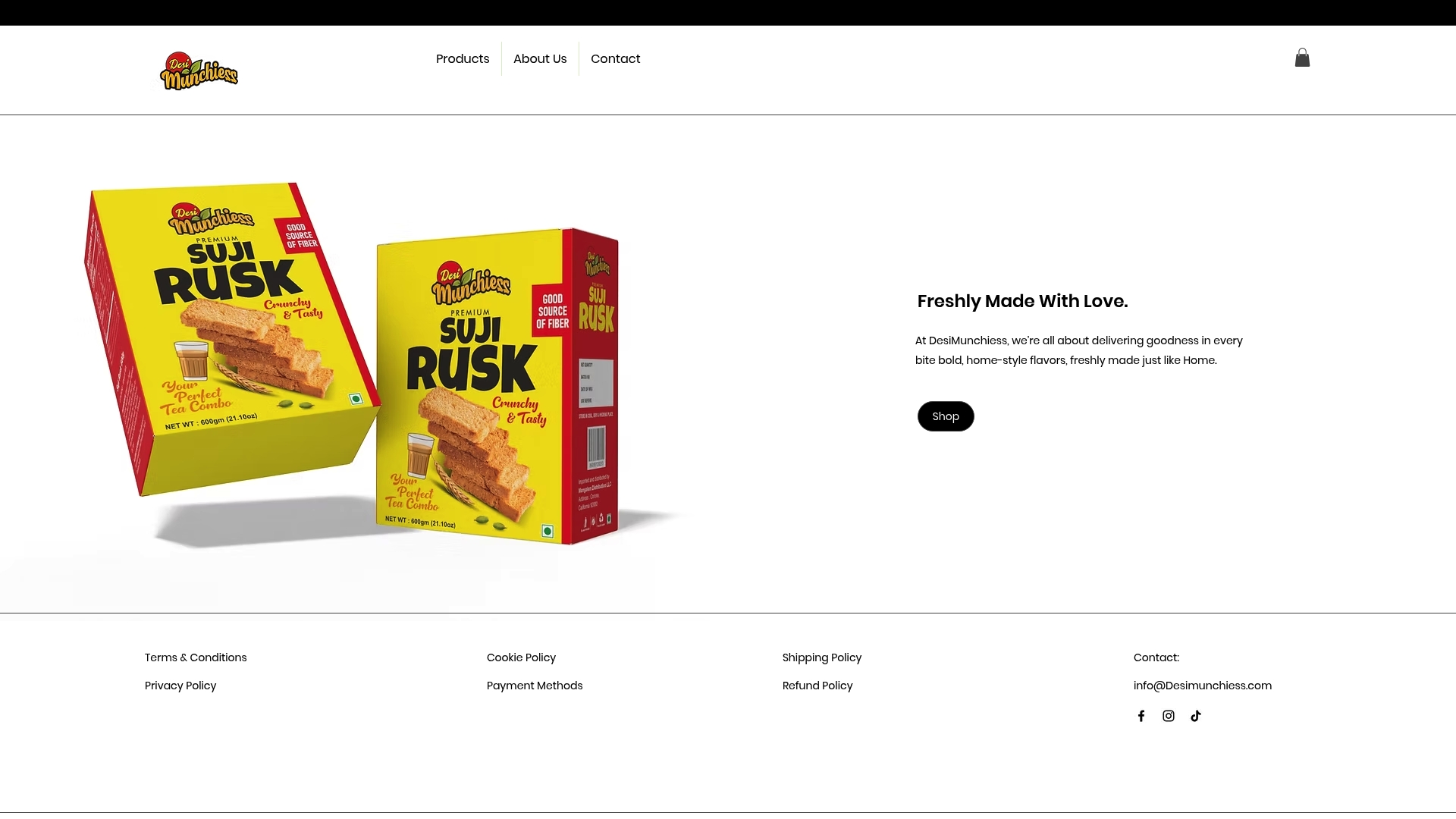
Every snack from Desimunchiess is handcrafted in small batches using traditional recipes and real, recognizable ingredients — no potato flakes, no mystery emulsifiers. The focus is on bold flavor and honest ingredients, the kind of snack that actually tastes like someone made it with care. Whether you’re looking for a roasted option or something with a little more crunch, there’s something here that fits what this article is about.
Visit Desimunchiess to browse what’s fresh and place your order today.
Sources and further reading
AICR: 30 Healthy Snack Ideas from Registered Dietitians — authority source for protein + fiber pairing advice and daily calorie context for snacks.
Goodbite: “Baked Not Fried” — Is It Actually Healthier? — ingredient comparisons, acrylamide data, and calorie/fat ranges for baked vs. fried commercial snacks.
NDTV Food: Baked vs. Fried Samosas — texture science and calorie comparisons for samosas; sensory commentary.
NDTV Health: Khakhra vs. Potato Chips — nutrition profile for khakhra and its case as a roasted whole-wheat swap.
EatHealthy365: Baked vs. Fried Samosa Differences — practical baking technique guidance for approximating fried texture at home.
Perzen Substack: Seven Indian Snacks You Need to Try — cultural context on traditionally fried Indian snacks and why texture drives preference.
Recommended
Comments