
Exotic Desi Snack Ingredients: A Home Cook's Guide

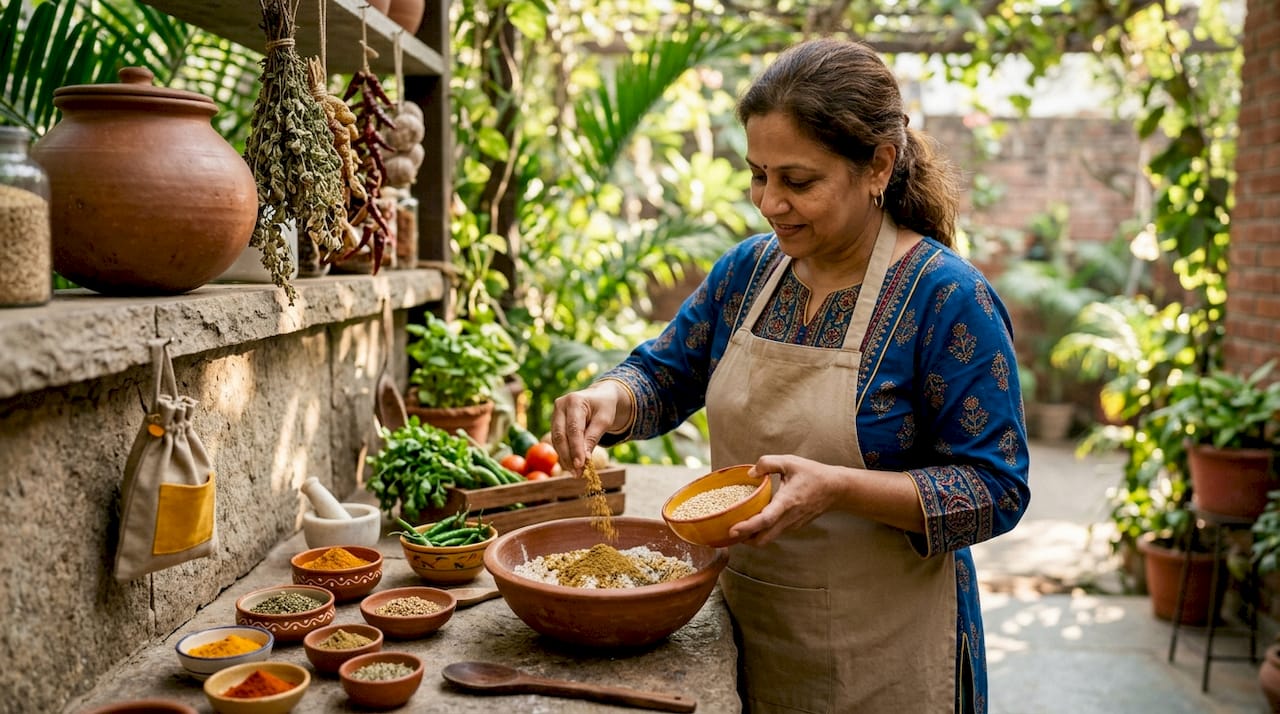
Exotic desi snack ingredients are distinctive flours, spices, seeds, and specialty flavorings that create the authentic taste and texture of Indian regional snacks. What separates murukku from a plain fried dough ring is not just the shape. It is the precise combination of rice flour, urad dal flour, asafoetida, and ajwain that produces that signature crunch and aroma. Home cooks who understand what are exotic desi snack ingredients, and how each one functions, can replicate snacks like chakli, mathri, and bhakarwadi with real confidence. This guide breaks down every key ingredient category, from base flours to tangy agents, with practical tips for getting results right the first time.
What are exotic desi snack ingredients and their base flours?
The foundation of most exotic desi snack recipes is a blend of two or more specialty flours. Each flour contributes a specific function: binding, crispness, or body. Getting the blend wrong changes the entire texture of the finished snack.
Murukku uses rice flour and urad dal flour as its primary base, mixed with water, salt, red chili powder, and asafoetida. Rice flour delivers crispness. Urad dal flour adds binding strength and a faint nuttiness. Without both, the dough either crumbles or turns chewy after frying.
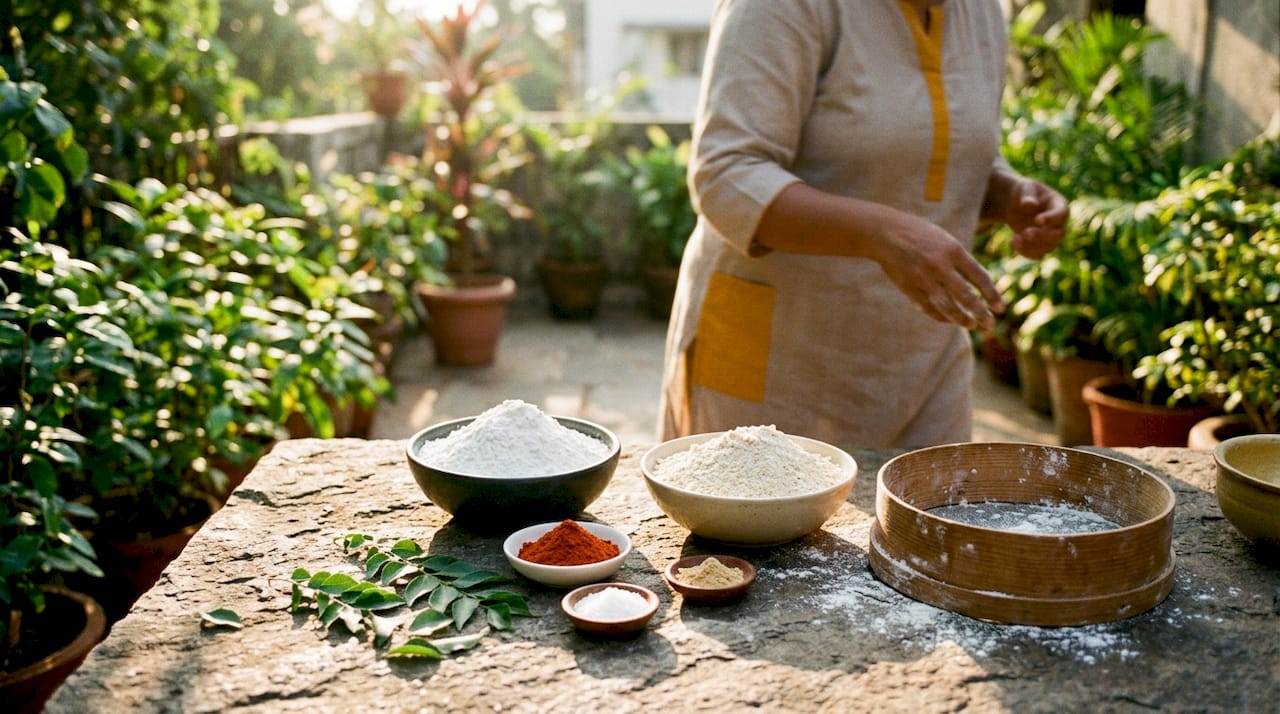
Chakli takes a slightly different approach. Its dough combines rice flour, Bengal gram flour (besan), and black gram flour, which together produce a denser, more layered crunch than murukku. Mathri, the flaky Rajasthani snack, uses wheat flour or refined flour as its base, mixed with ghee as a shortening agent. The fat content in mathri dough works like shortcrust pastry. It creates layers that shatter when you bite in.
Here is a quick breakdown of the most common base flours and their roles:
Rice flour: Delivers crispness and lightness; the primary flour in murukku and chakli
Urad dal flour (black gram flour): Adds binding and a mild earthy flavor; used in murukku
Besan (Bengal gram flour): Contributes body, color, and a slightly nutty taste; used in chakli and kurkuri bhindi chaat
Wheat flour: Creates flaky, layered textures; used in mathri and some namkeen varieties
Moong dal flour: Adds a delicate flavor and crispness; used in Rajasthani moong dal mathri
Pro Tip: Sieve all flours at least twice before mixing. Coarse particles create uneven dough and result in snacks that crack during frying rather than holding their shape.
Flour particle size and moisture control are critical to the right dough texture. Fine, well-sieved flour absorbs fat and water evenly, producing a smooth dough that fries consistently. Skipping this step is the single most common reason home cooks end up with greasy or soft snacks.
Which spices and seeds define exotic desi snack flavors?
The spice profile is what makes desi snacks taste unmistakably Indian. These are not background flavors. They are the point. The right combination of aromatics, heat, and tang creates the complexity that keeps you reaching for another piece.
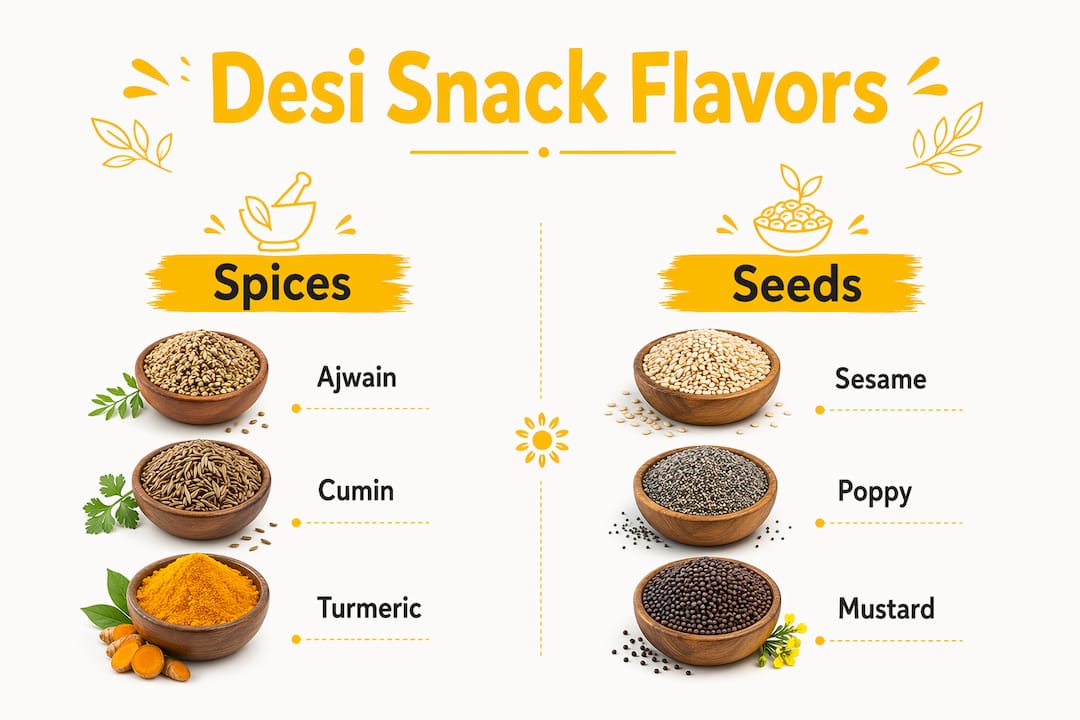
Chakli’s spice blend includes ajwain (carom seeds), cumin, sesame seeds, turmeric powder, red chili powder, and asafoetida. Each ingredient plays a specific role. Ajwain adds a sharp, thyme-like bite. Asafoetida (hing) delivers a pungent, onion-garlic depth that is irreplaceable in savory dough. Cumin adds warmth and earthiness.
Seeds are equally important in desi snack preparations. Sesame seeds (til) add a toasty crunch and mild nuttiness to dough and coatings. Fennel seeds (saunf) bring a sweet, anise-like note that balances heat in Gujarati snacks. Poppy seeds (khus khus) appear in fillings like bhakarwadi, where they add texture and a subtle richness.
Tangy agents complete the flavor picture. Namkeen masala blends typically include amchur (dry mango powder), black salt, and citric acid alongside heat and aromatic spices. These sour and salty elements create the addictive quality that plain salted snacks cannot replicate. Balancing heat, tang, aroma, and color in a masala blend is the real skill in desi snack making.
Asafoetida (hing): Adds savory depth; used in murukku, chakli, and mathri doughs
Ajwain (carom seeds): Sharp, herbal bite; used in chakli, mathri, and fulwadi
Cumin (jeera): Warm, earthy base note; appears in nearly every savory snack blend
Sesame seeds (til): Toasty crunch and mild fat; used in dough and coatings
Fennel seeds (saunf): Sweet, cooling contrast to heat; common in Gujarati snacks
Amchur (dry mango powder): Fruity tang without moisture; used in namkeen masala
Black salt: Sulfurous, mineral tang; a key component in chaat-style snacks
Pro Tip: Dry roast whole spices like cumin and sesame before grinding or adding them to dough. Roasting releases volatile oils and intensifies flavor by a noticeable margin.
How do regional variations use specialty ingredients for exotic appeal?
Different regions of India use the same base flours and spices in completely different proportions and combinations. The result is a range of snacks that taste nothing alike, even when the ingredient list overlaps.
Gujarati snacks: layers of flavor in every bite
Bhakarwadi is the best example of Gujarati snack complexity. Its filling uses dry grated coconut, poppy seeds, sesame seeds, fennel seeds, and a binding paste made from tamarind, ginger, and chili. Amchur and hing round out the flavor. The filling is rolled inside a spiced dough, sliced, and fried. Dry roasting the seeds before grinding the filling is what gives bhakarwadi its aromatic depth. Skipping that step produces a flat, one-dimensional taste.
Fulwadi, another Gujarati classic, uses citric acid (nimbu ka phool) rather than lemon juice for tang. Dry citric acid distributes evenly through the dough without adding moisture, which keeps the fried snack crisp. This is a detail most home cooks outside Gujarat miss entirely.
Rajasthani and South Indian contrasts
Rajasthani moong dal mathri takes a different route. It uses soaked yellow moong dal, wheat flour, ghee, dried fenugreek leaves, ajwain, hing, chili powder, and turmeric. The soaked dal adds moisture and a legume flavor that plain wheat flour mathri lacks. Dried fenugreek leaves (kasuri methi) contribute a slightly bitter, herbal note that cuts through the richness of the ghee.
South Indian murukku variations push the base recipe in a different direction. Black pepper, curry leaves, and spinach or almond additions appear in regional versions, each changing the flavor profile while keeping the core rice and urad dal structure intact. Curry leaves fry crisp in the hot oil and become part of the snack’s texture, not just an aromatic.
Snack | Region | Specialty ingredient | Flavor effect |
Bhakarwadi | Gujarat | Poppy seeds, dry coconut | Rich, layered, sweet-savory |
Fulwadi | Gujarat | Citric acid (dry) | Sharp tang without sogginess |
Moong dal mathri | Rajasthan | Soaked moong dal, kasuri methi | Earthy, flaky, slightly bitter |
Murukku | South India | Curry leaves, black pepper | Herbal, sharp, crispy |
Kurkuri bhindi chaat | North India | Okra, besan, rice flour | Crispy, tangy, layered |
Kurkuri bhindi chaat shows how specialty vegetables enter the exotic snack category. Okra is coated in a besan and rice flour blend, fried until crisp, then topped with yogurt, tamarind chutney, green chutney, and chaat masala. The dual flour coating is what makes the okra stay crisp under the wet toppings. A single flour coating turns soggy within minutes.
What practical tips help home cooks use these ingredients effectively?
Knowing the ingredients is only half the work. How you handle them determines whether the finished snack is crispy and bold or soft and flat. These techniques apply across most traditional snack making methods.
Sieve flours twice. Fine, lump-free flour creates smooth dough that fries evenly. Lumps cause uneven cooking and weak spots that absorb oil.
Control oil temperature. Sieving flours and controlling frying temperature are the two most critical steps for crispy murukku and chakli. Oil that is too cool produces greasy snacks. Oil that is too hot burns the outside before the inside cooks.
Use dry citric acid instead of lemon juice in dry spice blends and dough. Liquid citrus adds moisture that softens fried snacks within hours.
Dry roast seeds before adding them. Toasted sesame, cumin, and fennel release more aroma and flavor than raw seeds added directly to dough.
Balance your masala blend. A good namkeen masala needs heat (chili, black pepper), tang (amchur, citric acid), aroma (cumin, coriander, hing), and color (turmeric). Missing any one element makes the blend taste incomplete.
Rest the dough. Letting dough rest for 10–15 minutes after mixing allows the flour to fully hydrate. This produces a more pliable dough that holds its shape during pressing or rolling.
For home cooks exploring lesser-known snack types, starting with a single regional recipe and mastering its ingredient ratios before experimenting is the fastest path to consistent results.
Key Takeaways
Exotic desi snack ingredients are specific flour blends, aromatic spices, seeds, and tangy agents that work together to create the authentic crunch, heat, and flavor of Indian regional snacks.
Point | Details |
Base flour blends matter | Rice flour, urad dal flour, and besan each serve distinct roles in texture and binding. |
Spices define regional identity | Asafoetida, ajwain, cumin, and sesame seeds create the signature flavor of each snack. |
Tangy agents add complexity | Amchur, black salt, and dry citric acid build the addictive sour-savory balance in namkeen. |
Regional variations use specialty ingredients | Poppy seeds, dry coconut, kasuri methi, and curry leaves separate one region’s snacks from another’s. |
Technique amplifies ingredients | Sieving, dry roasting, and oil temperature control determine whether ingredients perform as intended. |
What I have learned from years of working with these ingredients
By Shivam
The biggest mistake I see home cooks make is treating desi snack ingredients as interchangeable. They swap rice flour for all-purpose flour, skip the asafoetida, or use lemon juice instead of amchur. The snack looks right but tastes generic. Every ingredient in a traditional recipe is there for a reason, and most of them are doing two jobs at once.
Asafoetida is a perfect example. Most people think of it as a flavor ingredient. It is also a digestive aid, which is why it appears in almost every fried snack recipe. The people who developed these recipes over generations understood that balance at a practical level, not just a culinary one.
The other thing I have come to appreciate is freshness. Whole spices that you dry roast and grind yourself produce a noticeably different result than pre-ground powder from a jar that has been sitting on a shelf. The difference is not subtle. It is the gap between a snack that tastes alive and one that tastes flat.
My honest advice: start with one snack, learn its ingredient ratios deeply, and resist the urge to substitute until you understand what each component is doing. Once you understand the cultural depth behind desi snacks, the ingredients stop feeling exotic and start feeling like a vocabulary you are learning to speak fluently.
— Shivam
Authentic desi snack flavors, ready when you are
Mastering exotic snack ingredients at home takes practice. Sometimes you want the real thing without the prep work.
At Desimunchiess, we make every snack fresh using the same traditional ingredients covered here: real besan, urad dal flour, hand-ground spice blends, and no shortcuts. Our Indian snacks online range includes murukku, chakli, mathri, and more, each made the way home kitchens used to make them. If you are building your ingredient knowledge and want a reference point for what authentic should taste like, our snacks give you exactly that. Bold flavors, honest ingredients, and goodness in every bite.
FAQ
What flours are used in exotic desi snacks?
Rice flour, urad dal flour, besan (Bengal gram flour), and wheat flour are the most common bases. Each contributes a different texture, from the crispness of rice flour to the flakiness of wheat flour with ghee.
What spices are most common in desi snack recipes?
Asafoetida, ajwain, cumin, sesame seeds, turmeric, red chili powder, and amchur appear across most savory desi snack recipes. These spices create the heat, aroma, and tang that define authentic flavor.
Why is citric acid used instead of lemon juice in some snacks?
Dry citric acid distributes evenly through dough and coatings without adding moisture. Liquid lemon juice softens fried snacks quickly, while citric acid keeps them crisp longer.
What makes Gujarati snacks different from South Indian snacks?
Gujarati snacks like bhakarwadi and fulwadi use poppy seeds, dry coconut, fennel, and citric acid for a sweet-savory-tangy profile. South Indian snacks like murukku rely on rice flour, urad dal, curry leaves, and black pepper for a sharper, more savory flavor.
How do I keep homemade desi snacks crispy after frying?
Fry at the correct oil temperature, use dry citric acid instead of liquid citrus in the dough, and store snacks in an airtight container once fully cooled. Moisture is the main enemy of crispness in fried desi snacks.
Recommended
Comments