
Reheat Gulab Jamun Softly in 5–8 Minutes: Stove, Steam, Microwave

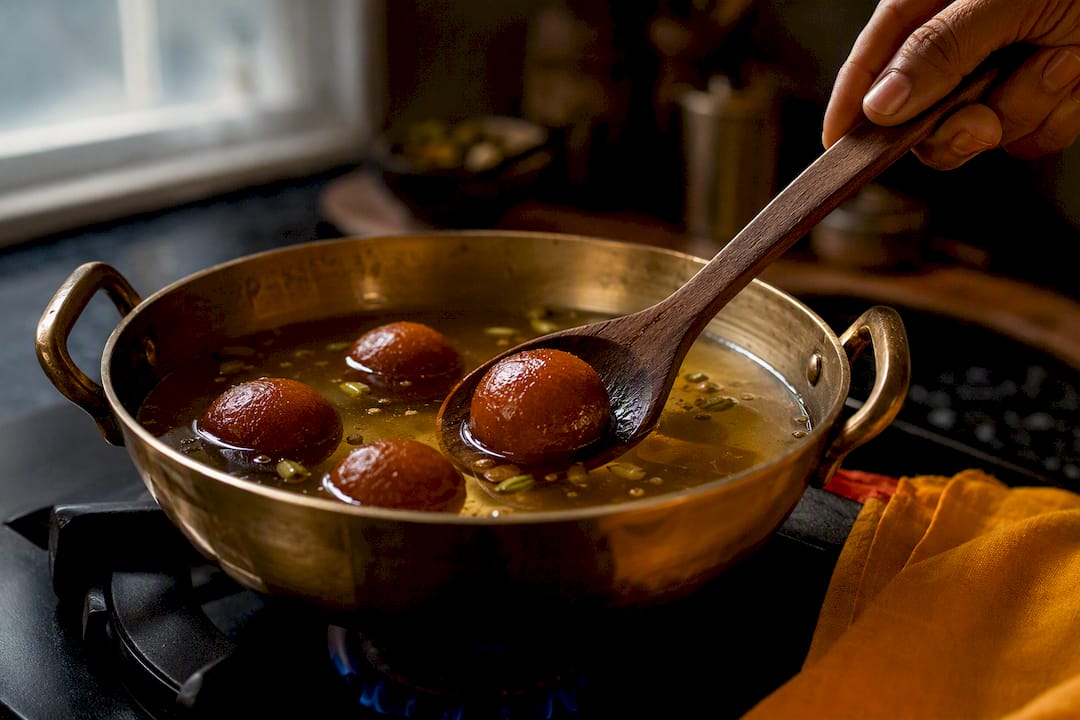
The best way to reheat gulab jamun is gentle stovetop warming right in its own syrup, on the lowest possible flame. If you reach for the microwave instead, use very short bursts with syrup or a splash of water, and keep the dish covered; for detailed tips, consult the Microwave Cookbook on safe microwave practices. The one rule that matters more than any other: never let the syrup boil, and if it has thickened up in storage, thin it with warm water before you start.
TL;DR:
Reheating gulab jamun on the stovetop in syrup is the most controlled and reliable method, requiring low heat and gentle stirring to avoid overcooking.
Microwaving should be done in short bursts with cover or humidity aid, as uneven heating can cause the jamuns to become rubbery or chewy.
Steaming is ideal for dried or stored-away jamuns, providing even heating and moisture without risking scorching or toughening the sugar.
Large batches are best reheated in the oven or air fryer, but only if they are covered tightly, since dry heat can evaporate the syrup and dry out the dessert.
Thickened syrup should be diluted with warm water before reheating, and overcooked or scorched syrup cannot be fixed, making proper storage and handling crucial.
Table of Contents
How Do You Reheat Gulab Jamun Quickly and Safely?
You have four real options, and they are not created equal. Here’s how they stack up when you need warm, soft jamuns without the rubbery aftertaste of overcooked sugar.
Stovetop in syrup: the most reliable choice. Low heat and full contact with syrup give you the best texture and the most control.
Steaming: ideal when your jamuns are stored without much syrup, or when they’ve dried out a little and need moisture back more than heat.
Microwave: fast, convenient, and the riskiest of the bunch. It rewards restraint and punishes impatience.
Oven or air fryer: worth it only for large batches. Dry heat and evaporating syrup work against you here, so treat this as a last resort, not a first choice.
If you’re only reheating a couple of pieces for dessert tonight, skip straight to the stovetop method below. It takes barely longer than the microwave and gives you far more control.
How Do You Warm Gulab Jamun in Syrup on the Stove?
This is the method Hot Gulab Jamun Secrets points to as the safest overall, and for good reason: the syrup does double duty as both flavor and moisture source, so the jamuns rehydrate as they warm instead of just sitting in hot liquid.
Pour the jamuns and their syrup into a heavy-bottomed pan. Arrange them in a single layer if the pan allows it.
Set the burner to its lowest flame. You’re aiming for a gentle simmer at most, never a rolling boil.
Let them warm for about 5 to 8 minutes, until they feel soft and heated through when you nudge one with a spoon.
If the syrup looks thick or syrupy-stiff before you start, stir in 1 to 2 tablespoons of warm water first. Diluting thick syrup lets the jamuns reabsorb liquid instead of just sitting in a glaze that never penetrates.
Swirl the pan gently now and then, or stir with a very light hand. Do not press down on the jamuns or poke them. They’re delicate once warm, and a stray fork tine will tear right through.
Pro Tip: Warm the syrup on its own for a minute or two before you add the jamuns. Lowering them into syrup that’s already warm helps them reabsorb moisture evenly, instead of just getting a hot coating while the inside stays cool. This mirrors what Serious Eats recommends for the initial soak, and it works just as well on reheat day.
Can You Microwave Gulab Jamun Without Ruining the Texture?
Yes, but the microwave punishes shortcuts more than any other method here. Sugar syrup heats unevenly in a microwave, and a few extra seconds is the difference between soft and rubbery.
Put the jamuns in a microwave-safe dish with some of their syrup, or add 1 to 2 tablespoons of warm water if syrup is scarce. Cover the dish to trap steam.
Heat in short bursts on medium or 50% power, then check frequently before heating further.
No lid handy? Place a microwave-safe cup of water next to the dish instead. The extra humidity in the cavity helps keep the jamuns from turning leathery.
Rotate or gently shift the jamuns between bursts. Microwaves create hot spots, and one overcooked corner can seize up the whole piece.
Taste of Home’s testing settled on the same 15 to 20 second intervals as the sweet spot for keeping gulab jamun soft in the microwave. Go much longer than that in one shot, and the sugar in the syrup starts to recrystallize on the surface, which is exactly what makes reheated jamun taste chewy instead of tender.
Is Steaming a Better Option for Dry Gulab Jamun?
Steaming earns its place when your jamuns have been stored apart from their syrup, or when they’ve dried out a bit and need moisture more than direct heat. It’s also the gentlest method on this list, since steam never gets hot enough to scorch sugar the way a stovetop or microwave can.
Set up a pot with an inch or two of water and a steamer basket over it. Bring the water to a simmer.
Place the jamuns in a heatproof bowl and set that inside the basket, above the waterline.
Steam for about 5 to 8 minutes. Steaming times around 5 to 7 minutes are typical, so check one piece early rather than guessing.
If you have syrup on hand, warm a small amount separately and spoon it over the steamed jamuns right before serving. This brings back the flavor without subjecting the syrup itself to prolonged heat.
The upside here is consistency: steam heats evenly on all sides, so you don’t get the hot spots that plague microwaving, and the moisture stays put instead of evaporating off like it does in an oven.
When Should You Use the Oven or Air Fryer Instead?
Reach for these only when you’re reheating a big batch and the stovetop pan just isn’t large enough. Both rely on dry heat, which is the opposite of what gulab jamun wants, so treat them as a fallback rather than a first pick.
Preheat the oven to its lowest practical setting.
Place the jamuns with their syrup in an oven-safe dish, cover tightly with foil, and heat for 10 to 15 minutes.
Air fryers are generally not recommended for this dessert. If you must use one, set the lowest possible temperature, add a little syrup to the dish, and check every 2 to 3 minutes.
The foil cover matters more than the temperature setting. Uncovered syrup evaporates fast in dry heat, and once it’s gone, there’s nothing left to keep the jamuns soft.
What Do You Do If the Syrup Turns Thick or the Jamuns Get Rubbery?
Most reheating problems trace back to one of two things: syrup that’s too thick to soak into anything, or heat that ran too hot for too long.
Thick syrup: stir in 1 to 2 tablespoons of warm water before you reheat. This is the fix Cooking Stack Exchange’s discussion points to, and it works because jamuns can only reabsorb liquid, not solid sugar.
Rubbery jamuns: a short soak in warm, diluted syrup can bring some softness back, but if the sugar has caramelized on the surface, that damage is permanent. Overheating is the single most common cause of ruined texture, and prevention beats any fix.
Dark or bitter syrup: if it’s scorched from previous reheating, don’t try to save it. A quick batch of fresh syrup will taste far better than trying to mask burnt sugar.
Pro Tip: Keep jamuns fully submerged in syrup inside an airtight container from the start. Syrup that’s exposed to air thickens fast, and thick syrup is what causes most of these headaches in the first place. For more on what makes a jamun hold up well through storage, our guide on canned gulab jamun quality breaks down what to look for.
How Long Does Gulab Jamun Last, and Does That Change How You Reheat It?
Storage length changes your reheating approach more than most people realize.
Room temperature: safe for 1 to 2 days, but only if the jamuns stay fully submerged in syrup the whole time.
Refrigerated: commonly good for 3 to 7 days. This is the better call if you’re not finishing them within a day or two.
Freezing: technically possible, but it damages texture enough that it’s not worth it for a dessert this texture-dependent.
Chilled jamuns need a little more patience on the stove or in the steamer, since they’re starting from a colder base and uneven warming shows up faster in a cold dessert than a room-temperature one. Reheat only what you plan to eat in that sitting. Repeated warm-and-cool cycles dry the syrup and toughen the jamuns a little more each time, and there’s no fix for that once it’s done.
What Pairs Well With Warm Gulab Jamun?
A scoop of cold vanilla or pistachio ice cream is the classic move, and it’s popular for a reason: the temperature contrast between warm jamun and cold ice cream balances out the dessert’s heavy sweetness in a way that serving it alone can’t.
Sprinkle chopped pistachios or almonds over the top for crunch.
Add a pinch of ground cardamom or a few saffron strands for aroma.
A light drizzle of rosewater brightens the whole plate.
Warm a small amount of syrup with one crushed cardamom pod or a few saffron strands before spooning it over, which freshens the smell without needing extra sugar.
If you’re plating for a small gathering, our post on hosting an Indian snack tasting party has more ideas for building out a dessert spread around a warm gulab jamun course.
Why Does the Original Recipe Matter for How Well It Reheats?
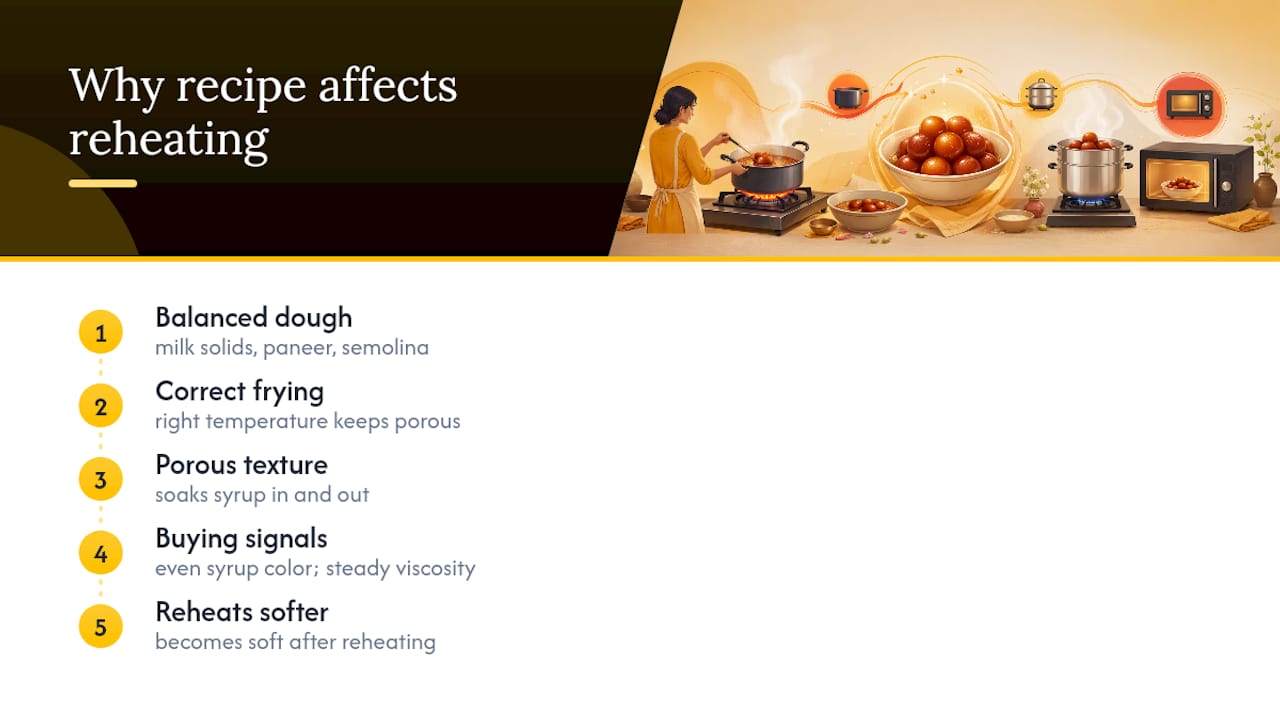
A jamun that’s been made with the right balance of milk solids, paneer, and semolina soaks up syrup better from the start, and that same balance is what lets it reabsorb moisture during reheating instead of just sitting there stiff. Recipe testing from BBC Food backs this up: get the dough ratio and the frying temperature right, and the jamun stays porous enough to soak syrup on the way in and again on the way out.
When you’re buying pre-made or canned jamuns, look for consistent syrup color and viscosity across the batch, and pieces that feel soft but still hold their shape rather than falling apart at a touch. Those two signals tell you more about how well a jamun will reheat than almost anything printed on the label. Our breakdown of traditional Indian snack making techniques covers more of what separates a jamun built to hold up in storage from one that won’t.
A Quick Lesson From a Ruined Batch
Skip the syrup swirl and reheat jamuns straight in cold syrup, and you’ll watch the outside heat up while the inside stays cool and dense. Warming the syrup for even a minute before the jamuns go in changes everything. Remember it as one line: warm the syrup first, then lower the jamuns into it, never the other way around.
— Shivam
Where to Find Gulab Jamun That Actually Reheats Well
Most reheating problems start before the jamun ever reaches your stove. If the milk solids ratio is off or the frying ran too hot, no amount of careful warming saves the texture. Some sweets made in small batches with traditional recipes have a consistency that determines whether a jamun soaks syrup back up or just sits there stiff.
If you’ve been reheating jamuns that never quite come back to soft, the issue might be what you started with rather than how you’re warming it. Browse the Desimunchiess lineup of handcrafted Indian sweets and snacks, and see the difference a properly made jamun makes the next time you warm one up.
Sources
FAQ
What Can You Do With Leftover Gulab Jamun Syrup?
Leftover syrup is still useful for reheating future batches or drizzling over pancakes and yogurt, but if it’s turned dark or bitter from repeated heating, replace it with a fresh small batch instead of reusing it.
Should You Put Gulab Jamun in the Fridge?
Yes, for anything beyond a day or two. Refrigerated gulab jamun keeps well for 3 to 7 days as long as the pieces stay submerged in syrup, while room temperature storage only holds up safely for 1 to 2 days.
Is Gulab Jamun Supposed to Be Served Hot or Cold?
Gulab jamun is traditionally served warm, not cold or straight-out-of-the-fridge, since gentle heat brings back the soft texture and lets the syrup’s flavor come through fully.
How Do You Heat Gulab Jamun Without a Microwave?
Warm it gently in its own syrup on the stove over the lowest flame for about 5 to 8 minutes, or steam it for 5 to 8 minutes if you want to avoid heating the syrup directly at all.
Recommended
Comments