
How Snacks Play a Role in Meal Replacement Nutrition


Snacks can genuinely replace a meal, but only when they are built the right way. The role of snacks in meal replacement comes down to three things: nutrient density, portion control, and timing. Get all three right, and a well-chosen snack can satisfy hunger, stabilize blood sugar, and support your weight goals just as effectively as a full sit-down meal. Get them wrong, and you end up eating more calories than the meal you skipped.
The numbers back this up. According to the Mondelez 2026 State of Snacking report, 41% of U.S. snack consumers already use snacks to replace regular meals, with lunch being the most commonly skipped. That shift is not random. Busy schedules, functional nutrition demands, and a growing awareness of what whole foods can do have pushed snacking into meal territory.
Here is what you need to know before making that swap:
Protein and fiber are non-negotiable. They are the two nutrients most responsible for keeping you full between meals.
Calorie range matters. A snack functioning as a meal replacement should land closer to 300–400 calories, not the typical 150–250 calorie “bridge snack” range.
The portion trap is real. Many packaged snacks contain two or three servings per bag. Eating the whole bag without checking the Nutrition Facts label can quietly double your calorie intake.
Nutrient gaps are the biggest risk. A bag of chips and a handful of nuts are both “snacks,” but only one of them comes close to covering your nutritional bases.
We love bold, satisfying food at Desimunchiess, and we know that what you eat between meals matters just as much as what you eat at them. Let’s dig into how to make snacks actually work for you.

How snacks influence nutrition, satiety, and weight control
Protein and fiber are the two nutrients that determine whether a snack keeps you full or leaves you reaching for more twenty minutes later. Protein and fiber-rich snacks provide longer-lasting fullness than snacks high in sugar or fat, because they slow digestion and blunt the blood sugar spike that triggers hunger shortly after eating. That mechanism is why a handful of almonds holds you over for two hours while a handful of crackers does not.

The Nutrient-Rich Foods (NRF) Index gives us a concrete way to score snack quality. The NRF Index rates foods based on nutrients to encourage, including protein, fiber, calcium, iron, potassium, and vitamin D, against nutrients to limit, like sodium, saturated fat, and added sugar. Yogurt scored 55.3 on the NRF Index, fruit scored 30.1, while carbonated soft drinks scored negative 17.2. That gap tells you everything about why yogurt and fruit show up in nearly every credible snack-as-meal-replacement conversation.
Blood sugar stability is the other piece of the puzzle. Going more than 2–3 hours without food can slow your metabolism and push you toward poor food choices, according to Alabama Public Health nutrition guidelines. A planned snack with fiber and protein prevents that drop and keeps your energy steady through the afternoon.
Snack category | NRF Index score | Key nutrients |
Yogurt | 55.3 | Protein, calcium, potassium, vitamin D |
Milk | 55.3 | Protein, calcium, vitamin D, magnesium |
Fruit | 30.1 | Vitamin C, fiber, potassium, magnesium |
Nuts and seeds | Positive | Protein, healthy fats, magnesium |
Carbonated soft drinks | −17.2 | Minimal; high in added sugar |
Pies and cakes | −17.2 | Minimal; high in saturated fat and sugar |
For weight management, the research is clear. A randomized trial on meal replacement programs found equivalent weight loss outcomes when planned, nutrient-dense snacks were included versus when they were not. The snacks did not sabotage progress. They supported it, because they prevented the kind of extreme hunger that leads to overeating at the next meal.
A general calorie target for a snack used as a mini-meal sits around 150–250 calories for a standard between-meal snack, per Harvard T.H. Chan School of Public Health. When a snack is meant to fully replace a meal, that range should increase to account for the nutrients a full meal would have delivered. Think an apple with peanut butter, a cup of plain yogurt with berries, or a small portion of nuts with a piece of fruit.
How snacks and meal replacements actually differ
The biggest difference between a traditional snack and a purpose-built meal replacement is coverage. A snack is designed to bridge the gap between meals. A meal replacement is designed to stand in for one entirely.
Meal replacement shakes are formulated to deliver balanced nutrition with controlled calories. They typically include a defined ratio of protein, carbohydrates, and fat, along with vitamins and minerals calibrated to cover a meaningful portion of your daily needs. A plain snack, even a nutritious one, rarely hits that full spectrum on its own.
Here is where most snacks fall short as meal replacements:
Calorie range. A snack typically provides 150–250 calories. A meal replacement shake or bar is usually formulated at 200–400 calories with a broader nutrient profile.
Micronutrient coverage. Whole food snacks like yogurt and fruit deliver specific nutrients well but leave gaps in others. Yogurt, for example, is low in iron, vitamin A, and fiber.
Protein completeness. Many snacks do not deliver enough protein to sustain fullness for three to four hours. Meal replacement products are specifically built around protein targets.
Convenience and consistency. Pre-portioned meal replacement products remove the guesswork. Snacks require more planning to hit the same nutritional marks.
That said, the line is blurring. A growing trend called “snealing,” tracked by food industry researchers, reflects consumers seeking high-protein, nutrient-dense snacks that function as full mini-meals. Functional nutrition demands, busy lifestyles, and even the rise of GLP-1 medications are driving people toward smaller, more purposeful eating occasions. The snack aisle is responding.
The Mayo Clinic notes that exclusive reliance on shakes as meal replacements can cause you to miss nutrients that only whole foods deliver. The smartest approach combines both: whole food snacks that cover nutrient density, alongside structured meal replacement products when convenience demands it.
Benefits and drawbacks of using snacks as meal replacements
Snacks used as meal replacements offer real advantages, but they come with genuine risks too. Knowing both sides helps you use them well.
Benefits:
Convenience. A handful of nuts and a piece of fruit requires zero prep and fits in a bag. For busy mornings or back-to-back meetings, that accessibility keeps you from skipping nutrition entirely.
Portion control. Smaller, defined portions can actually make calorie management easier than a full restaurant meal with unpredictable serving sizes.
Flexibility. You can mix and match snacks to hit different nutrient targets across the day, which suits people who prefer grazing over three structured meals.
Preventing overeating. Healthy snack choices reduce hunger and prevent overeating at the next meal, which supports weight management when planned properly.
Sustained energy. Protein and fiber slow digestion, keeping blood sugar steadier than a high-carb meal would.
Drawbacks:
Nutrient gaps. Replacing a full meal with a single snack almost always means missing something. Vitamins, minerals, and macronutrients that a balanced meal would cover can fall short.
The portion trap. Packaged snacks are notorious for containing multiple servings. Eating a whole bag of trail mix thinking it is one serving can add hundreds of unplanned calories.
Meal skipping risk. Too much snacking can reduce hunger at actual mealtimes, leading to skipped meals and the nutrient deficits that follow.
Blood sugar instability. Snacks high in sugar or refined carbs without protein or fiber cause a quick spike and crash, leaving you hungrier than before.
Behavioral drift. Replacing meals with snacks can gradually shift eating patterns in ways that are hard to track, especially if snack quality slips over time.
The Harvard T.H. Chan School of Public Health is direct on this point: snacks are meant to provide energy and curb hunger, not replace meals nutritionally, unless they are deliberately planned to do so. That word “deliberately” carries a lot of weight. Accidental meal replacement, where you just keep snacking instead of sitting down to eat, tends to produce worse outcomes than intentional, structured snack meals.
How to choose snacks that actually work as meal substitutes
The best snacks for meal replacement share a few consistent traits. They are high in protein and fiber, low in added sugar and unhealthy fats, and portioned to satisfy without overshooting your calorie needs. Start there, and you eliminate most of the poor choices immediately.
What to look for:
Protein of at least 8–10 grams per serving. This is the threshold where satiety starts to hold for two or more hours.
Fiber of 3 grams or more. Fiber slows digestion and adds physical fullness.
Low added sugar. The FDA’s Nutrition Facts label lists added sugars separately from total sugars. Keep added sugars low, especially in snacks meant to replace a meal.
Minimal sodium and saturated fat. These are the nutrients the NRF Index flags as “to limit,” and they show up heavily in ultra-processed snack foods.
Strong examples of healthy snack options that can substitute for a meal:
Plain Greek yogurt with fresh fruit (high protein, calcium, fiber)
A small handful of mixed nuts with an apple (protein, healthy fats, fiber)
Apple slices with peanut butter (fiber, protein, sustained energy)
A banana with a small portion of almonds
Plain popcorn with a string cheese (fiber, protein, low calorie density)
Timing matters too. Going longer than 2–3 hours without eating can slow your metabolism and push you toward poor choices. If you are replacing lunch with a snack, eat it at roughly the same time you would have eaten the meal. Do not wait until you are ravenous, because hunger that intense usually overrides good judgment about portions.
Pro Tip: Before you eat a packaged snack as a meal replacement, flip it over and check the serving size on the Nutrition Facts label. Many packages contain two or three servings. What looks like a single snack can easily be 500 or 600 calories once you account for the whole bag.
Reading the label is not optional when you are using snacks as meal substitutes. The FDA’s Nutrition Facts label shows serving size at the very top, followed by calories per serving. Most people read only the first five components and miss fiber, potassium, and calcium entirely. Those are exactly the nutrients that determine whether a snack is genuinely nourishing or just filling.
For practical guidance on better-for-you snack choices that satisfy without the calorie overload, we have put together a full breakdown worth bookmarking.
Why homemade-style snacks make the best meal replacements
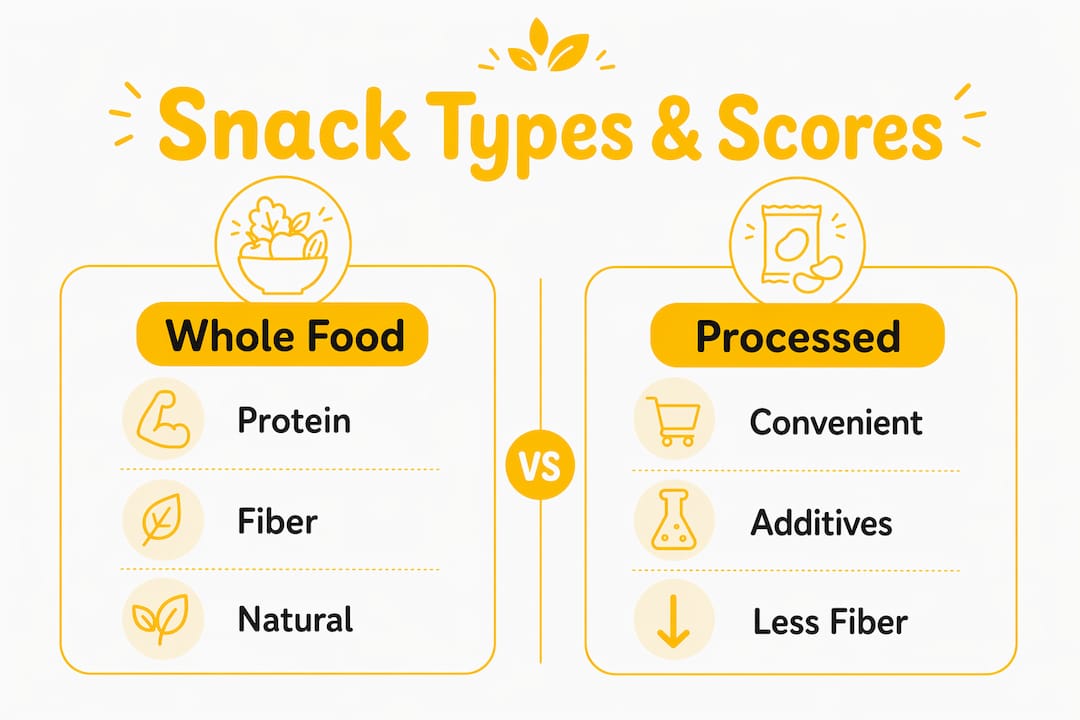
Whole food snacks made from real, natural ingredients consistently outperform ultra-processed options on every metric that matters for meal replacement: nutrient density, satiety, blood sugar stability, and ingredient transparency.
At Desimunchiess, that philosophy is baked into every product we make. We use authentic, traditional recipes and high-quality ingredients because we know that freshly made, bold-flavored snacks built on whole foods do something mass-produced options simply cannot: they nourish you while actually tasting like something you want to eat. No mystery additives, no ingredient lists you need a chemistry degree to decode.
The nutritional case for whole food snacks is well-established. Yogurt and fruit, two of the highest-scoring foods on the NRF Index, are whole food snacks. Nuts and seeds also score positively. These are not coincidences. Whole foods tend to deliver more of the nutrients your body needs and fewer of the ones it does not. When you replace a meal with a snack made from real ingredients, you are far more likely to hit your protein and fiber targets than when you reach for something from a vending machine.
Families especially benefit from understanding this. Homemade snacks give you full control over ingredients, portion sizes, and flavor, which means you can build snacks that genuinely function as mini-meals without the guesswork. For a deeper look at homemade snack nutrition for families, we have covered the key nutrients and practical tips in detail.
The role of natural ingredients in snacks goes beyond just nutrition. Flavor matters. When a snack tastes genuinely good, you eat the right amount and feel satisfied. When it tastes like cardboard, you keep eating, looking for the satisfaction that never comes. That is a behavioral reality that no calorie chart fully captures.
Key Takeaways
Snacks function as effective meal replacements only when they are deliberately planned around protein, fiber, and calorie targets that match what a full meal would deliver.
Point | Details |
Protein and fiber drive satiety | Choose snacks with sufficient protein and fiber to stay full for two or more hours. |
NRF Index guides snack quality | Yogurt and fruit score high; soft drinks score low on nutrient density. |
41% of U.S. snack consumers use snacks as meal replacements | Lunch is the meal most often replaced, highlighting a growing trend. |
The portion trap undermines weight goals | Always check the Nutrition Facts label; many packages contain multiple servings. |
Whole food snacks outperform processed options | Natural ingredients deliver broader nutrient coverage and better satiety than ultra-processed snacks. |
Recommended
Comments