
Why Whole Food Snacks Matter for Your Health


Whole food snacks are minimally processed foods that retain their natural fiber, vitamins, and healthy fats, making them one of the most direct tools for protecting long-term health. Research shows that high fiber intake reduces the risk of cardiovascular disease, type 2 diabetes, colorectal cancer, and all-cause mortality by 15–30%. That single finding tells you everything about why whole food snacks matter. The average adult eats only about 16g of fiber per day, well below the recommended 25–38g. Closing that gap starts with what you reach for between meals.
Why whole food snacks matter for energy and satiety
The biggest reason to choose whole foods over packaged snacks is how they affect your energy. Intact fiber in whole foods slows digestion and steadies glucose release, which means no mid-afternoon crash. Ultra-processed snacks do the opposite. They spike blood sugar fast and leave you hungry again within an hour.
Satiety from whole foods comes from more than just fiber. Fiber, macronutrients, water, and texture work together to send neurohormonal signals to the brain that say “you’re full.” A handful of almonds, a piece of fruit, or a small bowl of yogurt triggers that full signal in a way that a processed snack bar simply cannot replicate.
Whole food snacks also deliver omega-3 fatty acids from sources like walnuts and flaxseeds, which reduce inflammation and support mood and cognition. That means your afternoon snack can do more than quiet your stomach. It can sharpen your focus for the rest of the workday.
Key whole food snacks that promote lasting fullness include:
Nuts and seeds: Almonds, walnuts, and pumpkin seeds deliver fiber, protein, and healthy fats in one small handful.
Fresh fruit: Apples, pears, and berries provide natural sugars alongside fiber, slowing glucose absorption.
Plain yogurt: High in protein and probiotics, it supports gut health and keeps hunger at bay.
Raw vegetables with hummus: The fiber in vegetables and the protein in hummus create a filling, low-calorie combination.
Hard-boiled eggs: A complete protein source that digests slowly and supports muscle recovery.
Pro Tip: Pair a carbohydrate-rich whole food like fruit with a protein or fat source like nut butter. This combination slows digestion even further and extends your energy window by 60–90 minutes.
How do whole food and ultra-processed snacks compare nutritionally?

The nutritional gap between whole foods and ultra-processed snacks is not subtle. The NOVA classification system, developed by researchers at the University of São Paulo, categorizes foods by their level of processing. NOVA Group 4 foods, the most processed, contain additives, emulsifiers, and flavor enhancers that have no nutritional function. They exist to extend shelf life and drive overconsumption.
A processed candy bar, for example, scores 33 out of 100 on food quality metrics and contains 8.3g of saturated fat per 100g. That is a significant saturated fat load in a small serving. By contrast, a 100g serving of mixed nuts delivers unsaturated fats, magnesium, and vitamin E with no artificial additives.
The table below shows how whole food snacks compare to ultra-processed options across key nutritional markers.
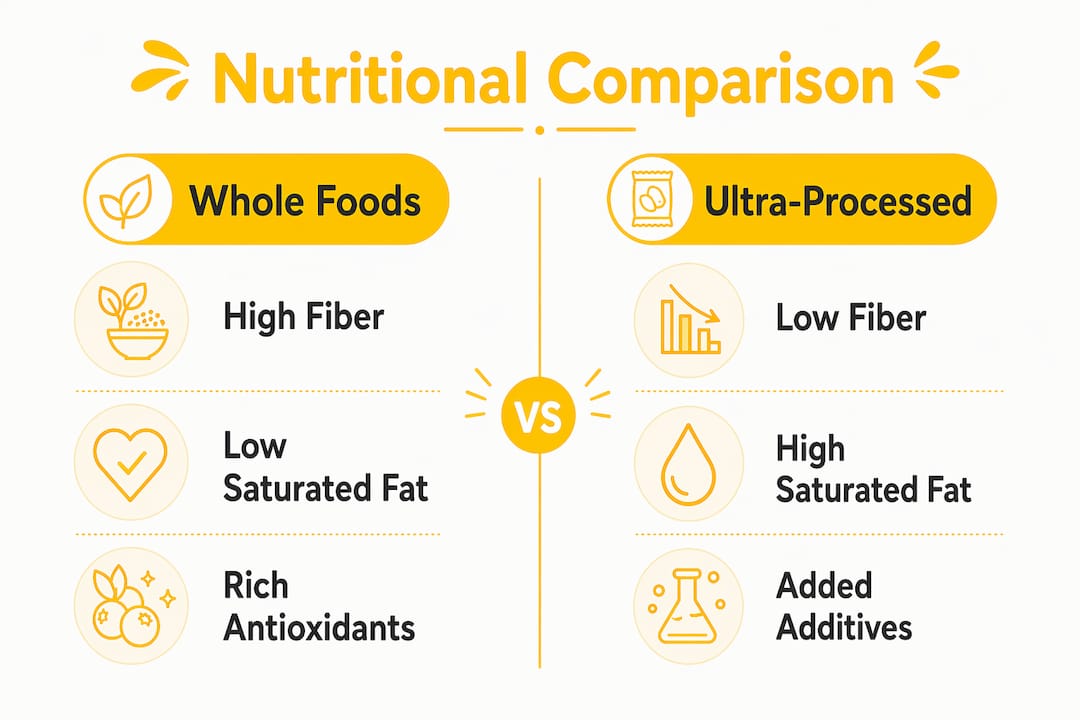
Nutritional marker | Whole food snacks | Ultra-processed snacks |
Dietary fiber | High (naturally occurring) | Low to none |
Saturated fat | Low to moderate | High |
Sodium | Naturally low | Often very high |
Artificial additives | None | Common (emulsifiers, flavors) |
Antioxidants | High (polyphenols, flavonoids) | Minimal or absent |
Nutrient synergy | Present | Absent |
Additives in ultra-processed snacks do more than reduce nutritional value. They actively disrupt gut health. Emulsifiers, for instance, alter the gut microbiome and increase intestinal permeability, which contributes to systemic inflammation. Whole food snacks eliminate this risk entirely.
Antioxidants from polyphenols and flavonoids found in berries, dark chocolate, and spiced legumes lower the risk of chronic disease and support immune function. These compounds require regular intake from diverse whole food sources to deliver their full benefit. A single serving of blueberries or a handful of roasted chickpeas contributes meaningfully to that daily polyphenol target.
Nutrient synergy is the hidden advantage of whole foods. Vitamin C in a bell pepper enhances iron absorption from the same food. Isolated vitamins added to processed snacks do not replicate these interactions. The whole is genuinely greater than the sum of its parts.
What are the best whole food snack ideas for daily life?
Switching to whole food snacks does not require a complete lifestyle overhaul. Small, consistent swaps build lasting habits. The key is having the right options ready before hunger hits.
Batch-prep nuts and seeds on Sunday. Portion them into small containers for the week. This removes the decision fatigue that leads to grabbing a processed snack at the office.
Keep fresh fruit visible. A bowl of apples or bananas on the counter gets eaten. Fruit hidden in the refrigerator gets forgotten.
Stock roasted legumes for travel. Roasted chickpeas and spiced lentils are shelf-stable, portable, and deliver protein and fiber in one snack.
Use plain yogurt as a base. Add fresh fruit and a drizzle of honey for a snack that covers protein, probiotics, and natural sweetness without added sugar.
Try traditional home-style snacks. Handcrafted snacks made from whole grains and spices, like those from Desimunchiess, deliver bold flavor and real nutrition without the additive load of mass-produced options.
For fitness contexts, high-protein traditional snacks made from whole ingredients support muscle recovery without the artificial sweeteners common in commercial protein bars.
The 80/20 approach works well for most people. Aim for 80% whole, unprocessed snacks and allow 20% higher-quality packaged items for convenience. This flexibility prevents the all-or-nothing thinking that derails most healthy eating attempts. Sustainability matters more than perfection.
Pro Tip: When ordering snacks online for the week, add a mix of shelf-stable whole foods alongside any packaged items. Check the ingredient list: if it has more than five ingredients or contains words you cannot pronounce, it belongs in the 20% category.
What are the biggest misconceptions about whole food snacking?
The most common mistake health-conscious people make is trusting the “health halo.” A snack labeled “natural,” “high-protein,” or “organic” is not automatically a whole food. Many packaged protein bars contain processed ingredients that digest quickly, lack the water content of real food, and produce less prolonged fullness than a handful of nuts.
Common misconceptions that trip people up:
“Protein bars are as good as whole foods.” Packaged bars lack the textural complexity and water content that slow digestion. They fill you faster but leave you hungry sooner.
“Whole food snacking takes too much time.” Washing an apple takes 10 seconds. Portioning nuts takes two minutes. The time barrier is mostly perception.
“Healthy snacks are expensive.” Oats, bananas, eggs, and legumes are among the most affordable foods per gram of nutrition available.
“If I eat whole foods most of the time, snacks don’t matter.” Snacking is a nutrient delivery opportunity to fill gaps in fiber, omega-3s, and polyphenols. Treating it as just hunger management leaves real health gains on the table.
The impact of snack industry advertising has reshaped eating patterns in ways that reduce overall nutritional quality, even as snacking frequency increases. Recognizing that influence is the first step toward making choices that actually serve your health. For families especially, homemade-style snacks made from real ingredients sidestep the additive concerns that come with mass-produced options.
Key Takeaways
Whole food snacks deliver fiber, antioxidants, and nutrient synergy that ultra-processed snacks cannot replicate, making them the most direct dietary tool for stable energy and chronic disease prevention.
Point | Details |
Fiber gap is real | Most adults eat only 16g of fiber daily; whole food snacks close the gap toward the 25–38g target. |
Satiety is multi-factor | Fiber, water, texture, and macronutrients together trigger fullness signals that processed snacks cannot match. |
Nutrient synergy matters | Vitamins in whole foods interact to improve absorption; isolated nutrients in processed snacks do not replicate this. |
80/20 rule supports adherence | Aiming for 80% whole food snacks and 20% quality packaged options builds sustainable habits without perfectionism. |
Health halos mislead | Labels like “natural” or “high-protein” do not guarantee whole food quality; always check the ingredient list. |
What I’ve learned from watching people change their snacking habits
People rarely fail at healthy snacking because they lack willpower. They fail because they underestimate how much their environment shapes their choices. When processed snacks are visible and whole foods are not, the processed snack wins every time. That is not a character flaw. It is just how decision-making works under low energy and time pressure.
What I have seen work consistently is the “ready before hungry” principle. People who prep their whole food snacks at the start of the week eat them. People who plan to “grab something healthy” when hunger hits almost never do. The preparation is the habit, not the snacking itself.
The other thing worth saying plainly: nutrient synergy is not a marketing term. The interaction between Vitamin C and iron, or between fiber and gut bacteria, produces health outcomes that no fortified snack bar can replicate. Whole foods carry compounds that work together in ways nutritional science is still mapping. Eating them regularly is one of the few areas where the science and the common-sense advice fully align.
Start with one swap. Replace your most frequent processed snack with a whole food alternative for two weeks. The energy difference alone tends to make the case better than any research paper.
— Shivam
Wholesome snacking, made easy with Desimunchiess
We know that finding snacks that are both genuinely nutritious and actually delicious feels like a tall order. That is exactly the gap Desimunchiess was built to fill.
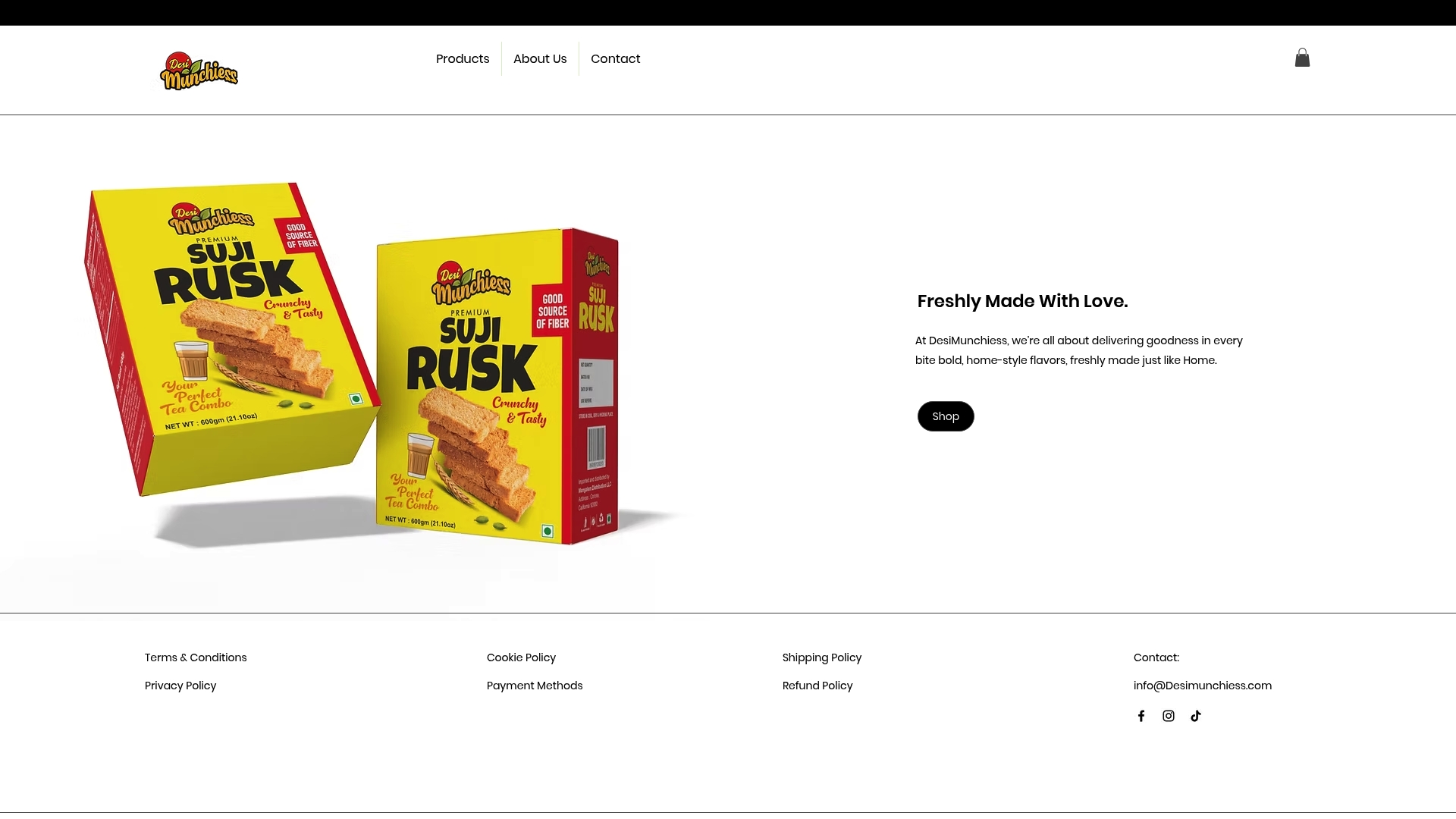
Desimunchiess crafts authentic Indian snacks using traditional recipes and high-quality whole ingredients, made fresh and shipped directly to you. No artificial additives. No mystery ingredients. Just bold, home-style flavor you can feel good about. Whether you are stocking up for the week or looking for a better-for-you snack alternative that actually satisfies, Desimunchiess has you covered. Shop the full range and taste the difference that real ingredients make.
FAQ
What makes a snack a “whole food” snack?
A whole food snack is minimally processed and retains its natural fiber, vitamins, and healthy fats. Examples include fresh fruit, nuts, seeds, plain yogurt, and raw vegetables.
How do whole food snacks help prevent chronic disease?
High fiber intake from whole food snacks is linked to a 15–30% lower risk of cardiovascular disease, type 2 diabetes, and colorectal cancer, according to large-scale research.
Are protein bars a good substitute for whole food snacks?
Protein bars lack the water content and textural complexity of whole foods, which means they digest faster and produce less lasting fullness than options like nuts, fruit, or yogurt.
How much of my snacking should come from whole foods?
The 80/20 approach works well: aim for 80% whole, unprocessed snacks and allow 20% higher-quality packaged options to maintain flexibility and long-term adherence.
What are the easiest whole food snack ideas to start with?
Almonds, apples, hard-boiled eggs, plain yogurt, and roasted chickpeas are all portable, require minimal preparation, and deliver strong nutritional value per serving.
Recommended
Comments