
What Does Balanced Snacking Mean for Desi Snack Lovers

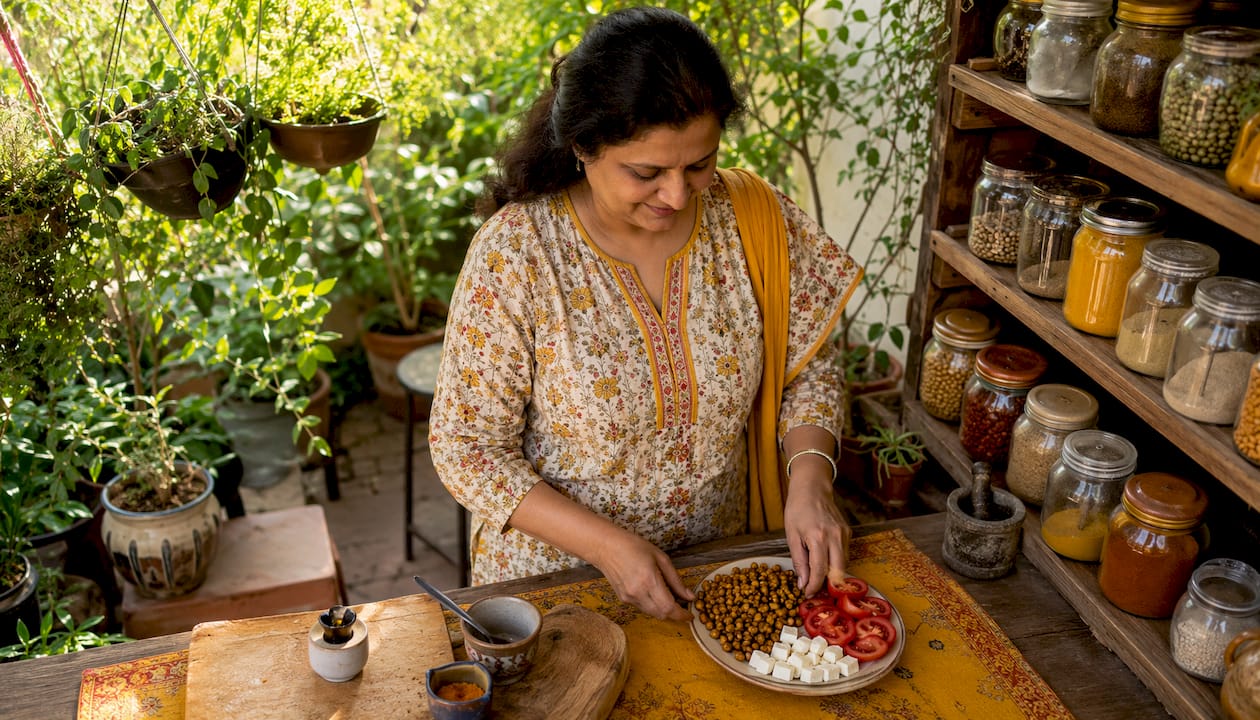
Balanced snacking means choosing a snack that combines at least two complementary nutrient groups, fits a reasonable portion, and happens because you’re actually hungry. That’s the whole rule. The Academy of Nutrition and Dietetics and Registered Dietitian Anne VanMeerbeke both frame it the same way: snacking works best when it fuels your body, not just fills a moment. At Desimunchiess, we see this play out every day through the snacks we love most.
Here’s the quick checklist to know if a snack qualifies:
Nutrient combo: At least two groups from protein, fiber-rich carb or produce, and healthy fat
Portion cue: A snack-sized amount, not a second meal (think one small bowl or a cupped handful)
Mindful trigger: You’re eating because you’re hungry, not bored or stressed
Table of Contents
What does balanced snacking mean for your energy and health?
Snacks account for roughly one-third of the average person’s daily calorie intake. That’s a big slice of your nutrition picture, and it means the quality of what you grab between meals genuinely matters for whole-food snack benefits and long-term health.
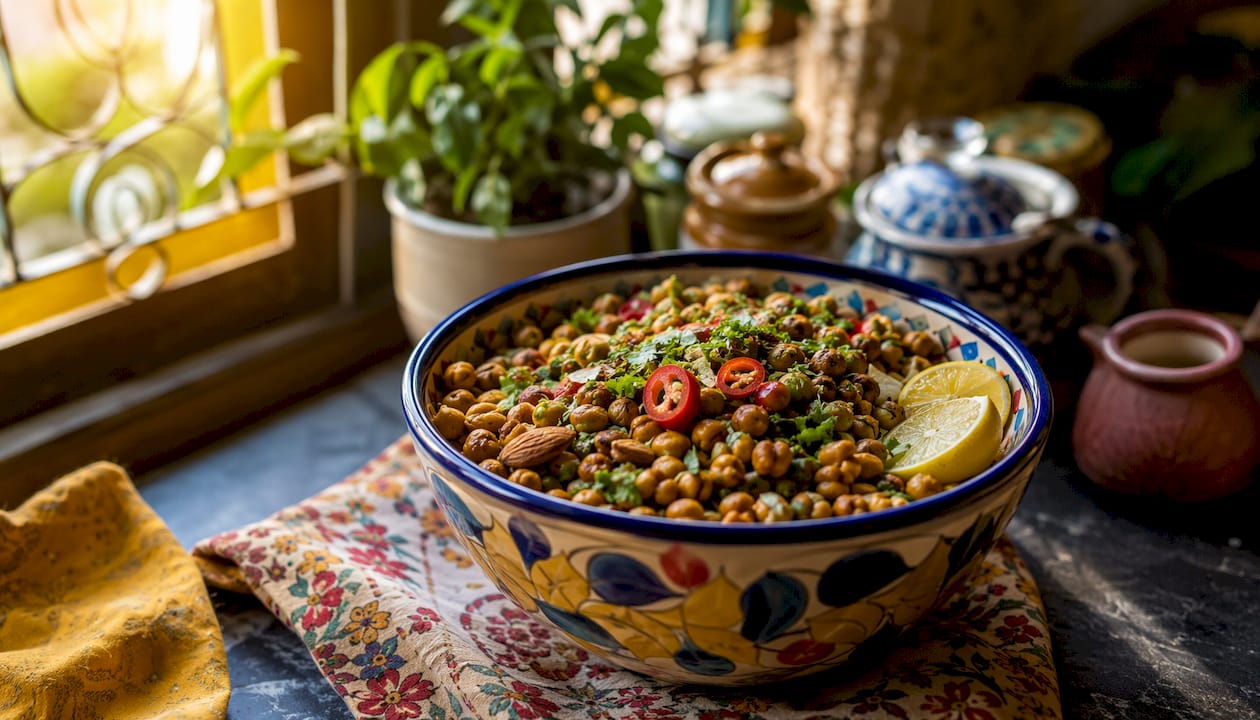
The payoff is real and immediate. A well-built snack keeps blood sugar steady, which means fewer 3 PM crashes and less of that frantic hunger that leads to overeating at dinner. Think about that post-commute moment when you walk through the door starving. A handful of spiced roasted chana with a few cucumber slices takes two minutes to pull together and holds you comfortably until your meal. That’s balanced snacking doing exactly what it’s supposed to do.
Choosing minimally processed snacks also gives your body extra nutrients it might otherwise miss, especially fiber, plant-based protein, and healthy fats that processed snacks rarely deliver.
How do you build a balanced snack? The simple formula
The two formulas dietitians reach for most are Protein + Produce (P+P) and Protein + Carb + Fat (P+C+F). Both work. The P+P approach, recommended by Dietitian Bridget Reiter of the American Institute for Cancer Research, is the simpler starting point: pair something with protein to something fresh or fiber-rich, and you’re covered.
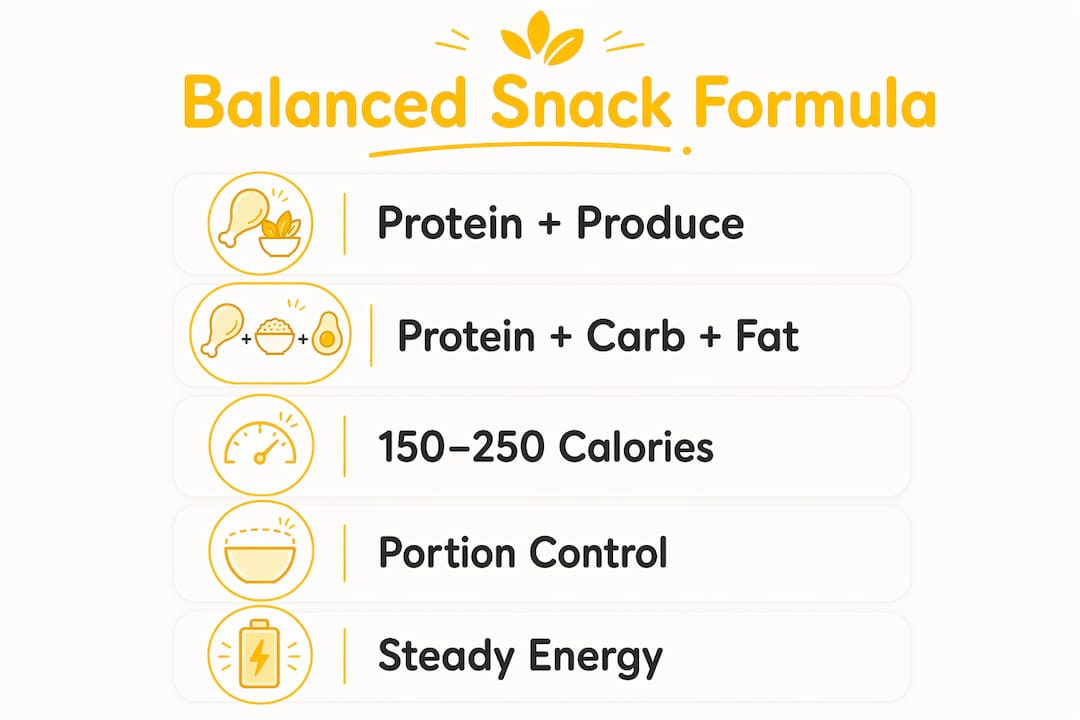
Each component earns its place. Protein slows digestion and keeps you full. Fiber-rich carbs (produce, whole grains) provide steady energy without a spike. Healthy fat adds satiety and helps your body absorb fat-soluble vitamins. Combining all three slows digestion even further and keeps energy stable for hours.
For portion and calorie guidance, many dietitians suggest targeting the 150–250 calorie range for most snacks. The VA’s nutrition guidance frames it well: treat snacks as mini-meals, not fillers.
Snack item | Suggested portion | Calorie estimate | Satiety window |
Roasted chana | 1/4 cup | 150–250 calories | Medium (2–3 hrs) |
Greek yogurt | 1/2 cup | 150–250 calories | Medium |
Mixed nuts | Small handful (~1 oz) | ~160–180 kcal | Long (3–4 hrs) |
Fresh fruit (apple, pear) | 1 small piece | 150–250 calories | Short (1–2 hrs) |
Whole-grain crackers | 5 crackers | 150–250 calories | Short |
Hummus | 2 tablespoons | 150–250 calories | Medium (with pairing) |
How to snack mindfully: habits and label-reading that actually help
The single most useful habit is rating your hunger before you reach for anything. On a scale of 1–10, aim to snack when you’re at a 3–4, not a 1 (ravenous) and not a 7 (not really hungry). This one check, recommended by the Academy of Nutrition and Dietetics, cuts emotional and boredom eating more reliably than any food rule. For more on managing cravings, practical behavioral tactics can help you build this habit faster.
When you’re reading a Nutrition Facts label, work through these four points in order:
Serving size — everything else on the label applies to this amount, not the whole package
Calories per serving — check whether your actual portion matches the listed serving
Added sugars — aim for less than 5g per snack; front-of-pack “healthy” claims can be misleading on this point
Sodium — under 200mg per serving is a reasonable target for a snack
Pre-portion snacks into small containers before you sit down. Eating straight from the bag almost always means eating more than you planned. Keep pre-portioned options at eye level in your fridge or pantry, and store less nutritious items out of easy reach.
Pro Tip: Nuts and dried fruit are calorie-dense. A small handful of mixed nuts can hit 160–180 calories on its own. Portion them into a small container before snack time, not after you’ve already started eating.
Balanced snack ideas with homemade Indian flavors
These combos are built on the P+P and P+C+F formulas, use whole-food ingredients, and take 2–10 minutes to put together. Each one carries that bold, home-style Desi flavor we love.
Spiced roasted chana + cucumber slices — protein and fiber, 5 minutes, swap chana for edamame for a nut-free option
Besan chilla mini + plain yogurt dip — protein, complex carb, probiotic fat; 10 minutes; use oat flour for gluten-free
Masala peanut handful + apple slices — healthy fat, protein, natural sugar and fiber; 2 minutes; swap peanuts for roasted sunflower seeds for nut-free
Ragi porridge jar + walnuts + sliced banana — whole grain, healthy fat, natural carb; 8 minutes; omit nuts for nut-free
Turmeric-spiced hummus + whole-grain pita triangles — plant protein, fiber, complex carb; 3 minutes; naturally vegan and nut-free
Atta biscuit (small-batch) + chai with low-fat milk — whole grain carb, protein from milk; 2 minutes; use oat milk for dairy-free
Moong dal chilla + sliced bell pepper — high protein, fiber-rich produce; 10 minutes; naturally gluten-free
Spiced poha cup + a boiled egg — complex carb, complete protein; 8 minutes; skip egg and add paneer for vegetarian
Roasted makhana (fox nuts) + a small pear — light carb, fiber, low-fat; 2 minutes; naturally gluten-free and nut-free
Paneer cubes with chaat masala + cherry tomatoes — protein, produce, bold flavor; 3 minutes; swap paneer for tofu for vegan
Sattu drink (barley flour + water + lemon + cumin) + a small banana — plant protein, complex carb; 3 minutes; naturally vegan and nut-free
Masala trail mix (roasted chana, pumpkin seeds, dried cranberry) — protein, healthy fat, natural carb; 2 minutes; high-protein traditional options like this fit the P+P formula perfectly
Can you still enjoy treats and snack in a balanced way?
Yes, and the research backs it up. Strict prohibition tends to backfire, making later overindulgence more likely, not less. Moderation and consistency beat restriction every time.
The practical move is pairing. A small Indian sweet like a piece of barfi or a couple of sesame chikki squares pairs well with a protein source, a small cup of yogurt, or a piece of fruit. The protein and fiber slow digestion, reduce the blood-sugar spike, and keep you satisfied longer. You enjoy the treat fully, and you don’t spend the next hour looking for something else to eat.
One behavioral tip: portion the treat before you sit down. A pre-portioned packaged treat or a small plate of your homemade sweet creates a natural stopping point. Plan the moment, enjoy it, and move on. That’s the whole mindset.
Key Takeaways
Balanced snacking means pairing at least two nutrient groups, portioning before you eat, and checking your hunger first — and traditional Indian ingredients like roasted chana, ragi, and moong dal fit this formula naturally.
Point | Details |
Core definition | A balanced snack pairs at least two nutrient groups: protein, fiber-rich carb or produce, and healthy fat. |
Calorie target | Aim for the 150–250 calorie range; treat snacks as mini-meals, not fillers. |
Portion habit | Pre-portion into small containers before eating to avoid mindless overconsumption. |
Treats are fine | Occasional indulgence supports long-term consistency; pair sweets with protein or fruit to stay satisfied. |
Desimunchiess fit | Desimunchiess roasted chana, atta biscuits, and small-batch snacks plug directly into the P+P formula. |
Why balanced snacking matters to us at Desimunchiess
At Desimunchiess, we believe the best snack is one that tastes like home and actually does something good for you. That’s why every product we make starts with a real recipe, whole ingredients, and a portion size you can feel good about. Freshness isn’t just a word for us. It’s how we make things.
Homemade-style snacks like our roasted chana or atta biscuits aren’t just nostalgic. They fit the balanced snacking formula naturally: plant protein, complex carbs, real ingredients, no mystery additives. Our small-pack formats are designed so you can grab one, pair it with a piece of fruit or a small yogurt, and have a genuinely balanced snack in under three minutes. That’s the kind of goodness we want to put in every bite.
— Shivam
Desimunchiess makes balanced snacking easy and delicious
Forget the guesswork of reading ingredient lists on mass-produced bags. Desimunchiess snacks are made in small batches, with authentic recipes and high-quality ingredients you can actually recognize. A 30g pack of our spiced roasted chana paired with cucumber slices or a small yogurt gives you protein, fiber, and bold Desi flavor in one easy combo — no prep required beyond opening the pack.
Our portion-friendly packaging makes it simple to stick to the 150–250 calorie snack window without measuring anything. If you’re ready to snack smarter without giving up the flavors you love, shop our homemade-style snacks at Desimunchiess and find your new go-to balanced bite.
Sources and further reading
Source | What it covers |
Academy of Nutrition and Dietetics — Smart Snacking Tips | Snack behavior, hunger-rating, and the one-third daily calorie finding |
Atlantic Health — Anne VanMeerbeke, RDN | Balanced snack components and the brain-and-body fueling framework |
American Institute for Cancer Research — 30 Dietitian Snack Ideas | P+P formula, 150–250 calorie range guidance |
VA Nutrition — Building Balanced Snacks | Mini-meal framing and snack composition examples |
MedlinePlus — Snacks for Adults | Portioning tactics, treats in moderation, calorie-dense foods |
Harvard Health — Snack Smarter | Label-reading, environmental cues, portion control |
Author Shivam’s guidance on homemade snack nutrition for families |
This article is general nutrition information, not personalized medical or dietary advice. For guidance specific to your health needs, consult a registered dietitian.
Recommended
Comments